When the cabin I run trips a breaker or GFCI, the first question is never “how do I stop it tripping” — it is “is this a nuisance trip or a real fault?” Those are opposite problems with opposite responses. A nuisance trip is a circuit that cannot comfortably carry the load and needs the supply side fixed; a real fault is current escaping where it should not — a Class A GFCI reacts to a leakage imbalance as small as about 5 mA — and resetting it repeatedly is exactly the wrong move. Getting that distinction right is the whole job, because one of these is an inconvenience and the other is a safety device doing precisely what it exists to do.
This is the Stage 1 power branch of the no-heat troubleshooting map, looked at from the other direction: instead of no power reaching the cabin, the protection device is actively cutting it. Here is how I tell the two apart before deciding whether to reset, re-wire, or stop.
Breaker vs GFCI: Two Different Trips
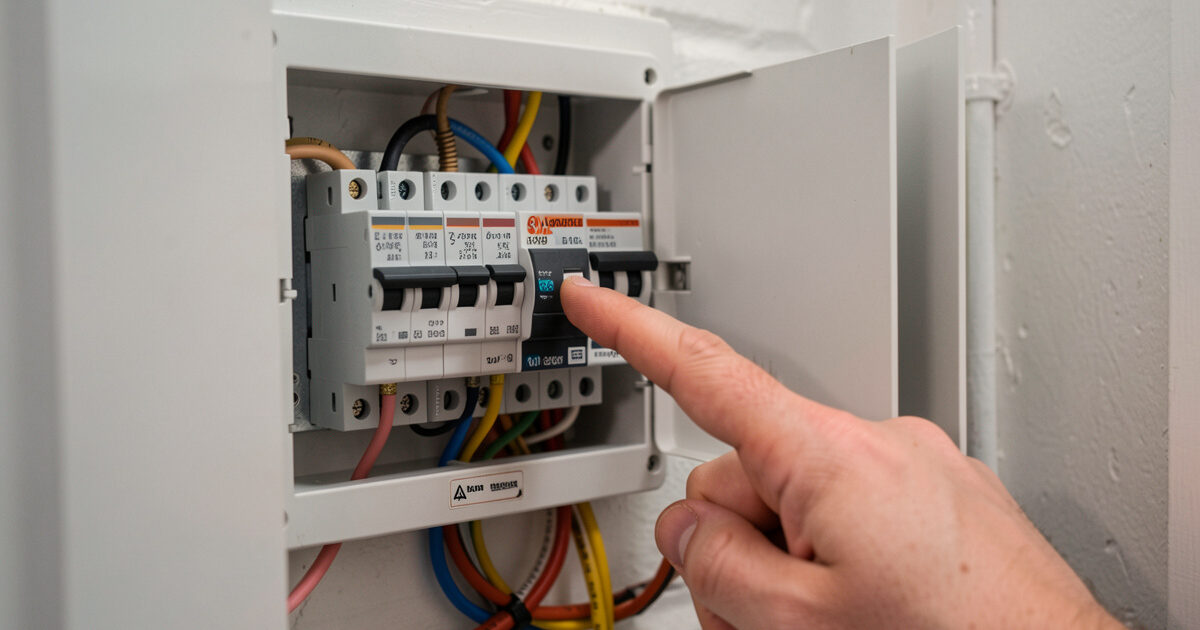
First, know which device tripped, because they protect against different things. A standard breaker trips on overcurrent — too many amps flowing, usually from an overloaded or undersized circuit. A GFCI (or RCD) trips on a ground fault — a tiny imbalance between the current going out and coming back, meaning current is leaking to ground somewhere it should not. That 5 mA reaction point is not arbitrary: UL 943, the standard that governs these devices, sets the Class A trip window at 4 to 6 mA — small enough that it reacts to a leak long before an ordinary breaker ever notices. A cabin that trips the breaker is most often a load problem; a cabin that trips the GFCI is most often a leakage problem. The fixes diverge from there, so identify the tripped device before anything else.
A 2-person far-infrared cabin like mine draws on the order of 1.5 to 1.8 kW once every panel is pulling. Whether that is a comfortable load or an overload depends entirely on the circuit feeding it and your local supply voltage and code — the same wattage is a modest draw on a dedicated line and an overload on a shared one. That is why I run mine on its own dedicated circuit with a GFCI; it removes the most common nuisance cause at the root.
| Clue | Points to Nuisance Trip | Points to Real Fault |
|---|---|---|
| When it trips | Under load, or with other appliances running | The instant the sauna powers on, every time |
| Which device | Breaker (overcurrent) | GFCI / RCD (ground fault) |
| Circuit | Shared with other loads | Dedicated, yet still trips |
| Weather / humidity | Worse on damp days, clears when dry | Trips regardless of conditions |
| Accompanying signs | None — just the trip | Burning smell, scorching, warm outlet |
| Right response | Fix the supply: dedicated, correctly sized circuit | Stop. Do not reset. Inspect or call an electrician |
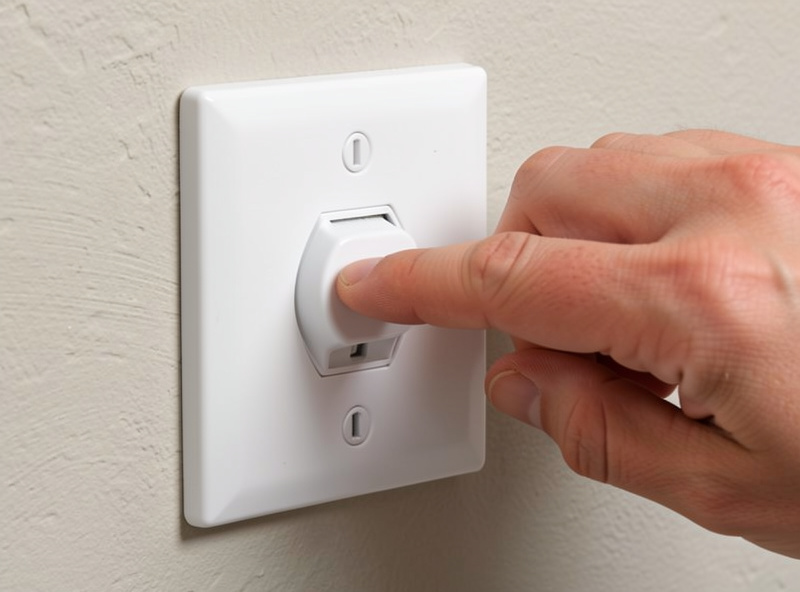
The Nuisance-Trip Causes (and Their Real Fixes)
Most trips I have helped diagnose are nuisance trips, and they cluster around a circuit that simply cannot carry the cabin. The classic is a shared circuit: the sauna runs fine until the dryer, the space heater, or a kettle kicks in on the same line, and the combined draw trips the breaker. The fix is not a bigger breaker on the same wire — that is dangerous — it is a dedicated circuit sized for the cabin, which I cover in wiring an outlet for an infrared sauna and in the broader installation requirements guide.
Humidity is the other big nuisance cause, and it mimics a real fault closely enough to fool people. A GFCI can trip on damp days because moisture in an outlet, a connector, or even the cabin’s wiring creates a small leakage path that vanishes when things dry out. If the trip tracks the weather — worse when damp, gone when dry — that points at moisture ingress and ventilation, not a failed component. Better sealing and ventilation usually solves it. But “usually” is doing real work in that sentence: a GFCI trip that does not track humidity is telling you something else.
The Real Faults — Where You Stop
A real fault is current going where it must not, and a GFCI tripping the instant the cabin powers on — every single time, regardless of weather — is the signature. The usual sources are an element whose insulation has broken down and is leaking to ground, a controller or relay that has shorted, or supply wiring that is damaged. None of these are reset-and-try-again situations. Each reset sends current down a fault path the GFCI is straining to interrupt, and the device is the only thing standing between that fault and a real hazard.
This is the moment to stop and inspect on a cold, unplugged cabin, or to call an electrician. If you are comfortable behind the panels, a leaking element can be found the same way you find a dead one — but instead of testing continuity through the element, you test for continuity between the element and the cabin’s ground or frame, which should read open. The full meter technique is in testing a heater element with a multimeter. Any continuity to ground convicts that element. And if a trip ever arrives with a burning smell or a warm, discolored outlet, that is not a diagnosis project — see burning smell from an infrared sauna and treat it as a hazard.
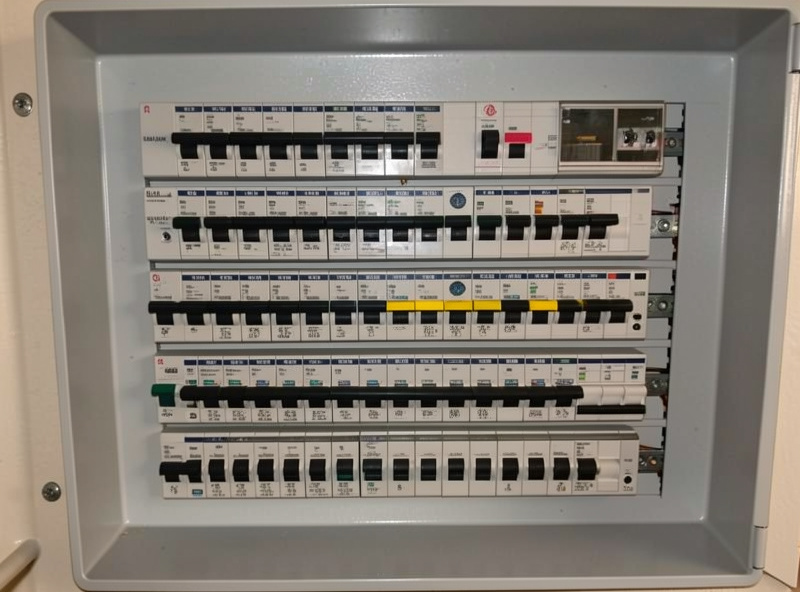
How I’d Work a Tripping Cabin in Order
My sequence is simple. Identify which device tripped. If it is the breaker and the circuit is shared, that is almost certainly load — move the cabin to a dedicated circuit. If it is the GFCI and the trip tracks humidity, chase moisture and ventilation. If it is the GFCI and it trips instantly every time on a dedicated circuit, stop and treat it as a ground fault — inspect for a leaking element or shorted controller, or hand it to an electrician. At no point do I keep resetting a device that trips immediately; that is the one habit guaranteed to turn a contained fault into a dangerous one.
The jurisdiction caveat is real and worth repeating: circuit sizing, GFCI requirements, and what an owner may legally wire versus what needs a licensed electrician are region-dependent. The permits and electrical codes guide covers why, and the short version is to confirm your local rules before touching the supply side. Getting the heat back is never worth bypassing a protection device.
Don’t Forget the Protection Device Can Fail Too
One possibility owners skip: the GFCI or breaker itself can be the faulty part. GFCIs have a finite lifespan, and one that has aged or been hammered by years of damp can start tripping on phantom imbalances that are not really there. Most GFCI outlets have a built-in test button — pressing it should trip the device, and the reset should hold cleanly afterward. A GFCI that will not reset even with the sauna unplugged, or that trips with nothing plugged into it, is itself suspect and is a straightforward swap for an electrician. I keep this near the bottom of the list deliberately, though: assuming the protection device is “just being oversensitive” is the comforting wrong answer, and you only land on it after the load and leakage causes are genuinely cleared.
On my own cabin, the one persistent GFCI trip I chased turned out to be neither dramatic nor the device — it was a damp outdoor-rated connector at the supply that wept a little leakage current on humid evenings. It tracked the weather perfectly, which is what pointed me away from the cabin’s internals and toward the supply connection. Re-terminating and properly sealing that joint ended it. The lesson I took: let the pattern of when it trips do most of the diagnosis before you start pulling panels, because the timing tells you load, leakage, or moisture before the meter ever comes out.
Frequently Asked Questions
Why does my infrared sauna keep tripping the breaker?
A standard breaker trips on overcurrent, so a sauna tripping it is usually a load problem: an overloaded or shared circuit that cannot carry the cabin’s 1.5 to 1.8 kW draw alongside other appliances. The fix is a dedicated, correctly sized circuit, never a larger breaker on the same undersized wire.
What is the difference between a breaker trip and a GFCI trip?
A breaker trips on overcurrent, meaning too many amps, usually an overloaded circuit. A GFCI trips on a ground fault, meaning current is leaking to ground where it should not. A breaker trip points at load; a GFCI trip points at leakage. Identify which device tripped before diagnosing further.
Is it safe to keep resetting a sauna that trips a GFCI?
No. A GFCI that trips the instant the sauna powers on, every time, signals a real ground fault such as a leaking element or shorted controller. Repeatedly resetting it forces current down a fault path the device is trying to interrupt. Stop and inspect on a cold, unplugged cabin, or call an electrician.
Why does my sauna only trip the breaker on damp days?
A trip that tracks humidity points to moisture creating a small leakage path in an outlet, connector, or wiring that vanishes when things dry out. This is usually a sealing and ventilation problem rather than a failed component. A trip that ignores the weather is telling you something else.
Does an infrared sauna need its own circuit?
A dedicated circuit removes the most common nuisance-trip cause at the root, since the cabin no longer competes with other appliances for amps. A 2-person far-infrared unit draws roughly 1.5 to 1.8 kW. Exact circuit sizing and GFCI requirements are region-dependent, so confirm local code.
How do I check a sauna heater for a ground fault?
On a cold, unplugged cabin, test for continuity between the heating element and the cabin’s ground or metal frame. A healthy element reads open to ground. Any continuity to ground means the element is leaking and is the source of the GFCI trip, so that element needs replacing.