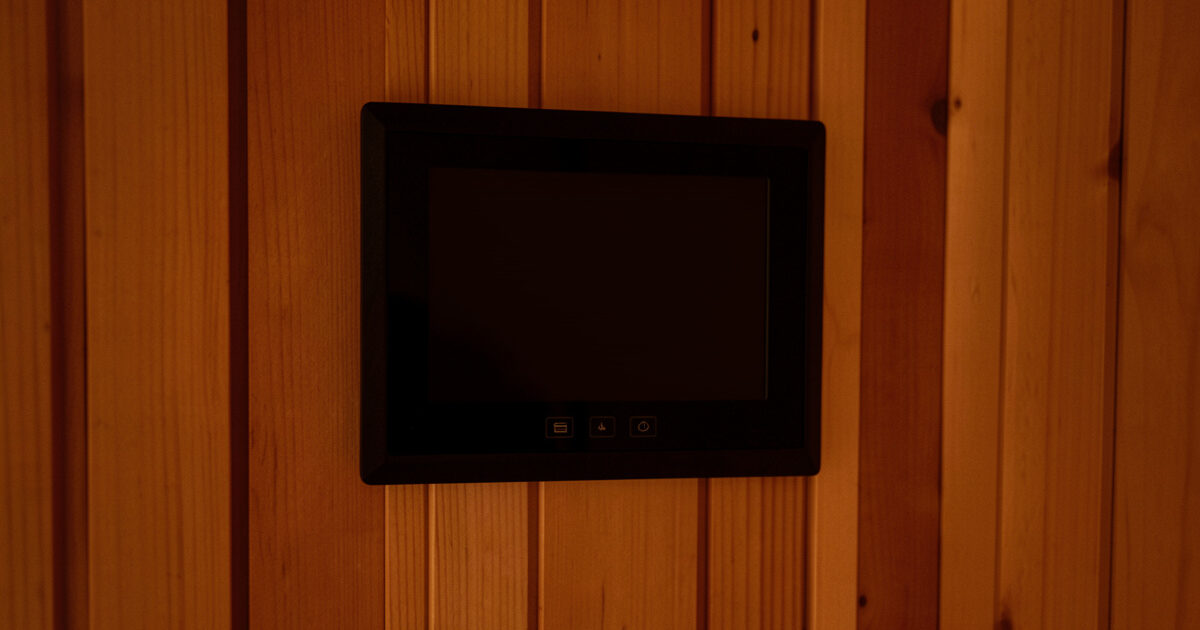
A completely dark control panel — no display, no beep, nothing — is a different fault from a sauna that lights up but won’t heat, and it is worth being precise about which one you have. A dead display means power is not reaching the controller’s low-voltage circuit at all — usually a 5–24 V DC rail, not the 230 V mains feed — and that traces back through a short, findable chain: the outlet, an inline fuse, the low-voltage supply that feeds the display, and the cable between them. In my experience the cause is usually upstream and mundane — a dead outlet or a blown fuse — long before it is the controller board itself.
This is the “control panel dark” branch of the no-heat troubleshooting map. If your panel does light up but no heat comes, you are in a different chapter — that is a relay or harness issue, and the error codes guide is the better start. Here we assume the display is genuinely dead, and we work from the wall inward.
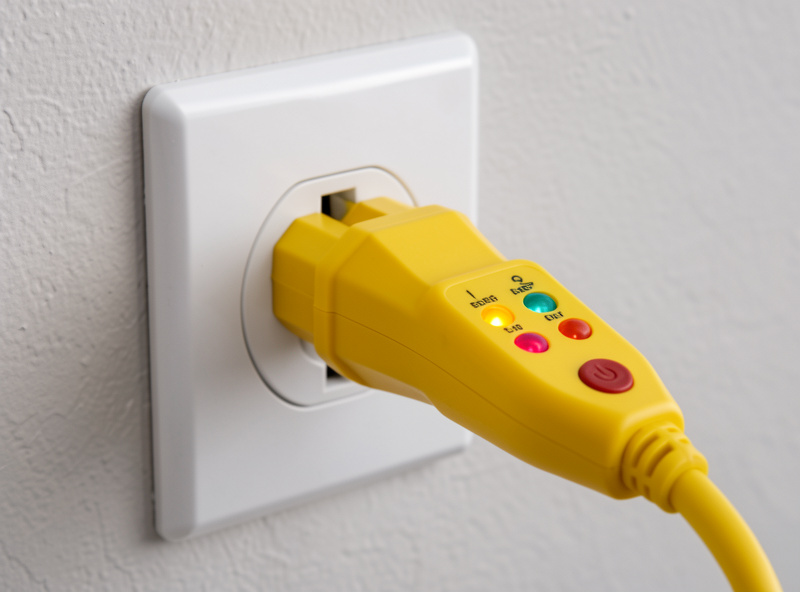
Step 1: Prove the Outlet Is Actually Live
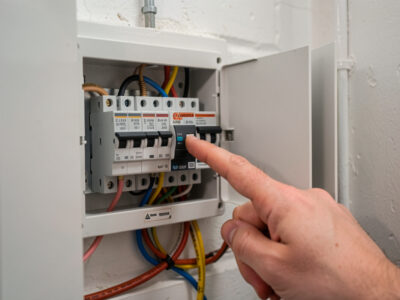
It sounds too simple, but a dead outlet is the single most common reason a control panel won’t turn on, and it costs nothing to rule out. Confirm the breaker and any GFCI are truly on — a breaker can sit in a deceptive middle position that looks set but isn’t. Then test the outlet itself with a plug-in tester or a known-good lamp, not by assuming. If the cabin is on a GFCI that has tripped, reset it; if it trips again immediately, you have a different problem entirely and the tripping breaker guide is where to go next.
If the outlet is dead, the fault is in the house circuit, not the sauna — and a cabin that shares a circuit with other loads can leave you chasing a sauna that was never broken. Proving the outlet live first means every later step is testing the cabin, not the wall.
Step 2: Find the Inline Fuse
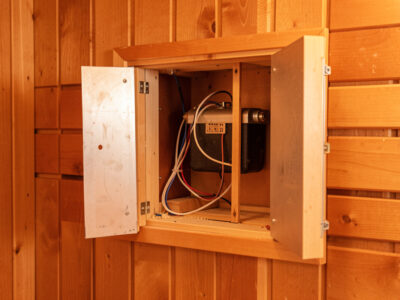
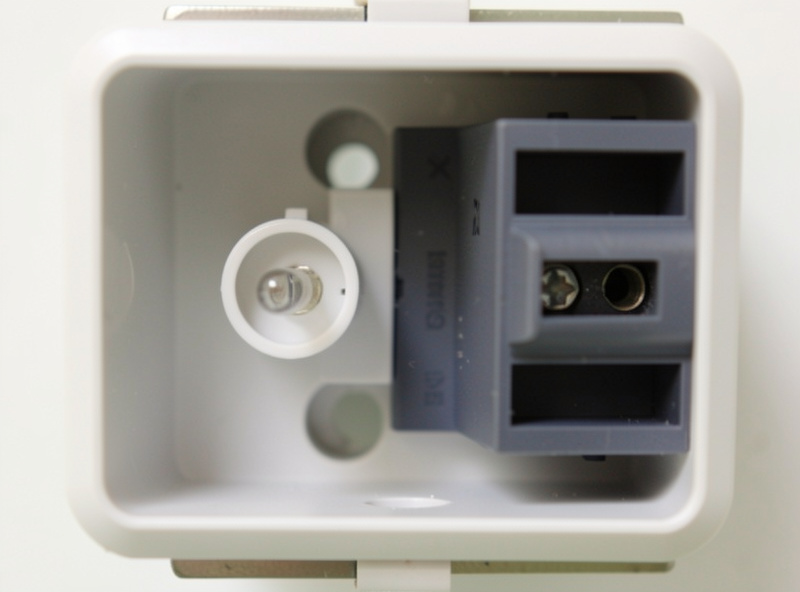
With a live outlet and a still-dark panel, the fault has moved inside the unit, and the first thing to look for is a fuse. Many cabins have an inline fuse — sometimes in the plug, sometimes on the main board, sometimes in a small holder near where the cord enters the cabin. A blown fuse drops everything downstream, which is exactly the all-dark symptom, and a fuse is a deliberate sacrificial part: it blows to protect the rest.
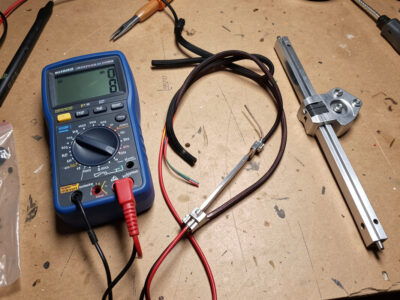
Everything from here is done on a cold, unplugged cabin. Find the fuse, pull it, and test it for continuity — a good fuse beeps, a blown one reads open. Replace a blown fuse with the exact same rating, never a higher one. The critical point: a fuse that blows again immediately is not the problem, it is a symptom. Something downstream is drawing a fault current, and stepping up to a bigger fuse to “make it stop” removes the protection and invites a fire. The Electrical Safety Foundation International is blunt on this point: a fuse must be replaced only with one of the same rating, because that rating is what holds the current to a level the downstream wiring can safely carry. If a same-rated replacement blows on power-up, stop and treat it as a real fault.
Step 3: Check the Low-Voltage Supply to the Display
The display does not run on mains voltage. A small transformer or power supply steps the incoming voltage down to the low voltage the controller and screen actually use, and if that supply has failed, the panel stays dark even though mains power is present and the fuse is fine. This is one of the more common genuine failures, because that little supply lives in a hot, sometimes humid environment and is exactly the kind of component that ages out.
Identifying a failed low-voltage supply usually means measuring its output with a meter — there should be a steady low-voltage reading on its output terminals when the cabin is powered. Most sauna controllers run their logic and display on a low DC rail, commonly in the 5V to 24V range depending on the board, and the module or its label will usually tell you what to expect. The test is comparative: good mains input going in, the rated low voltage coming out, equals a healthy supply; rated input going in with little or nothing coming out convicts the supply. No output with good input is the clearest verdict you can get here.
This is approaching the limit of comfortable owner diagnosis, and if the supply is integrated into the main controller board rather than a separate module, you are now looking at a board-level decision covered in replacing the controller. A separate, replaceable supply module is the happy case — it is a cheap, swappable part. A supply baked into the main board means the board is the unit of replacement.
Step 4: The Cable Between Board and Display
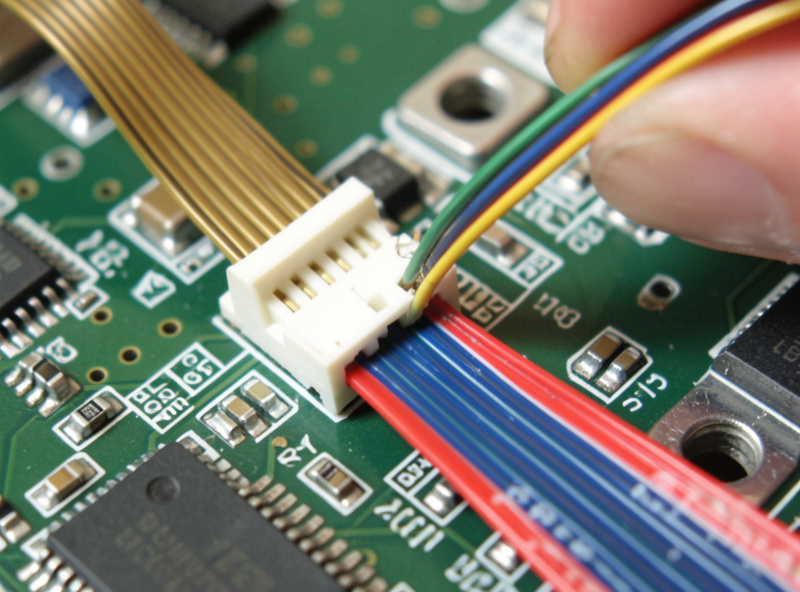
If mains is present, the fuse is good, and the low-voltage supply is producing its output, the last cheap suspect is the cable that carries power and data from the main board to the display. The screen itself can be perfectly healthy and simply not receiving its feed because a connector has backed off or a ribbon cable has been pinched or corroded — the same humidity-driven connector failure that causes intermittent error codes can also leave a display completely dark. Power down, trace the cable from the back of the display to the board, and re-seat both ends firmly.
Work this order — outlet, fuse, low-voltage supply, cable — and you isolate the fault to the cheapest fixable part at each step before moving to the expensive one. Only when every one of those passes does the controller board itself become the verdict.
Smart and App-Connected Panels Add One More Check
Newer cabins put a smart controller or app in the loop, and that changes the diagnosis slightly. If your panel is dark but the companion app still sees the cabin, the display hardware has failed while the controller lives on — the screen is dead but the brain is fine, which narrows the fault to the display and its cable. The reverse is more telling: if both the panel and the app go dark together, the failure is further upstream at the power or main-board level, exactly where this guide has been pointing.
My own cabin runs on a smart plug tied into the same home-automation hub that pre-heats it on a schedule, and that setup doubles as a diagnostic. Because the hub logs when the circuit actually draws power, a scheduled pre-heat that fires but pulls no current tells me the cabin lost power before I ever walk over and find a dark panel — the same one-rule-engine-for-everything-that-draws-current habit I lean on across the whole house. I dig into that integration in smart infrared sauna controls. The caution worth flagging: an aftermarket smart relay spliced into the supply is one more connection that can fail and one more thing to check, so if you have added one, put it on the suspect list right after the fuse.
Where the Owner Stops and the Electrician Starts
Testing a fuse, re-seating a display cable, and metering a low-voltage output on a cold, unplugged cabin are within reach of a careful owner. The hard line is mains-voltage work behind a hardwired junction box: if your cabin is hardwired rather than plug-in, or the fault sits at the incoming supply, that is electrician territory and not a place to improvise. The supply-side reasoning is in wiring an outlet for an infrared sauna and the code side in permits and electrical codes.
And the universal override applies here too: if the panel went dark alongside a burning smell, a warm or discolored plug, or any scorching, stop diagnosing and treat it as a hazard — burning smell from an infrared sauna covers exactly that. A dark panel on its own is a tidy diagnostic chain. A dark panel with a burn smell is a reason to unplug and call someone.
Frequently Asked Questions
Why won’t my infrared sauna control panel turn on at all?
A completely dark panel means power is not reaching the controller’s low-voltage circuit. Work the chain in order: confirm the outlet is live, check for a blown inline fuse, measure the low-voltage supply that feeds the display, then re-seat the cable to the screen. The cause is usually upstream, not the board.
How do I know if the fuse in my sauna is blown?
On a cold, unplugged cabin, find the inline fuse in the plug, near the cord entry, or on the main board, pull it, and test it for continuity. A good fuse beeps; a blown one reads open. Replace only with the exact same rating, never a higher one.
My sauna fuse blows again as soon as I replace it. What does that mean?
A fuse that blows again immediately is a symptom, not the problem. Something downstream is drawing a fault current, and the fuse is sacrificing itself to protect the cabin. Never fit a higher-rated fuse to stop it. Stop and diagnose the fault, or have an electrician inspect it.
Can a dead display mean the whole controller is broken?
Not usually. The display runs on a low-voltage feed separate from the heating circuit. A failed step-down supply, a blown fuse, or an unseated display cable all leave the screen dark while the board may be fine. The controller is the last suspect, only after the cheaper causes are cleared.
Is it safe to open my sauna to check the control panel wiring?
Testing a fuse, re-seating the display cable, and metering a low-voltage output on a cold, unplugged cabin are within reach of a careful owner. Mains-voltage work behind a hardwired junction box is electrician territory. And any burning smell means stop and unplug immediately.