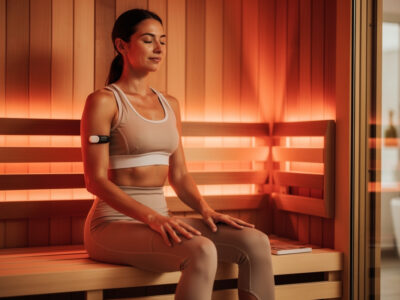
Does an infrared sauna actually do anything for a health condition, or is it all wellness theater? The honest answer sits in between, and it’s different for every condition. For a few — cardiovascular health and inflammatory joint disease especially — there is genuine peer-reviewed research (Laukkanen et al., Finnish cohort) worth taking seriously. For others, there’s a plausible mechanism and a couple of small studies. For a handful, there’s nothing but marketing. This hub is the honest map: what the evidence really supports, how strong it is (a systematic review: PubMed 29849692), where the hype outruns the science, and which conditions are physician-supervision-only. None of it replaces medical advice — it’s the research summary you bring to your doctor, not a substitute for one.
I’ll be clear about who’s writing this. I’m not a physician — I’m a sauna-equipment obsessive who reads the actual studies and refuses to launder a 12-person pilot into a headline. So every condition below gets an honest evidence grade, and where the research is thin I say so plainly rather than dressing it up. The cardiovascular research is the part I find genuinely compelling; a lot of the rest is “interesting, unproven, and oversold.” Let’s sort which is which.
How to Read the Evidence Grades
Across the condition spokes you’ll see a four-tier label, and it’s the most important thing on this page: Strong (multiple trials or large long-term cohorts), Moderate (a single small trial plus supporting mechanism), Emerging (small pilots, case series, or mechanism only), and Theoretical (a plausible idea with no real human sauna data). This separation matters because marketing copy quotes a twelve-person pilot in exactly the same confident tone it uses for a two-thousand-person cohort — and those are not remotely the same thing.
The single best dataset is still the Finnish Kuopio Ischaemic Heart Disease (KIHD) study, which followed more than 2,000 middle-aged men for around two decades and found that frequent sauna users had markedly fewer fatal cardiovascular events than once-a-week users. That’s a serious finding — but it’s observational, meaning it shows a strong association, not proof of cause, and it studied hot Finnish steam saunas rather than infrared cabins. Hold both the strength and the caveats at once; that’s what honest reading of this field requires.

Evidence Grade by Condition (At a Glance)
This table is the navigation map for the cluster. Read the “what studies reported” column as exactly that — outcomes measured in specific, often small, studies, not results you’re promised. The strongest research today is cardiovascular, with rheumatoid arthritis and ankylosing spondylitis close behind. Cancer, Lyme, and pregnancy sit firmly in the physician-oversight corner.
| Condition | Evidence grade | What studies reported | The honest read | Deep dive |
|---|---|---|---|---|
| Blood pressure & cardiovascular | Strongest here | Modest systolic drops; fewer CV events in the Finnish cohort | Best-supported, but adjunct — never a medication replacement | Blood Pressure |
| Rheumatoid arthritis & AS | Moderate–strong | Reduced pain and stiffness in a small trial | Genuine symptom relief; not disease-modifying | Arthritis |
| Fibromyalgia | Moderate | Improved pain and quality-of-life scores | The best-supported pain condition, via sleep and calm | Fibromyalgia |
| Chronic musculoskeletal pain | Moderate | Pain-score reductions over weeks | Real, temporary relief that aids movement | Chronic Pain |
| Type 2 diabetes markers | Emerging | Small insulin-sensitivity signals in pilots | Promising, unproven; a post-meal walk beats it | Diabetes |
| Autoimmune (general) | Emerging | Heat-shock and inflammatory marker changes | Interesting mechanism; specialist clearance needed | Autoimmune |
| Lyme disease | Emerging / weak | Symptom reports in case series; no trial | Comfort only; lab biology is not a remedy | Lyme |
| Cancer (adjunct only) | Not a treatment | Clinical hyperthermia is separate medicine | Comfort under oncology supervision; never a therapy | Cancer |
| Pregnancy | Avoid | Overheating linked to birth defects | The standard advice is to skip it entirely | Pregnancy |
The Five Mechanisms Behind Most of the Claims
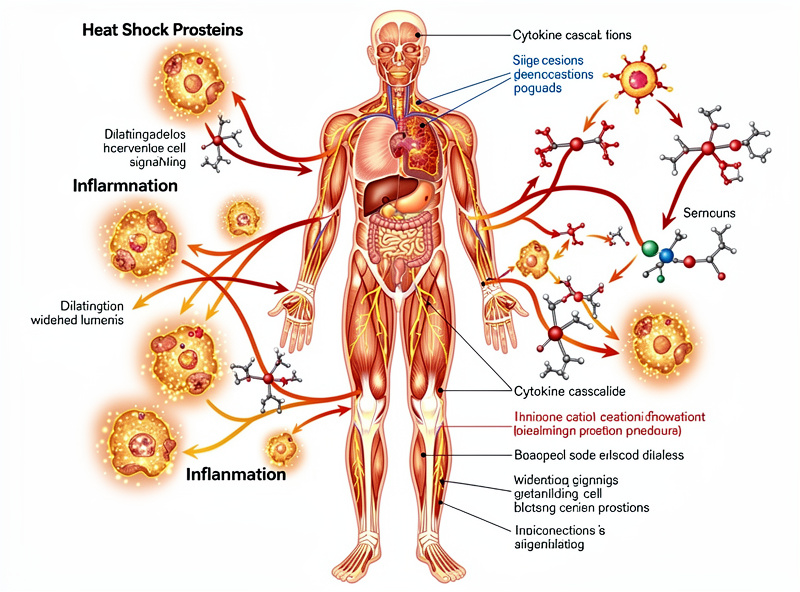
Before any condition-specific page, anchor on the five mechanisms that recur in the literature. Almost every plausible effect traces back to one or more of these — and here’s the useful filter: when a marketing claim doesn’t map to one of these five, treat it as unproven.
1. Heat-Shock Protein Response
A core-temperature rise of around 1°C triggers heat-shock proteins like HSP70, which help cells manage stress and repair, and appear to nudge immune signaling. A sauna-immunology study (PubMed 36813265) measured a rise in serum HSP70 after sauna sessions, with a larger response building over repeated use — that study used traditional Finnish sauna rather than infrared specifically, so the infrared read-across is reasonable but not identical. This is the mechanism most cited for autoimmune and Lyme reports — interesting, but a marker change in healthy adults is a long way from a treated disease.
2. Vascular Dilation and Endothelial Effects
Heat sends a large share of blood flow to the skin, pushing heart rate into a moderate-exercise range without the joint load. Repeated, this is associated with improved endothelial function and modestly lower blood pressure over weeks. This is the engine behind the (genuinely strongest) cardiovascular evidence.
3. Parasympathetic / Vagal Shift
The cool-down after a session shifts you toward the calm, “rest-and-digest” state, which is why people sleep better and why pain often eases for a few hours afterward. This is a general relaxation effect — real, but not condition-specific magic.
4. Inflammatory Modulation
Sessions briefly raise an exercise-like signal and, over weeks, are associated with lower systemic inflammatory markers — comparable, some reviews suggest, to moderate aerobic exercise. Relevant to arthritis, autoimmune disease, and the inflammation that underlies cardiovascular risk.
5. Mitochondrial and Metabolic Signaling
Heat appears to drive mild metabolic adaptations that may improve insulin sensitivity. It’s the most plausible explanation for the small type-2 diabetes signals in pilot studies — emphasis on small and pilot.
What “Adjunct” Honestly Means
You’ll see the word “adjunct” all over this cluster, and it’s worth slowing down on, because it’s doing a lot of careful work. An adjunct is something you add alongside real treatment that may make things a little better or a little more bearable — not something that does the treating. Calling a sauna an adjunct for blood pressure means: keep taking your medication, keep moving, keep eating well, and a sauna habit on top of all that might nudge things in a good direction. It does not mean the sauna is quietly doing the work of the pill.
This distinction is exactly where wellness marketing gets dangerous, because “adjunct” quietly mutates into “alternative” the moment someone’s trying to sell a cabin. The honest test I’d apply to anything you read — here or anywhere — is simple: does the claim leave your existing medical care fully in place, or does it hint you could lean on the sauna instead? Anything in the second category should set off alarm bells. Across every condition on this page, the realistic frame is the same: a sauna is a pleasant lifestyle layer that sits on top of proper care, and its honest value is measured in comfort, relaxation, and adherence to good habits — not in quick fixes. Set that expectation correctly and you’ll get real, modest value out of a cabin without ever being disappointed or, worse, harmed by over-trusting it.
Universal Contraindications and Red Flags
This is the most important section on the page, and it’s the same across every condition spoke. A sauna is generally safe for healthy adults, but it has clear “do not use” categories. The list below is deliberately conservative and aligns with mainstream cardiology and obstetric guidance:
| Situation | Recommendation | Why |
|---|---|---|
| Pregnancy | Avoid | Overheating is linked to birth defects, especially early on |
| Unstable angina or recent heart attack | Avoid until cleared | Heat stress mimics exercise demand |
| Severe aortic stenosis | Avoid | Vasodilation can drop preload dangerously |
| Active bleeding or bleeding disorder | Avoid | Vasodilation risk |
| Implanted defibrillator or pacemaker | Ask your cardiologist | Heat tolerance and device considerations |
| Acute infection with fever | Postpone | Adds to thermoregulatory stress |
| Multiple sclerosis in active relapse | Caution | Heat can unmask symptoms (Uhthoff) |
| Severe peripheral neuropathy | Caution | Reduced ability to feel overheating/burns |
| Young children | Avoid unsupervised | Lower heat-regulating reserve |
During any session, the universal “get out now” signs are lightheadedness, nausea, palpitations, chest pressure, or vision changes. And hydration before, during, and after isn’t optional — most “detox reactions” people describe are simply dehydration. The practical hydration thinking is in the temperature guide.
Building a Routine You’ll Actually Keep
The single biggest reason people abandon a sauna within a few months is overdoing it in week one. Every sensible approach follows the same arc: start short and cool, build duration before temperature, build frequency last — and if you have any health condition your doctor should sign off before you begin. The beginner schedule walks through a gentle first 30 days in detail; it is a general on-ramp, not a clinical prescription, and your own tolerance sets the real pace.
If a session ever feels like a chore, back off one notch — duration first, then frequency, then temperature — until it’s sustainable again. Consistency at a gentle dose beats a heroic push you quit in week three. The how-often guide covers why more isn’t better. For condition-specific pacing, the spokes go deeper:
- Blood pressure: the honest cardiovascular read
- Fibromyalgia: a gentle starter approach
- Arthritis: timing for morning stiffness
- Chronic pain: pairing heat with movement
- Diabetes: the medication safety point
If you’re still choosing equipment, the buying guide covers the EMF, wavelength, and material decisions that matter most for sensitive users. Low-EMF models from Sunlighten, Clearlight, and Sun Home tend to dominate this space — and I’d still meter any cabin’s panels myself rather than trust a label.
My authority on this entire hub is the equipment layer. The cabin I run daily is a 2-person low-EMF far-infrared unit on a dedicated 16A circuit, metered with a TriField TF2 for magnetic and electric fields. When I discuss “what a sauna does,” I am talking about measurable heat physics: a 0.6-1.0°C core temperature rise over 30 minutes at 130-140°F, panel surface temperatures confirmed by thermal camera, and kWh-per-session numbers from a kill-a-watt meter. The health-condition research I summarize from published literature — the gear expertise is mine.
Equipment for Sensitive Bodies — My Actual Lane
Here’s where I can help with full confidence, because it’s pure hardware rather than medicine. If you’re considering a sauna because of a health condition, you’re often more sensitive than the average buyer — to heat, to enclosed spaces, sometimes to EMF — and that changes what you should buy. Three things matter more for you than for a healthy gym-goer.
First, EMF. Cheap cabins can run noisy heaters, and while the evidence that EMF aggravates conditions like autoimmune disease or chronic fatigue is anecdotal, a quiet, well-shielded panel costs little extra — so it’s a cheap hedge against an expensive flare. I keep a TriField meter on a hook by my own cabin and check new panels myself rather than trusting a “low-EMF” sticker; on my meter, the premium low-EMF cabins genuinely measure where they claim, and plenty of budget units don’t. Second, form factor: if claustrophobia or autonomic symptoms are part of your picture, a sauna blanket you can exit instantly often beats a “better” cabin you dread climbing into — the best sauna is the one you’ll actually use. Third, controllability: a unit that holds a low, stable temperature and lets you bail easily matters far more for a fragile body than a high maximum temperature you’ll never safely reach. None of that is medical advice — it’s gear advice, and it’s the part of this decision I can answer honestly without a white coat.
Why Infrared Specifically
Most published sauna-and-health research that uses infrared does so for a practical reason: the lower air temperature (roughly 120–140°F versus a Finnish sauna’s 175°F-plus) is tolerable for people with cardiovascular, autoimmune, or pain conditions who’d quit a blazing steam room after a couple of tries. The Finnish data established the cardiovascular association at hot saunas; the infrared work since has leaned on the fact that people with comorbidities actually stick with the gentler version. Adherence, not some unique infrared magic, is the real advantage. The infrared-vs-traditional guide and the wavelength deep dive cover the trade-offs.
What to Track — and What to Leave to Your Doctor
If you adopt a routine, it’s worth knowing whether it’s doing anything. Keep it simple and feel-based for the most part — are you sleeping better, moving easier, feeling calmer? A cheap notes-app log of sleep and how you feel is plenty for most people. The clinical numbers — blood pressure, HbA1c, inflammatory markers — are genuinely useful, but they belong to your doctor to order and interpret, not to a self-directed spreadsheet built off a blog. Bring your log and your questions to your appointments; let the clinical tracking live there.
One expectation to set straight up front: a sauna is not a weight-loss tool. The scale moving after a session is fluid you’ll drink back, not fat — the realistic energy math is in the benefits article. Judge a sauna on how you feel and on the markers your physician actually tracks, not on the bathroom scale.

Five Myths Worth Killing Before You Start
The marketing around sauna-and-health outruns the research by a mile. Five claims show up so often they deserve a direct correction:
“Sweat equals detox.” Sweat is over 99% water with traces of salt and a few other things. Real heavy-metal excretion through sweat is a tiny fraction of what your liver and kidneys handle. The honest data is in the sweat composition breakdown; the legitimate benefits are cardiovascular, inflammatory, and the calm-down — not “pulling toxins.”
“Hotter is better.” The research lives in a moderate range, not at maximum heat. Cranking toward 160°F adds risk without adding benefit and torpedoes your odds of sticking with it, especially with a health condition.
“Daily use speeds results.” More isn’t better past a few sessions a week, and new users who jump to daily long sessions usually crash out on dehydration or wrecked sleep. Build duration before frequency.
“All infrared is the same.” Near, mid, and far infrared penetrate differently and suit different uses; full-spectrum cabins offer all three at a higher price and, often, higher EMF. The full-spectrum article and far-infrared article cover the trade-offs.
“You can self-prescribe instead of seeing your doctor.” No — and this whole cluster is built to make the opposite happen: to hand you good questions and citations to bring to a clinician. For blood pressure, diabetes, autoimmune disease, and anything touching pregnancy or cancer, the physician’s review isn’t optional.
How to Actually Bring This to Your Doctor
“Talk to your doctor” is easy to say and easy to skip, so here’s how to make that conversation productive rather than awkward. Don’t walk in asking “is a sauna good for me?” — that’s a yes/no that invites a reflexive shrug. Instead, come with specifics: tell them you’re considering a few moderate infrared sessions a week, name your conditions and your full medication list, and ask the two questions that actually matter — “Is heat exposure safe for me given my heart, my medications, and my history?” and “Is there anything I should watch for or avoid?” If you’ve read the relevant condition spoke, you can mention the kind of evidence behind it honestly (“I know it’s mostly small studies, I’m treating it as a comfort habit, not a treatment”), which signals you’re being sensible rather than chasing a miracle. That framing tends to get you a real, useful answer instead of a brush-off — and it keeps the person with the medical training, not the person with the cabin to sell, in charge of the call.
Why I Built This Library This Way
I’m a publisher and an equipment nerd, not a doctor, and I think that’s exactly why this cluster is useful: I have no prescription pad to protect and no patients to upsell, so I can afford to be blunt about where the evidence is thin. Every health claim on this site is supposed to map to a real, citable source, and where it can’t, I grade it Emerging or Theoretical and tell you what would have to change to upgrade it. The ten condition spokes were each written separately, with their own read of the literature, and not one of them ends with “so buy a sauna and skip your doctor.” They end with “bring this to your doctor.” That conversation is where a real protocol gets built — not on a marketing page, and not here.
Read Your Condition
Each spoke opens with the honest evidence state, lays out a sustainable approach, and closes with the cautions specific to that diagnosis:
- Infrared Sauna and Arthritis (RA, AS, OA)
- Infrared Sauna and Fibromyalgia
- Infrared Sauna and Autoimmune Conditions
- Infrared Sauna and Blood Pressure
- Infrared Sauna for Chronic Pain
- Infrared Sauna and Lyme Disease
- Infrared Sauna and Type 2 Diabetes
- Infrared Sauna and Pregnancy
- Infrared Sauna and Cancer
Related Guides
- Infrared Sauna Benefits: What Science Actually Supports
- Infrared Sauna Safety: Risks and Side Effects
- Cardiovascular, Immune, and Mental Benefits
- How to Use an Infrared Sauna
- Infrared Sauna Detox: What the Science Shows
Frequently Asked Questions
Which health conditions have the strongest infrared sauna evidence?
Cardiovascular health has the strongest evidence, anchored by a large long-term Finnish cohort linking frequent sauna use with fewer fatal heart events — though that study is observational and used steam saunas. Rheumatoid arthritis and ankylosing spondylitis come next. Most other conditions sit in emerging or theoretical territory.
Is an infrared sauna safe for autoimmune disease?
For many stable autoimmune conditions it can be, with specialist clearance and gentle onboarding. Active flares, MS during relapse, and any heat-sensitive condition need a doctor’s sign-off first. The mechanism is interesting but the human evidence is still preliminary.
Can I use an infrared sauna while pregnant?
The standard advice is no. Guidance is to avoid anything that raises core body temperature above about 102F, especially in the first trimester, because of the link to birth defects. Most providers recommend skipping sauna for the whole pregnancy — always follow your own OB/GYN.
How often should I use an infrared sauna?
Start with a couple of short, cool sessions a week and build slowly, increasing duration before frequency. More is not better — benefits plateau and overdoing it early tends to cause dehydration and quitting. A few moderate sessions a week suits most people.
Does an infrared sauna help with chronic pain?
For muscle and joint pain it often provides real, temporary relief and a window to move more easily, which is genuinely useful. The evidence is moderate and the effect is symptom relief, not a remedy. Pure nerve pain responds less reliably.
What temperature is safe if I have a health condition?
Gentler than you might expect — many people with conditions start low and short and build only if it stays comfortable. What matters is a modest core-temperature rise, not maximum heat, and your doctor should help set safe limits for your situation.
Should I tell my doctor before starting?
Yes. Anyone with cardiovascular disease, diabetes, an autoimmune diagnosis, who is pregnant, or who takes blood-pressure or other affected medications should clear sauna use with a physician first. Bring the citations from the relevant condition page to that conversation.