Of all the reasons to own a sauna, easing everyday musculoskeletal pain is the one I’m most comfortable standing behind — heat for a stiff, aching back or a knotted neck is about as mainstream as it gets. A Cochrane systematic review of superficial heat for low back pain (PubMed 16641776) found moderate evidence that heat gives a small, short-term reduction in pain and disability — modest, not dramatic, and it covers heat wraps and pads, not infrared specifically, but the underlying physiology carries across heat sources reasonably well. The honest version: for mechanical and muscle pain, a warm session reliably opens a few-hour window where things hurt less and move easier, and if you use that window to actually move, the benefit compounds. It’s genuine symptom relief and a movement aid — not a remedy, and not a reason to skip the care a persistent pain problem deserves.
My expertise is the heat and the hardware, not pain medicine, so I’ll give you what I can back up: which pain actually responds, an honest read of the evidence, and how I use the warm window myself. Nothing here is medical advice. This sits in the health conditions cluster; for joint-driven pain see arthritis, and for central-sensitization pain see fibromyalgia.
Which Pain Actually Responds to Heat
Not all chronic pain answers to warmth, and being honest about that is half the value here. Heat tends to help most with:
- Mechanical and myofascial pain — chronic low back, trapezius, that stubborn knot between the shoulder blades. This is the sweet spot: heat loosens the tissue, then movement locks in the gain.
- Inflammatory joint pain — RA, AS, and similar, covered in the arthritis evidence.
- Central-sensitization pain — fibromyalgia-type pain, mostly via the calming autonomic effect rather than the tissue itself.
- Old, fully healed post-surgical aches — once you’re completely cleared and closed up.
And the honest flip side — heat helps these less, sometimes not at all: pure nerve pain like diabetic neuropathy or post-herpetic neuralgia, sharp shooting pain from an acute disc problem (warmth can briefly make an irritated nerve root worse), and deep internal/visceral pain. These aren’t hard bans, just realistic expectations so you don’t waste weeks chasing the wrong tool.
What the Evidence Says — and Doesn’t
The most-cited infrared-specific study is Masuda and colleagues (Psychotherapy and Psychosomatics, 2005, PubMed 16088266), which compared 46 chronic-pain patients split between usual multidisciplinary care and usual care plus repeated thermal (Waon) therapy, and reported a meaningful drop in pain scores in the heat-therapy group. Read it with the obvious caveat: it’s a small comparison study, not a blinded placebo trial, because you can’t blind someone to whether they’re warm. So this is moderate evidence — enough to make heat a reasonable thing to try, not enough to promise you a number.
The way I’d frame it honestly: a sauna is one useful layer in a pain toolkit, not the whole kit. The people I’ve seen get real, lasting mileage out of it are the ones who treat it as the thing that makes the other work easier — the physiotherapy, the daily movement, the sleep hygiene — rather than a passive fix they sit in and wait on. Heat that loosens a guarded back so you’ll finally do your physio is doing something genuinely valuable; heat sold as a standalone remedy for a complex pain problem is overselling. Keep your expectations in that first lane and you’ll rarely be disappointed.
Why Heat Helps — Three Honest Mechanisms
None of these are exotic or sauna-specific; they’re why a hot water bottle has soothed sore backs for a century, just delivered more thoroughly:
Your own pain brakes. Sustained warmth engages the body’s descending pain-dampening pathways — the same system that releases endorphins — which quiet pain signals for several hours. That few-hour window is the whole opportunity.
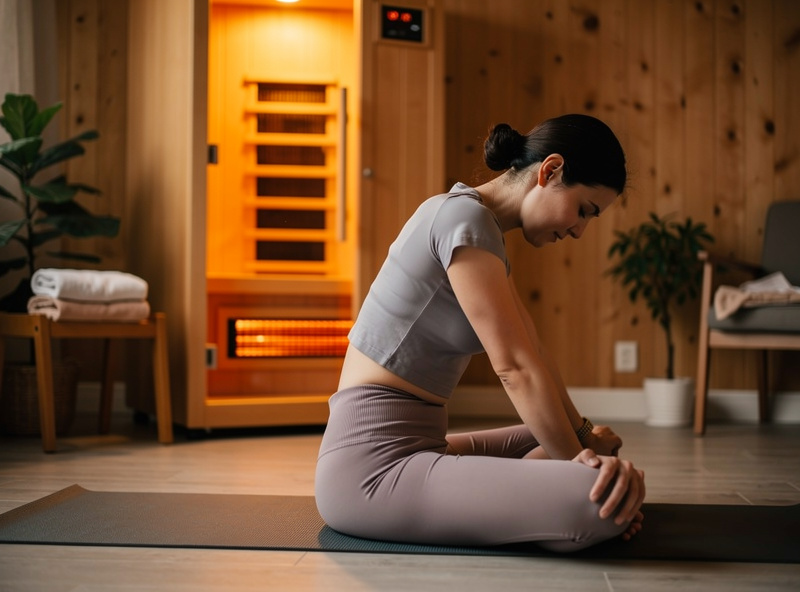
More pliable tissue. Fascia, muscle, and joint capsule stretch noticeably better when warm than when cold. Stretching or mobility work done within half an hour of a session produces more lasting range-of-motion than the same work done cold — this is the single most practical thing on this page.
A calmer nervous system. People in chronic pain tend to live braced and guarded, stuck in a low-grade fight-or-flight. The post-session settle breaks that guarding cycle for a while, and repeated over weeks it seems to nudge the baseline, which is likely why scores keep easing beyond any single session’s effect.
A Simple Warm-Then-Move Routine
The real magic isn’t a fixed schedule, it’s the move part. A session without movement after it gives shorter relief; a session followed by easy mobility work uses the warm, pliable window to actually retrain the stiff, guarded patterns that fed the pain. Start gentler than the general beginner schedule and build slowly, pairing every session with a few minutes of stretching or range-of-motion work right after — that pairing matters more than the exact temperature or duration you land on.
This is exactly how I use it for my own grumpy lower back after too long at a desk: warm up properly, then do the boring mobility drills I’d otherwise skip while everything’s loose. The heat is the bribe that gets me to do the part that actually helps. Session-length thinking lives in the how-long guide, and rehydrate with electrolytes after.
The equipment reality: a far-infrared cabin delivers sustained, even radiant heat that is gentler than a hot pack but reaches deeper tissue. On my thermal camera, a 130°F session warms muscle tissue to 38-39°C at depth within 15 minutes.
Pain Medications — One Real Warning
Most over-the-counter pain relievers are fine alongside a sauna, but a few prescription situations genuinely matter, and one is a real safety issue rather than a footnote:
- Opioids, and especially fentanyl patches — this is the important one. Opioids blunt your ability to regulate heat and raise sedation risk, and a fentanyl patch can release its drug faster when it’s warmed, which is dangerous. If you use any transdermal pain patch or opioid, do not use a sauna without your doctor’s specific guidance.
- Tramadol, muscle relaxants, gabapentinoids — sedating or dizzying; don’t sauna right before driving, and sit and rehydrate before standing.
- Topical lidocaine or capsaicin patches — take them off before a session, because heat increases how much absorbs.
And the universal rule: a sauna might leave you reaching for fewer painkillers over time, but never reduce or change prescribed medication on your own — that’s a conversation with whoever prescribed it.

If Pain Gets Worse Afterward
A few people feel worse in the day after a session. It’s almost always one of three fixable things:
- Dehydration — by far the most common. Drink more before, and add electrolytes after.
- Heat on a fresh injury — warmth applied to something acutely injured or inflamed (within a few days) tends to aggravate it. Wait out the acute phase; ice, not heat, is for the first 72 hours.
- Too much, too soon — back off one thing (temperature, time, or frequency) and hold there a couple of weeks.
If you’ve onboarded gently and pain is still worse at the four-week mark, heat probably isn’t your tool for this particular pain — pause and talk it through with your physician.

Related Guides
- Cluster hub: Infrared Sauna for Health Conditions
- Infrared Sauna for Arthritis
- Infrared Sauna for Fibromyalgia
- How Long to Sit in an Infrared Sauna
- Infrared Sauna Safety Guide
Frequently Asked Questions
Does an infrared sauna actually relieve chronic pain?
For mechanical and muscle pain it often does, at least temporarily. Small trials reported meaningful drops in pain scores over a few weeks of regular use, and most people feel a few hours of easier movement after each session. It is real symptom relief and a movement aid, not a remedy, and the evidence is moderate rather than definitive.
How long does the relief last after a session?
The eased-pain window usually lasts a few hours after you finish — long enough to do mobility work, which is the point. Any longer-term easing of baseline pain tends to build over several weeks of consistent, gentle sessions rather than appearing overnight.
Which kinds of pain respond best?
Mechanical and myofascial pain (low back, neck, shoulders) responds best, along with inflammatory joint pain and old fully-healed surgical aches. Pure nerve pain and sharp acute disc-related pain respond less reliably, and heat can briefly worsen an irritated nerve root.
Can I use a sauna while taking opioid pain medication?
Only with your doctor’s specific guidance. Opioids impair heat regulation and increase sedation, and a fentanyl patch can release its drug faster when warmed, which is genuinely dangerous. If you use any opioid or transdermal pain patch, clear sauna use with your prescriber first.
Should I stretch right after a session?
Yes — that is where most of the value is. Tissue is most pliable within about half an hour of finishing, so pairing the session with gentle stretching or mobility work turns a temporary warm-up into more lasting range of motion.
What if my pain is worse after a session?
Usually it is dehydration (drink more and add electrolytes), heat applied to a fresh injury (wait out the first few days and use ice instead), or simply doing too much too soon (ease back one notch). Persistent worsening after gentle onboarding means heat may not be your tool.
Can a sauna replace my pain medication?
Some people find they reach for fewer painkillers over time, but you should never reduce or change prescribed medication on your own. Track how you feel, and discuss any medication changes with the doctor who prescribed it.