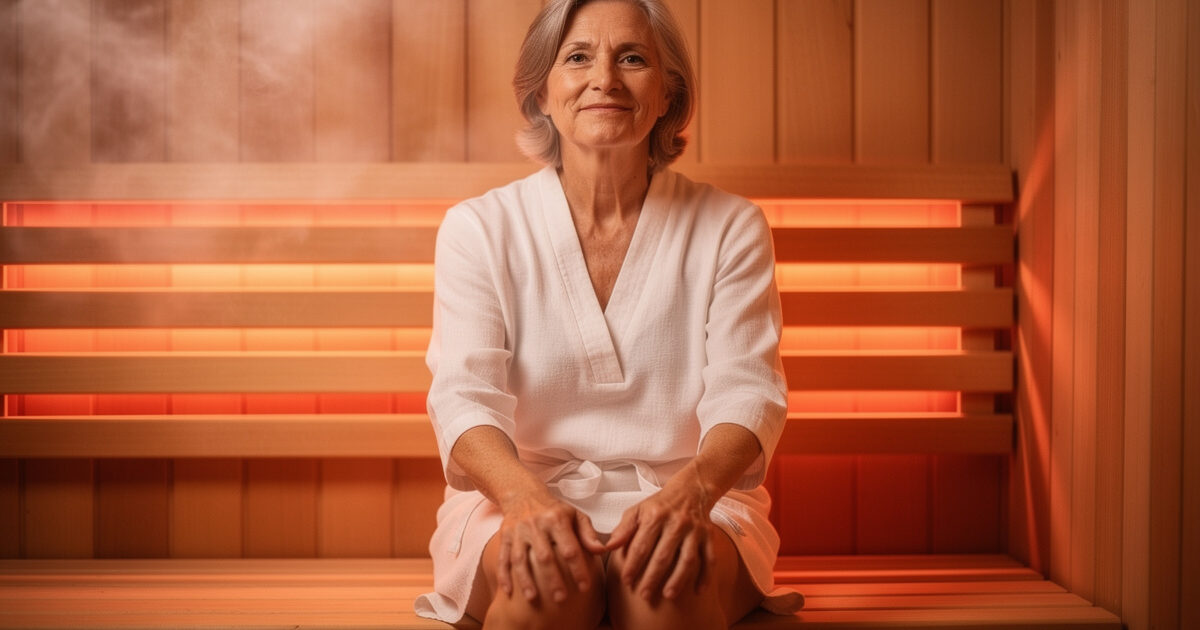
Of everything people ask me about heat and the body, “does a sauna help arthritis?” is the one with the most comfortable answer — because warmth easing stiff joints is about the least controversial idea in this entire cluster. Even mainstream rheumatology nods at heat for stiffness, and there’s an actual small trial behind infrared sauna specifically. The honest framing: a sauna can genuinely make stiff, achy joints feel looser and buy you a window to move — real, useful symptom relief. What it does not do is repair joints or replace your treatment, and anyone selling it as a remedy is selling false hope.
I write about sauna hardware and how heat behaves, not rheumatology, so I’ll keep to what I can stand behind: what the trials actually found, a sustainable way to use the heat, and the equipment angle. Nothing here is medical advice. The hub is infrared sauna for health conditions; the broader picture is in infrared sauna benefits.
Rheumatoid Arthritis: The Cluster’s Strongest Trial (PubMed 18685882)
The headline study is Oosterveld and colleagues, Clinical Rheumatology 2009 — a pilot of 17 RA patients and 17 ankylosing-spondylitis patients who did eight 30-minute far-infrared sessions over four weeks. Pain and stiffness dropped in a statistically significant way immediately around each session; over the full four weeks, pain, stiffness, and fatigue trended better too, though the study’s own authors describe that longer-term change as a trend rather than a statistically confirmed result. Importantly: no flares, no medication changes, and nobody dropped out. Treat those numbers as what they are: encouraging results from a small pilot study, not a percentage you’re guaranteed to hit.
That’s why I’d call the RA evidence the most solid in this cluster — solid enough that a few European rheumatology bodies mention infrared sauna as an adjunct, even though it’s rarely formally prescribed. “Adjunct” is the operative word: a helpful add-on to real treatment, never a replacement for it.
Ankylosing Spondylitis: Stiffness Is the Win
In the same trial, the AS patients saw their biggest gains in stiffness — which makes sense, because AS is dominated by that locked-up morning rigidity that takes an hour to walk off. A warm evening session seems to translate into an easier next morning, and in practice this is the group that tends to report the most noticeable day-to-day functional difference, even when blood markers barely move. That gap — feeling better while labs hold steady — is worth saying out loud, because it’s exactly the honest, comfort-level benefit a sauna offers.
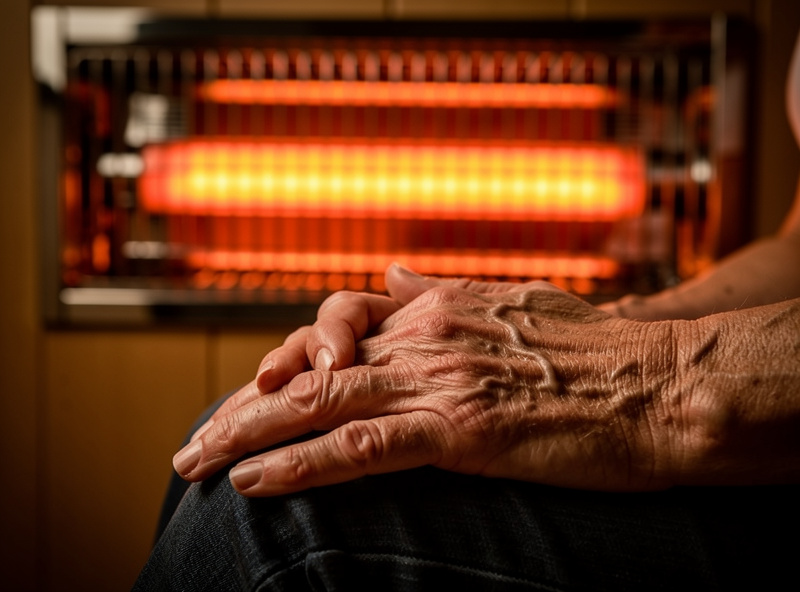
Osteoarthritis: Real Relief, No Miracles
Osteoarthritis doesn’t have a strong sauna trial, so the case rests on mechanism and lived experience: heat makes the joint capsule more pliable and quiets pain signaling for a few hours afterward. Knee and hip OA sufferers often describe a several-hour window of easier movement after a session — and that window is the whole point, because it’s long enough to get the walk or the stretching done.
Here’s the line I won’t cross, though: OA is driven by cartilage wearing down, and a sauna does not regenerate cartilage. Anyone framing infrared as an OA “remedy” is selling false hope. The realistic, valuable role is symptom relief that lets you move — and movement is the thing that actually slows OA down.
I’ll put my own skin in this, because it’s the honest source of why I believe the “comfort window” is real. I’m fifty, I live where winter mornings are genuinely cold, and my hands and shoulders are stiff and grumpy for the first hour of a January day — no diagnosis, just age and climate. A warm session genuinely loosens that up; I move easier afterward, and that’s the entire mechanism I’m describing, felt firsthand. What I’ve also learned the boring way is that the loosening is temporary, and the real value is using the window — that’s when I do the stretching I’d otherwise skip. If a sauna gets a stiff person moving, it has earned its electricity. That’s a long way from “it fixes your joints,” and I’d rather undersell it honestly than oversell it like the cabin brochures do.
A Sustainable Way to Use It
The trial clustered around 30-minute sessions a couple of times a week at roughly 131°F, but the number that actually matters is consistency, not heat — a modest cabin used regularly beats a premium one used twice a month. Start gentler than that and build slowly using the general beginner schedule; let your joints and your doctor set the real pace rather than a fixed table.
Timing matters more for AS than RA: if stiffness is your main complaint, an afternoon or early-evening session tends to pay off the next morning. With RA, morning or evening both work — pick the one you’ll actually keep. Session-length and frequency reasoning live in the how-long guide and the how-often guide. And rehydrate with some electrolytes after each session — a stiff body doesn’t need a dehydration headache on top.
On the equipment side: arthritis patients often have joint-specific heat sensitivity. My thermal mapping shows a 2-person carbon-panel cabin holds even surface temperature across the seating zone, while ceramic-rod cabins create hotter and cooler bands. Even heat matters when joints are inflamed.
A Note on Medications
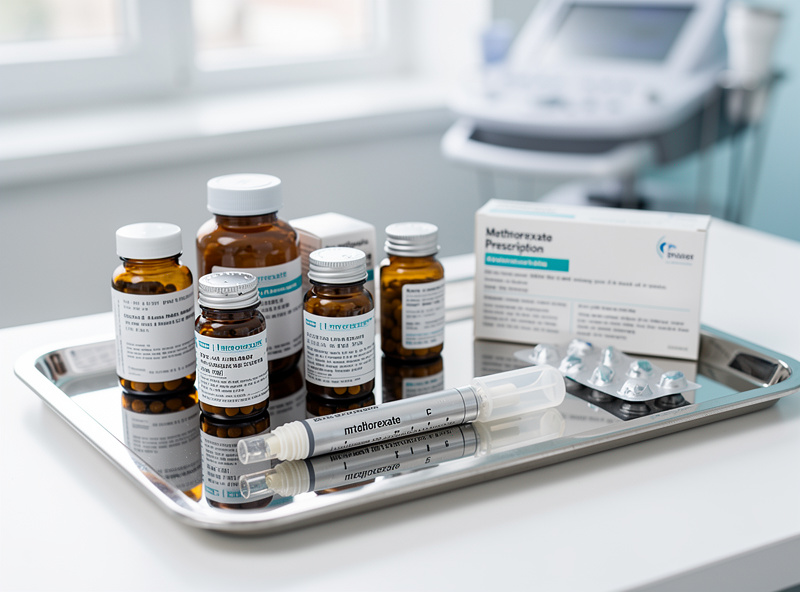
Most people with inflammatory arthritis are on something — methotrexate, hydroxychloroquine, a biologic, NSAIDs, sometimes low-dose prednisone or an anticoagulant. None of these rule out a sauna, but a few deserve a quick word with your rheumatologist before you start: heat and some of these can stack up on hydration or kidney load, long-term steroids thin the skin (so start cooler and shorter), and anticoagulants plus lots of vasodilation is worth clearing. The one firm rule: if you develop any infection while on a biologic or other immunosuppressant, pause the sauna entirely until it’s resolved. And never drop or change a medication on your own because a session felt good — that’s a conversation, not a solo decision.
Pair It With Movement
The most reliable gains I hear about come from pairing the heat with gentle movement. A session followed within half an hour by easy range-of-motion work or stretching uses that warm, pliable window before the tissue cools back down. This is one place the cabin-versus-blanket choice tips toward a cabin — you can do slow stretches in a cabin, which you can’t really do wrapped in a blanket. AS patients especially seem to get value from gentle spinal flexion-extension while they’re warm.
A brief cool shower afterward (not an ice bath) helps some people settle into that calm, post-session state — just skip the cold contrast entirely if you have Raynaud’s or any cold sensitivity.
When a Sauna Is the Wrong Tool
Three situations mean stop and check with your rheumatologist first: an active flare with fever (your inflammation is already maxed; piling heat on can make the pain worse), septic arthritis (a medical emergency, not a sauna candidate), and active vasculitis (heat-driven vasodilation can interact badly with inflamed vessels). Beyond those, the universal cautions in the safety guide still apply.

Related Guides
- Cluster hub: Infrared Sauna for Health Conditions
- Infrared Sauna for Fibromyalgia
- Infrared Sauna for Chronic Pain
- Infrared Sauna for Autoimmune Conditions
- Infrared Sauna Safety Guide
Frequently Asked Questions
Does an infrared sauna actually help rheumatoid arthritis?
The evidence here is the strongest in this cluster. A small 2009 Clinical Rheumatology trial reported meaningful reductions in pain and morning stiffness in RA patients after eight sessions over four weeks, with no flares. Read it as encouraging adjunct support — a helpful add-on to real treatment, not a replacement and not a remedy.
What temperature should arthritis patients use?
Start gentle — around 120F for the first couple of weeks — and build toward the roughly 130F the trials used only if it stays comfortable. Hotter is not better and adds dehydration risk, especially on methotrexate or biologics. Let comfort, not a target number, lead.
How often should I use a sauna for arthritis?
A couple of 30-minute sessions a week is the trial-style dose, built up slowly. More than three or four a week tends to give diminishing returns and more dehydration risk. Consistency matters far more than intensity.
Can I use a sauna during an arthritis flare?
Avoid it during an active flare with fever, and stop if a session makes a flare worse. Heat suits stable disease and everyday stiffness, not acute flares — and septic arthritis is an emergency, not a sauna situation.
Does an infrared sauna help osteoarthritis?
It can ease symptoms for a few hours, which is genuinely useful because that window lets you move — and movement is what slows OA. But heat does not regenerate cartilage, so anyone calling a sauna an OA remedy is overselling it. Frame it as comfort that enables exercise.
Is a sauna safe with methotrexate or biologics?
Generally yes, but raise it with your rheumatologist first. Watch hydration on methotrexate, and pause the sauna entirely if any infection develops while you are on an immunosuppressive biologic. Never adjust medication on your own based on how a session felt.
Should I sauna in the morning or evening for arthritis?
If stiffness is your main issue (as with ankylosing spondylitis), an afternoon or early-evening session tends to make the next morning easier. With rheumatoid arthritis either works — choose the time you can realistically keep up.