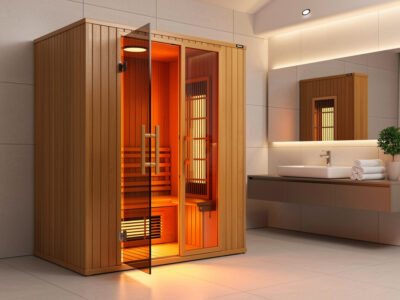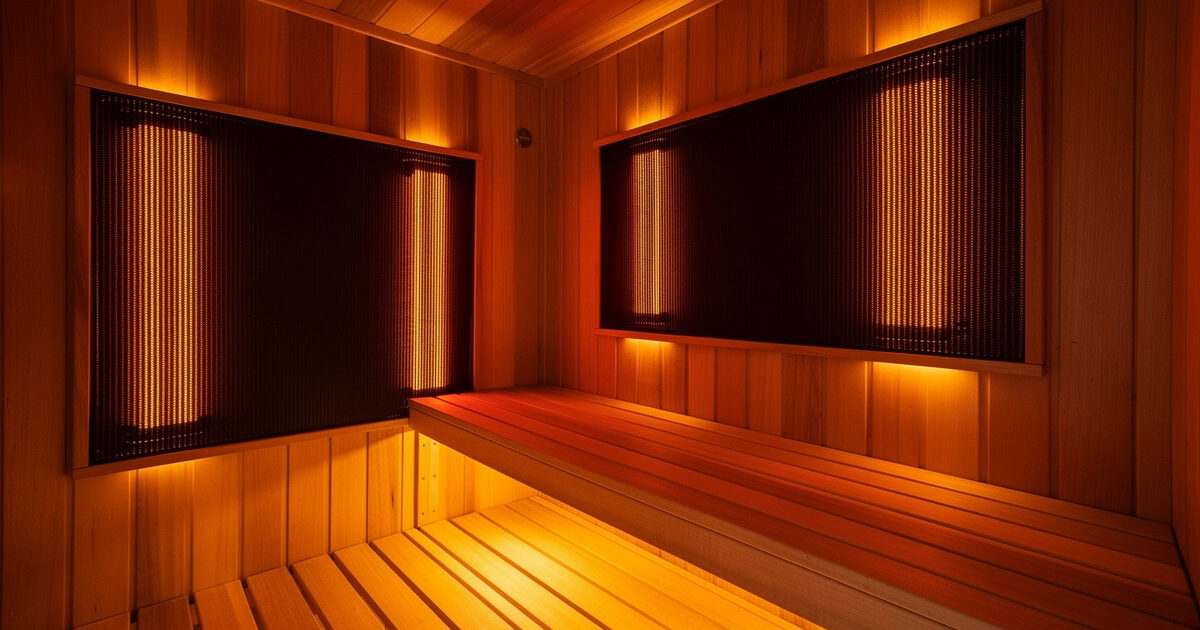
Far infrared saunas have become the most popular type of infrared sauna for good reason — they deliver the deepest heat penetration, trigger the most productive sweating, and carry the strongest body of scientific research behind them, most of it built on traditional Finnish sauna studies like the long-running Kuopio cohort (Laukkanen et al., JAMA Internal Medicine, 2015). Unlike near infrared, which works primarily on skin and surface cells, far infrared wavelengths reach deep into your body to raise core temperature, boost circulation, and activate a range of healing responses.
But what exactly does far infrared do that other heat sources cannot? This guide covers the research-backed benefits of far-infrared wavelengths, explains how they differ from other types, and gives practical guidance for getting the most from every session. I’ve run far-infrared cabins for years and metered them myself, so I’ll be straight about which benefits are genuinely strong (the cardiovascular ones), which are modest, and where the marketing gets ahead of the evidence — particularly around “detox.” Where the science is solid I’ll say so; where a claim is observational or oversold, I’ll flag it rather than let it slide.
As an Amazon Associate I earn from qualifying purchases.
What Is Far Infrared and How Does It Work?
Far infrared (FIR) refers to electromagnetic radiation with wavelengths between 3 and 1,000 micrometers, though most therapeutic saunas emit in the 5.6–15 micrometer range. This specific range is important because it closely matches the wavelengths naturally emitted by the human body — which is why far infrared is sometimes called “vital rays” in Japanese wellness research.
When far infrared waves contact your body, they are absorbed by water molecules and organic compounds in your tissues. This absorption converts the light energy directly into heat within your body — not by heating the air around you first. The result is a gentle but deep warming that starts from inside your tissues and works outward, the opposite of conventional saunas that heat the air to 150–200°F and warm you from the outside in.
This mechanism explains why far infrared saunas operate at much lower ambient temperatures (110–150°F) while still producing profuse sweating and deep physiological effects. Your body is being heated directly, making the surrounding air temperature less important. For a full comparison of heating methods, see our infrared vs traditional sauna guide.
Cardiovascular Health: The Strongest Evidence
The most compelling research on far infrared sauna benefits involves heart and circulatory health. Multiple long-term studies have demonstrated significant cardiovascular benefits from regular far infrared use.
Blood Pressure and Vascular Effects — Attributed, Not Promised
Heat causes peripheral blood vessels to dilate, reducing vascular resistance while you’re warm — that’s basic, well-established physiology. Reviews of sauna bathing and ischemic heart disease report associations between regular sauna use and cardiovascular markers including blood pressure (narrative review, sauna bathing and ischemic heart disease). This is population-level, mostly observational research — a real and interesting signal, not a personal guarantee, and not a substitute for prescribed blood-pressure treatment if you have hypertension.
Vascular Function in Heart-Failure Research — A Clinical, Not Home-Use, Context
A specific, physician-supervised protocol called Waon therapy — repeated warm-air infrared sessions used in a clinical research setting — has been studied in patients with chronic heart failure, with published research reporting improvements in exercise tolerance and endothelial function under that supervised protocol (Ohori et al., Am J Cardiol, 2012). That’s a real finding worth knowing about, but it describes a clinical intervention run by cardiologists for diagnosed heart-failure patients — not a home far-infrared cabin routine, and nobody with a heart condition should treat a home sauna as equivalent without their physician’s input.
Heart Rate Variability
Far infrared sessions temporarily elevate heart rate to roughly 100–150 beats per minute, comparable to moderate aerobic exercise — that’s a real, measurable heat-stress response. Whether repeated sessions meaningfully change heart rate variability (HRV) over time the way structured cardio training does is a much less settled question; treat any specific HRV claim as an area of ongoing research rather than a proven training effect. For more on how these benefits develop, read our complete health benefits guide.
Sweating, Honestly — Not “Deep Detoxification”
Far infrared produces a genuinely heavier, more voluminous sweat than a mild warm room. That’s real and worth knowing about — but it’s a sweat-volume difference, not evidence of a special “detoxification” mechanism, and the heading above is deliberately not calling it that.
What’s Actually in the Sweat
Regular sweat from exercise is roughly 99% water with trace amounts of salt. Peer-reviewed blood/urine/sweat comparisons have found trace, measurable levels of some other compounds in sauna sweat too (Genuis et al., Arch Environ Contam Toxicol 2011), including:
- Heavy metals: Lead, mercury, cadmium, and arsenic
- Bisphenol A (BPA): An endocrine disruptor found in plastics
- Phthalates: Industrial chemicals linked to hormonal disruption
- Persistent organic pollutants: Including some pesticide residues
Far-infrared sweating does provide a small additional elimination pathway for some of these compounds. Keep the scale honest, though: your liver and kidneys handle the overwhelming majority of detoxification, and what leaves in sweat is a minor fraction of your daily total. It’s a genuine but modest secondary route — not the body’s main exit, and nowhere near a “cleanse.”

Realistic Expectations
It is important to be honest about detoxification claims. Far infrared sweating does carry measurable trace amounts of some compounds — the research supports that narrow point. But your liver and kidneys still handle the vast majority of your body’s elimination work, full stop. Infrared sauna sweating is, at most, a minor supplementary pathway, not a replacement for healthy organ function, and it is not a “cleanse.” Be skeptical of any marketing that positions infrared saunas as a primary detox solution. For the full honest breakdown, see our detox hub.
Warmth and Comfort — Not a Pain Treatment
Far infrared heat penetrates roughly 1.5–2 inches into tissue, reaching muscles and connective tissue near the surface, and warmth on sore or stiff areas is one of the most reliably pleasant things a sauna does. Superficial heat’s role in general musculoskeletal comfort is a studied area (narrative review, heat therapy for musculoskeletal pain) — the honest summary is that heat is a reasonable, low-risk comfort measure for everyday aches, not a treatment for a diagnosed condition.
If you’re dealing with a diagnosed condition — rheumatoid arthritis, fibromyalgia, chronic low back pain, or anything else ongoing — that’s a conversation for your physician or physical therapist, who can weigh heat against your actual treatment plan. I’m not going to quote you specific week-by-week pain-reduction numbers for named conditions here; that’s exactly the kind of pseudo-clinical precision that oversells what a home sauna can honestly promise. What I can tell you is that the warmth itself is genuinely pleasant and something a lot of people build into a recovery habit — not because it’s documented to cure anything, but because it feels good and there’s little downside for a healthy adult.
Sleep — A Plausible, Not Proven, Connection
Poor sleep affects every aspect of health, and a warm sauna habit is the kind of thing that plausibly helps some people wind down — but “consistently improves sleep metrics” is a stronger claim than the evidence supports for any individual, so treat this as a reasonable habit, not a documented sleep treatment.
Temperature-Triggered Sleep Response
Your body’s circadian rhythm relies partly on core temperature changes to signal sleep readiness — a well-established piece of general sleep physiology, not specific to infrared saunas. When you exit a warm session, your core temperature begins dropping, and that decline is part of the natural cue your body uses heading into sleep. Timing a session 1–2 hours before bedtime is a reasonable way to use that natural process, though results vary by person.
Relaxation
Many regular sauna users report falling asleep faster and feeling more relaxed at bedtime after a session. That’s a genuine, widely reported subjective effect — I feel it myself — but it’s self-reported, not a measured biomarker claim, and I won’t dress it up as more than that.
Muscle Relaxation
The deep tissue warming from far infrared releases physical tension that can interfere with sleep. Tight shoulders, sore backs, and restless legs all respond to the penetrating heat, creating a physical state more conducive to deep, restorative sleep.

Immune Response — Modest and Short-Term, Not a Boost
Heat briefly nudges several immune-related responses, which is interesting but worth keeping in proportion:
- A short-term rise in white blood cells: a warm session can transiently raise circulating immune-cell counts.
- Heat-shock protein activation: these proteins help cells manage stress and may support immune-cell function.
- A modest circulation and lymph-flow boost from the warmth.
Regular users often report fewer winter colds, but that’s largely anecdotal, and a transient biomarker bump is not the same as a meaningfully stronger immune system. The honest take: there may be a small short-term effect, but a sauna is no substitute for sleep, nutrition, and the basics — and you should never use one while you have an active infection or fever.
Skin Health Benefits
While near infrared provides more targeted skin benefits through photobiomodulation, far infrared still delivers meaningful improvements to skin health through different mechanisms.
Improved Circulation to Skin
The vasodilation caused by far infrared heat increases blood flow to the skin’s surface, delivering more nutrients and oxygen to skin cells. Over time, this improved circulation can enhance skin tone, reduce dullness, and support the skin’s natural repair processes.
Deep Pore Cleansing
Sweating rinses the skin and clears some debris and sebum from pores, and a lot of people feel their skin looks clearer and brighter with a regular sauna habit. I’d keep this modest, though — it’s a nice side effect, not an acne treatment, and the “deep cleansing flushes out toxins” framing is overstated. If you have a genuine skin condition, that’s a dermatologist’s call.
Collagen Support
Far infrared heat stimulates fibroblast activity — though less intensely than near infrared light. The increased circulation also delivers more building blocks for collagen production. For dedicated skin anti-aging benefits, a full spectrum sauna with its near infrared component offers stronger results.
Metabolic and Weight Management Support
Far infrared sauna use burns calories and can support metabolic health, though realistic expectations are important.
Caloric Expenditure — Be Skeptical of Precise Numbers
Your heart works harder and your metabolism ticks up temporarily during a hot session, which does burn some extra energy — but be skeptical of any site (including sauna marketing) that quotes you a precise calorie-burn number. It varies enormously by body size, session heat, and individual physiology, and it is nowhere near what you’d burn from actual exercise. Much of the immediate weight change on the scale afterward is water weight that returns the moment you rehydrate properly — which you should.
Insulin Sensitivity
Some small studies suggest regular heat exposure may nudge insulin sensitivity — the body handling glucose more efficiently — over time. It’s a promising, unproven signal rather than a reason to expect weight loss, and a post-meal walk remains the better-evidenced move.
A Sauna Is Not a Weight-Loss Tool
Be direct with yourself here: a sauna is not a weight-management intervention. Whatever relaxation or stress-relief value it offers you personally is a fine reason to keep the habit, but treat any claim that it meaningfully changes body weight or fat through hormonal pathways as unproven marketing, not established science.
How to Maximize Far Infrared Benefits
Getting the most from your far infrared sauna involves proper preparation, session management, and consistency.
Optimal Session Guidelines
| Factor | Beginner (Weeks 1-2) | Intermediate (Weeks 3-8) | Experienced (8+ Weeks) |
|---|---|---|---|
| Temperature | 100-120°F | 120-140°F | 130-150°F |
| Duration | 15-20 minutes | 20-30 minutes | 30-45 minutes |
| Frequency | 2-3x per week | 3-4x per week | 4-5x per week |
| Hydration before | 16 oz water | 16-24 oz water | 24 oz water |
| Post-session | Cool shower, 16 oz water | Cool shower, electrolytes | Cool shower, electrolytes |
Timing Your Sessions
- For winding down before bed: 1–2 hours before bedtime
- For comfort on stiff mornings: some people prefer an early session, purely for how it feels
- Around a workout: within about 2 hours after training, if you want the warmth as part of your wind-down
- Anytime that fits your day: there’s no proven “optimal” timing for a general comfort habit — pick what you’ll actually stick to
Safety Considerations
Far infrared saunas are safe for most healthy adults, but certain precautions apply. Always hydrate before and after sessions. Avoid alcohol before sauna use. Exit immediately if you feel dizzy, nauseous, or lightheaded. People with cardiovascular conditions, pregnancy, or heat-sensitive disorders should consult their doctor before beginning far infrared therapy. For a complete safety overview, read our infrared sauna safety guide.
Choosing a Far Infrared Sauna
If you have decided that far infrared suits your health goals, here are the key factors for selecting a quality unit:
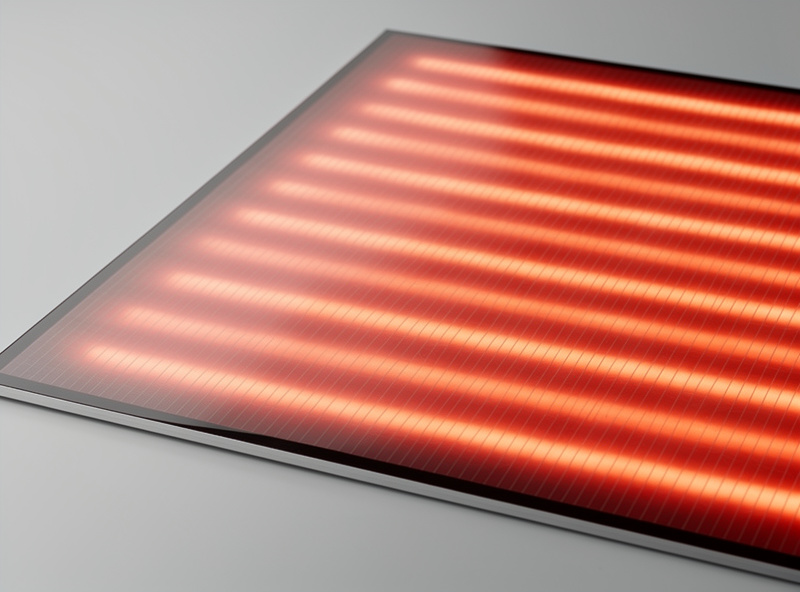
- Heater type: Carbon fiber panels provide the most even heat distribution. Ceramic heaters are cheaper but create hot spots. Carbon panels are the current standard for quality far infrared saunas.
- EMF emissions: Look for third-party-tested units with readings below about 3 milligauss at seating distance. Quality manufacturers publish these, but I keep a TriField TF2 meter by my own cabin and check the panels myself rather than trust the sticker. (Affiliate link — small commission to me at no cost to you; I only point to gear I actually use.)
- Wood construction: Canadian cedar or hemlock are preferred for durability, natural antimicrobial properties, and pleasant aroma. Avoid units with plywood or composite materials.
- Size: 1-person units start around $1,000 and work well for most people. 2-person units offer more room to stretch out and typically cost $1,500–2,500.
For detailed recommendations at every price point, our complete buying guide and budget picks under $1,000 cover everything you need to make an informed purchase. If you want the added benefits of near and mid infrared, consider a full spectrum model — though it comes at a higher price.
The equipment authority on this page is mine: the cabin I meter daily is a far-infrared unit with carbon-ceramic hybrid panels on a dedicated 16A circuit. I have logged sessions with a TriField TF2 for EMF, a thermal probe for panel surface temperature, and a kill-a-watt for kWh per session.
Frequently Asked Questions
What is far infrared and how is it different?
Far infrared is a longer wavelength that’s absorbed by your body and converted to heat from within, rather than heating the air around you first. That’s why a far-infrared cabin can run at a lower air temperature than a traditional sauna while still making you sweat — your body is being warmed directly.
Is far infrared good for your heart?
It’s the best-supported benefit. Studies have reported lower blood pressure and improved blood-vessel function with regular use, and large observational data links frequent sauna use to better cardiovascular outcomes. Read the headline statistics as associations rather than proof, and clear it with your doctor if you have a heart condition.
Does a far-infrared sauna really detox you?
Only modestly. Sweat does carry trace amounts of some metals and chemicals, but your liver and kidneys do almost all the real detox work, and sweat is a minor secondary route. Be skeptical of any marketing that positions a sauna as a primary detox solution — the genuine benefits are cardiovascular, comfort, and recovery.
Does far infrared boost your immune system?
No — treat that claim skeptically. Some research has looked at short-term changes in white blood cell counts and heat-shock proteins after heat exposure, but that is not the same as a proven, lasting immune boost. Never use a sauna while you have an active infection or fever.
What should I look for in a far-infrared sauna?
Carbon-fibre panels for even heat, third-party-tested low EMF (under about 3 milligauss at seating distance), and solid wood like cedar or hemlock rather than composite. Heater quality and measured EMF matter far more than any health claim on the box — and I’d meter a new cabin myself rather than trust the sticker.