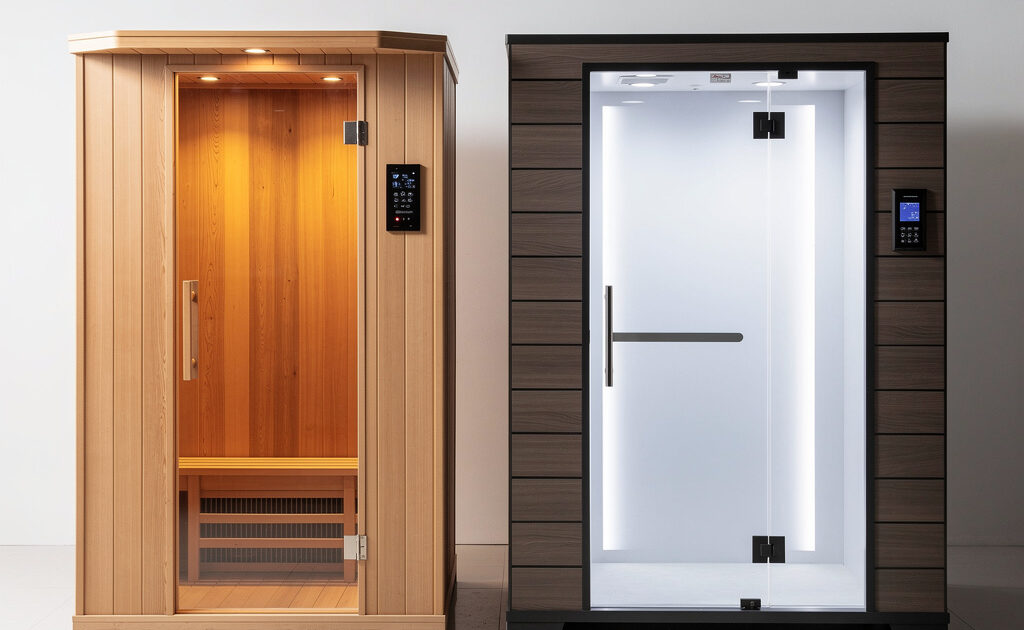
Choosing between an infrared sauna and a traditional sauna is one of the first decisions anyone considering home sauna therapy must make. Both offer legitimate health benefits backed by research, but they deliver those benefits through fundamentally different mechanisms. This comparison covers every factor you need to consider, from how each type works to which suits your specific situation best.
A quick note: a couple of links below are affiliate links — buy through one and I may earn a small commission at no extra cost to you. I only point to gear I’d actually run or meter myself. Details on my disclaimer page.
How Each Type Works: The Science of Heat
The fundamental difference between infrared and traditional saunas lies in how they transfer heat to your body.
Traditional Saunas: Convection Heat
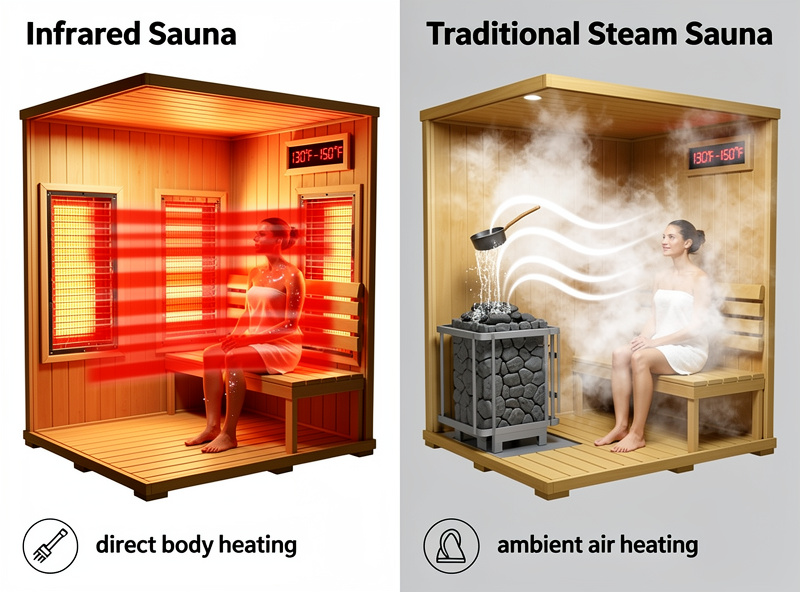
Traditional saunas, including Finnish saunas and steam rooms, heat the air inside the enclosure. This hot air then warms your body through convection — the same way an oven cooks food. The high air temperature (150-195°F) creates an environment where your body must work to maintain its core temperature, triggering the sweating and cardiovascular responses associated with sauna therapy.
Traditional saunas fall into two categories:
- Finnish-style dry saunas: Use electric heaters or wood stoves to heat stones, creating dry heat typically at 170-195°F
- Steam saunas: Add water to heated stones to create humidity, operating at slightly lower temperatures (150-170°F) but feeling more intense due to moisture
Infrared Saunas: Radiant Heat
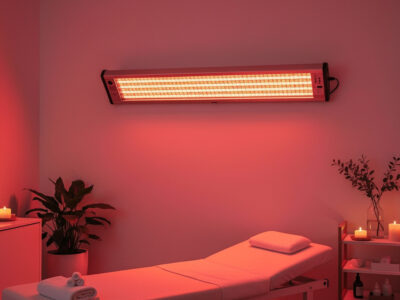
Infrared saunas bypass heating the air entirely. Instead, they emit invisible light waves in the infrared spectrum that penetrate your skin and warm your body directly. Think of how sunlight feels warm on your skin even on a cold day — that is radiant heat in action.
This direct heating method allows infrared saunas to operate at lower air temperatures (120-150°F) while still raising your core body temperature and triggering the same physiological responses as traditional saunas.
Why the Heating Method Matters
The different heating approaches create distinct experiences:
- Air quality: Infrared saunas have minimal impact on room air quality since they do not heat the air significantly. Traditional saunas can dry out air or create high humidity.
- Breathing comfort: Many people find breathing easier in infrared saunas because the air remains cooler and less humid.
- Heat penetration: Infrared waves penetrate 1.5-2 inches into tissue, potentially reaching deeper than heated air alone.
- Temperature tolerance: The lower air temperature of infrared saunas allows longer, more comfortable sessions for many users.
Side-by-Side Comparison: Every Factor You Need to Know
| Factor | Infrared Sauna | Traditional Sauna |
|---|---|---|
| Operating Temperature | 120-150°F (49-65°C) | 150-195°F (65-90°C) |
| Heating Method | Radiant heat (light waves) | Convection heat (hot air) |
| Heat-up Time | 10-15 minutes | 30-45 minutes |
| Session Duration | 20-45 minutes typical | 10-20 minutes typical |
| Humidity Level | Low (dry heat) | Variable (5-30% humidity possible) |
| Electrical Requirements | Standard 120V outlet | Often requires 240V |
| Energy Consumption | 1.5-2.5 kW | 4-9 kW |
| Monthly Operating Cost | $10-20 | $25-50 |
| Installation Type | Plug-and-play, portable options | Usually permanent installation |
| Assembly Complexity | 1-2 hours, DIY friendly | Often requires professional |
| Portability | Many models are movable | Generally fixed installation |
| Purchase Cost Range | $1,000-$6,000 | $3,000-$15,000+ |
| Wood Options | Hemlock, cedar, basswood | Cedar, aspen, hemlock, spruce |
| Social Experience | Usually 1-2 person capacity | Often 4+ person capacity |
| Maintenance | Minimal, wipe-down cleaning | Stone replacement, wood treatment |
| Cultural Tradition | Modern wellness technology | Centuries of Finnish tradition |
| Research Base | Extensive since 1970s | Extensive since 1800s |
| EMF Considerations | Varies by brand (some low-EMF) | Minimal EMF (just heating elements) |
Health Benefits Comparison
Both sauna types deliver overlapping health benefits through the common mechanism of heat stress. However, research suggests some nuances:
Cardiovascular Benefits
Both types improve cardiovascular health through similar pathways: increased heart rate, improved circulation, and enhanced vascular function. The landmark Finnish studies on sauna use and reduced cardiovascular mortality primarily involved traditional saunas, but subsequent research on infrared saunas shows comparable cardiovascular effects.
Verdict: Both types provide cardiovascular benefits. Traditional saunas have longer-term epidemiological data; infrared saunas have more recent controlled studies showing similar physiological effects.
Detoxification and Sweating
Both types induce sweating, which research confirms can help eliminate certain environmental toxins. However, infrared saunas often produce more profuse sweating at lower temperatures because the radiant heat penetrates directly into tissue, raising core temperature efficiently.
Some studies suggest the composition of sweat may differ slightly between types, though research remains limited on whether this has clinical significance.
Verdict: Infrared may have a slight edge for sweating intensity, but both support the body’s natural elimination processes.
Pain Relief and Recovery
Infrared heat penetrates deeper into tissue (1.5-2 inches) compared to heated air alone. This deeper penetration may provide enhanced benefits for muscle recovery, joint pain, and deep tissue injuries. Multiple studies on infrared therapy specifically for pain show significant benefits.
Traditional saunas provide excellent surface-level heat that relaxes muscles and reduces tension, particularly effective for stress-related muscle tightness.
Verdict: Infrared has stronger research specifically for deep pain conditions and recovery; traditional excels at general muscle relaxation.
Skin Health
Infrared saunas, particularly those with near-infrared wavelengths, deliver specific benefits for collagen production and skin rejuvenation that traditional saunas cannot match. The light wavelengths stimulate cellular energy production and support tissue repair.
Traditional saunas improve skin through enhanced circulation and pore cleansing from sweating, but lack the specific photobiomodulation effects of infrared light.
Verdict: Infrared clearly superior for skin health due to wavelength-specific effects.
Respiratory Benefits
Steam saunas (a subset of traditional saunas) have documented benefits for respiratory conditions. The moist heat can help clear airways and may benefit people with asthma, bronchitis, or sinus issues.
Infrared saunas provide dry heat that some people with respiratory sensitivities prefer, but lack the specific moisture-related respiratory benefits of steam.
Verdict: Traditional steam saunas superior for respiratory conditions; infrared better for those sensitive to humidity.
Stress and Mental Health
Both types effectively reduce stress through heat-induced endorphin release, cortisol reduction, and the meditative quality of sauna sessions. The cultural and social aspects of traditional sauna bathing — the löyly ritual, social bonding, and intentional relaxation — may provide additional psychological benefits for some users.
Verdict: Tie — both provide comparable physiological stress relief. Traditional may offer additional cultural/social benefits depending on individual preferences.
Practical Considerations: Installation and Use
Space Requirements
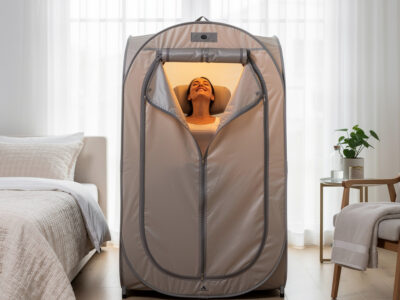
Infrared: Highly flexible. Units range from compact 1-person models (3×3 feet) to larger family sizes. Many are designed to fit in bedrooms, bathrooms, or closets. Portable options exist for apartment dwellers.
Traditional: Generally requires dedicated space. Minimum recommended size is larger due to higher temperatures and the social nature of traditional bathing. Usually installed in basements, dedicated sauna rooms, or outdoor structures.
Electrical Requirements
Infrared: Most 1-2 person units plug into standard 120V outlets (15-amp circuit). Larger 3-4 person units may need 240V but still have lower total power requirements than traditional saunas.
Traditional: Almost always requires 240V with dedicated circuits. Electric heaters draw 4-9 kW, often requiring professional electrical work and potentially panel upgrades.
Operating Costs
Infrared: Approximately $10-20 per month with regular use (3-4 sessions per week). The lower temperature and faster heat-up time translate to lower energy consumption.
Traditional: Approximately $25-50 per month with regular use. Higher power draw and longer heat-up periods increase costs significantly.
Maintenance
Infrared: Minimal maintenance. Regular wiping with mild cleaner, occasional wood conditioning, and keeping the unit dry between uses. No water or stones to manage.
Traditional: More involved. Stone replacement every few years, wood sealing and treatment, water management for steam, and potential mold/mildew prevention in high-humidity environments.
Who Should Choose Infrared
Infrared saunas are the better choice if you:
- Have limited space: Can fit in bedrooms, bathrooms, or apartments
- Want plug-and-play installation: No professional electrical work needed for most units
- Prioritize convenience: Heat up in 10-15 minutes, use anytime
- Seek specific therapeutic benefits: Deep tissue penetration, skin health, recovery
- Prefer lower temperatures: Find traditional sauna heat overwhelming
- Have budget constraints: Quality cabins start around $1,000, and a far-infrared sauna blanket gets you the sweat response for far less if you just want to try the format first
- Live in an apartment or rental: Portable options that move with you
- Want longer sessions: Comfortable 30-45 minute sessions vs. 10-20 minutes in traditional
- Have respiratory sensitivities: Dry heat is easier for some people to breathe
- Plan to use it solo: Most models designed for 1-2 person use
Who Should Choose Traditional
Traditional saunas are the better choice if you:
- Value cultural authenticity: Appreciate the Finnish sauna tradition and ritual
- Want a social experience: Larger capacity for family and friends
- Have respiratory conditions: Steam benefits for asthma, sinus issues, bronchitis
- Enjoy intense heat: Prefer the 180-195°F experience
- Have outdoor space: Can install in a separate sauna house or cabin
- Plan permanent installation: Building a dedicated wellness space
- Want the löyly experience: The ritual of water on hot stones creates unique atmosphere
- Live in a cold climate: Traditional saunas align with Nordic wellness culture
- Have larger budget: Investing in a long-term home feature
- Prioritize proven longevity data: Finnish studies on lifespan benefits
Who Should Consider Both
Some wellness enthusiasts choose to have access to both types:
- People with specific health needs: Infrared for chronic pain, traditional for respiratory issues
- Luxury home setups: A traditional sauna for social gatherings, infrared for daily personal use
- Wellness professionals: Offering clients both experiences
- Spa or gym owners: Providing variety for different preferences
Hybrid and Combination Options
The market has evolved to offer hybrid solutions that blur the lines between categories:
Full-Spectrum Infrared Saunas
These combine far, mid, and near-infrared to deliver broader benefits. Some users find these provide a more “complete” experience similar to traditional saunas while retaining infrared advantages.
Traditional Saunas with Infrared Add-ons
Some high-end traditional saunas now include infrared panels alongside conventional heaters, offering both experiences in one unit.
Steam Capability in Infrared Units
A few hybrid models claim to offer both dry infrared heat and steam capabilities, though these are less common and may compromise on both experiences.
Cost Analysis: 5-Year Ownership
When evaluating cost, look beyond the purchase price:
Infrared Sauna: 5-Year Cost
- Purchase price (mid-range): $2,500
- Installation: $0 (DIY) to $200 (electrical)
- Operating costs (4x/week): $15/month × 60 months = $900
- Maintenance: $100 over 5 years
- Total 5-year cost: $3,500-3,700
Traditional Sauna: 5-Year Cost
- Purchase price (mid-range): $6,000
- Installation: $1,000-3,000 (electrical, construction)
- Operating costs (4x/week): $35/month × 60 months = $2,100
- Maintenance (stones, wood treatment): $300 over 5 years
- Total 5-year cost: $9,400-11,400
Making Your Decision: A Decision Framework
If you are still unsure, answer these questions:
- Where will you put it? If space is tight or you rent, choose infrared.
- What is your budget? Under $2,500 total cost strongly favors infrared.
- Who will use it? If you want social/family use, traditional may be better.
- What benefits matter most? For deep pain/skin, choose infrared. For respiratory, choose traditional steam.
- How often will you use it? Daily users benefit from infrared convenience; occasional users might prefer traditional experience.
- What temperatures can you tolerate? If you dislike intense heat, infrared is more comfortable.
- Do you value tradition or convenience? Traditional for ritual, infrared for ease.
The Verdict
Neither infrared nor traditional saunas are objectively “better.” They serve different needs, preferences, and situations. I will add the Nordic view here, since I get asked: I grew up around traditional Finnish-style sauna and now run an infrared cabin at home through Swedish winters, and they genuinely are different rituals. Traditional loyly is a social, eyes-watering blast of heat; infrared is the quiet, lower-temperature session I can drop into on a Tuesday night and still function afterward. Neither replaces the other — they answer different questions.
Choose infrared if: You want convenience, lower costs, specific therapeutic wavelengths, space flexibility, or prefer lower temperatures. For most modern homeowners, especially those new to sauna therapy, infrared represents the more accessible entry point. One infrared-specific caveat a traditional sauna does not have: EMF varies by brand, so if that matters to you it is worth checking your unit with a TriField TF2 meter — a properly built low-EMF cabin reads near a milligauss, and you only know yours does once you have metered it.
Choose traditional if: You value cultural authenticity, want social/family use, have respiratory needs that benefit from steam, or are building a dedicated wellness space with a larger budget.
Whichever you choose, the research is clear: regular sauna bathing, of either type, supports cardiovascular health, reduces stress, aids recovery, and enhances overall wellbeing. The best sauna is the one you will actually use consistently.
Next Steps
Ready to explore specific options? Read our guide to the best infrared saunas for home use or learn about which infrared wavelength type matches your goals. For budget-conscious buyers, see our recommendations for quality saunas under $1,000.
Already decided on infrared? Our home setup guide will help you prepare your space, and our safety guide ensures you use it correctly.
Frequently Asked Questions
What is the difference between infrared and traditional saunas?
Infrared saunas heat your body directly using light waves at 120-150°F, while traditional saunas heat the air to 150-195°F. Infrared saunas warm up faster, cost less to operate, and allow longer sessions at lower temperatures.
Which type of infrared sauna is best?
Far infrared saunas are the most popular and well-researched option for beginners. Full spectrum saunas combine near, mid, and far infrared for comprehensive benefits but cost 30-50% more. For most users, far infrared provides the best value.
How long do infrared sauna sessions last?
Beginners should start with 15-minute sessions at 120°F and build up to 25-45 minutes over several weeks. Most research supporting health benefits used 25-45 minute sessions, 3-4 times per week.
Can I use an infrared sauna every day?
Yes, daily use is safe for most healthy adults. Research shows benefits compound with regular use. Stay hydrated, limit sessions to 45 minutes, and take rest days if you feel fatigued or dehydrated.
What should I look for when buying an infrared sauna?
Key factors include heating technology (carbon fiber panels preferred), EMF levels (look for third-party testing), wood quality (Canadian hemlock or cedar), warranty (minimum 5 years on heaters), and size matching your available space and user count.