
If there’s one area where sauna science is genuinely strong rather than hopeful, it’s the heart. Large, long-running Finnish cohort studies link regular sauna use with better cardiovascular outcomes, and trials and a systematic review (PubMed 29849692) have measured modest blood-pressure reductions from consistent sessions. The honest framing, though: “modest” and “adjunct” are the key words. A sauna may gently support healthy blood pressure alongside real treatment — it is not a substitute for your medication, and it cannot match what your pills do. Anyone telling you it replaces a blood-pressure drug is giving you advice that could land you in trouble.
I find this research genuinely compelling — as a Swedish-winter sauna owner, the cardiovascular data is the part that’s hard to dismiss as wellness fluff. But I’m not a cardiologist, so I’ll keep to what I can defend: what the studies actually found, where the evidence is solid and where it’s softer, and the safety lines that matter. Nothing here is medical advice. This sits in the health conditions cluster; the broader heart picture is in the cardiovascular benefits article.
The Finnish Data — Strong, but Read It Correctly
The headline comes from the Kuopio Ischaemic Heart Disease (KIHD) study, which followed more than 2,000 middle-aged Finnish men for around two decades. Men who used a sauna 4–7 times a week had markedly fewer fatal cardiovascular events and lower all-cause mortality than once-a-week users (Laukkanen et al., JAMA Internal Medicine, 2015). That’s a serious, peer-reviewed finding, and it’s why sauna gets taken seriously in cardiology at all.
Two honest caveats keep it in the grey zone. First, it’s an observational cohort — it shows a strong association, not proof that sauna caused the benefit, and frequent sauna users may simply be healthier or more relaxed people to begin with. Second, KIHD studied hot Finnish steam saunas, not infrared cabins. The cardiovascular load looks broadly similar when an infrared session runs long enough to raise core temperature comparably — infrared trades intensity for duration — but you’re extrapolating across sauna types, and that’s worth being upfront about rather than papering over.
How Heat May Nudge Blood Pressure Down
The mechanism is plausible and the same one behind a lot of cardiovascular fitness, which is exactly why it’s believable and also why it’s no miracle:
Endothelial training. Each session’s flush of blood to the skin gently exercises the lining of your blood vessels. Over weeks, that’s associated with improved flow-mediated dilation — and better endothelial function tends to lower vascular resistance. It’s a similar adaptation to what gentle aerobic exercise produces.
Less arterial stiffness. Regular sessions are associated with improvements in arterial stiffness measures over a couple of months, echoing what moderate exercise does. Suppler arteries mean a smaller systolic spike and less strain on the heart.
A calmer baseline. The relaxed, parasympathetic state after a session, repeated over time, seems to shift resting tone slightly — a little lower resting heart rate, a little less of the constant vasoconstriction that feeds high blood pressure.
A Sensible Routine
The studies cluster around moderate sessions several times a week, built up gradually rather than jumped into — and if you’re managing hypertension your doctor should sign off before you start, because several common blood-pressure medications change how your body handles heat. The general on-ramp I walk any new sauna owner through lives in the beginner schedule; the frequency-and-duration thinking beyond that is in the how-often guide. Neither is a prescription — your care team sets your real numbers if you medicate.
For most people a few sessions a week captures the bulk of the benefit; chasing the daily Finnish frequency roughly doubles the time for a small extra margin. Electrolytes after every session matter more here than usual, because of the medication angle below.
Blood-Pressure Medications — A Doctor Conversation
Nearly everyone using a sauna for blood pressure is already on at least one medication, and heat genuinely interacts with several of them — which is the single best reason to loop in your doctor before starting rather than after:
- Diuretics already pull fluid and electrolytes; add a sauna and dehydration risk climbs. Your doctor may want to keep an eye on this.
- Beta-blockers blunt the normal heart-rate rise, so don’t use your pulse to judge how hard a session is — go by how you feel and how much you’re sweating.
- Calcium-channel blockers and alpha-blockers add their own vessel-relaxing effect on top of the sauna’s, which can drop your blood pressure when you stand up after a session — so cool down and stand slowly.
The non-negotiable: never adjust an antihypertensive based on how a sauna makes you feel. Any blood-pressure benefit takes weeks to settle in, and pulling a medication early can cause a dangerous rebound. Medication changes are your physician’s call, made on real readings, not on a hot session that felt good.

When a Sauna Is Not Safe for Your Heart
This is the part I’d actually want a heart patient to read twice. For some cardiovascular conditions, heat is genuinely risky, and these warrant clearing with a cardiologist first — or avoiding entirely:
- A recent heart attack — wait for explicit cardiologist clearance.
- Unstable angina — stabilize first.
- Severe aortic stenosis — heat-driven vasodilation can drop preload to an unsafe level.
- Decompensated heart failure — heat stress can destabilize an already-struggling system.
- Uncontrolled arrhythmia — the heart-rate load can unmask other rhythms.
- An implanted defibrillator — not an automatic no, but a conversation with your cardiologist first.
For people with stable, well-managed heart disease, cardiology opinion has actually warmed to sauna as a reasonable adjunct — but “stable and cleared by my cardiologist” is doing all the work in that sentence. More context is in the cardiovascular benefits article.

My Honest Bottom Line
Here’s how I actually hold all this in my own head. The cardiovascular research is the most legitimate reason I keep a sauna habit through the dark half of the Swedish year — it’s real epidemiology, not a supplement ad. But I treat it as one healthy habit sitting alongside the others that matter more and are better proven: moving every day, sleeping properly, eating like an adult, and taking whatever my doctor prescribes exactly as prescribed. The sauna is a pleasant, plausibly heart-friendly bonus on top of that foundation — not a shortcut that lets me skip any of it. If you’re tempted to think of a cabin as a way to dodge a blood-pressure prescription, that’s the one conclusion the evidence absolutely does not support, and the one that could genuinely hurt you. Used the right way — as a relaxing habit layered onto good basics and good medical care — a sauna is one of the more enjoyable things on the “probably good for your heart” list, and that’s a perfectly good reason to own one without needing it to be more than that.
Related Guides
- Cluster hub: Infrared Sauna for Health Conditions
- Cardiovascular, Immune, and Mental Wellness Benefits
- Infrared Sauna and Type 2 Diabetes
- How Often to Use an Infrared Sauna
- Infrared Sauna Safety Guide
Frequently Asked Questions
Does an infrared sauna lower blood pressure?
It may, modestly. Trials have reported small reductions in systolic blood pressure over several weeks of regular use, and large observational studies link frequent sauna use with better cardiovascular outcomes. Treat it as gentle support alongside real treatment, never as a replacement for blood-pressure medication.
Is a sauna safe with blood-pressure medication?
Often yes, but clear it with your doctor first, because heat interacts with several of these drugs. Diuretics raise dehydration risk, beta-blockers blunt your heart-rate response, and vessel-relaxing drugs can drop your pressure when you stand up. Never adjust medication on your own.
How quickly does a sauna affect blood pressure?
There is usually a short-lived dip right after a session as your vessels are dilated, but that is temporary. Any meaningful change in your baseline takes weeks of consistent use to settle in — and it is modest even then.
Can a sauna replace my blood-pressure pills?
No, and this is important: never reduce or stop an antihypertensive based on sauna use. Any benefit is modest and slow to build, and stopping medication early can cause a dangerous rebound. Medication decisions belong to your physician, based on real readings.
Should I check my blood pressure around sauna use?
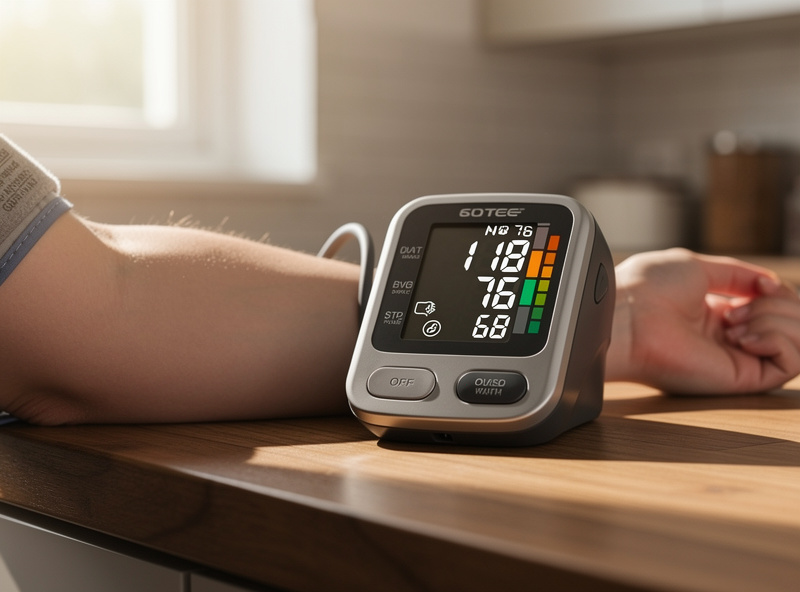
It is sensible to know your numbers, and you should not sauna during a hypertensive crisis or when your pressure is very high and uncontrolled — get that managed first. Beyond basic common sense, let your doctor guide any monitoring rather than self-managing from a blog.
How often should I use a sauna for heart health?
The studies cluster around several moderate sessions a week, and four a week captures most of the benefit for most people. The Finnish data associated 4-7 weekly sessions with the best outcomes, but that was observational, so read it as encouraging rather than a guarantee.
Which cardiovascular conditions make a sauna unsafe?
A recent heart attack, unstable angina, severe aortic stenosis, decompensated heart failure, and uncontrolled arrhythmia are situations to avoid heat or clear with a cardiologist first. An implanted defibrillator needs a cardiologist conversation. Stable, well-managed heart disease is increasingly viewed as compatible with cleared, conservative use.