If you are choosing between an infrared sauna and the alternatives, here is the short version from my own bench: infrared heats you with radiant panels at a 45–60°C air temperature, while a traditional sauna, steam room, or hot tub heat the air or water around you and run far hotter or wetter. That single difference—radiant body heating versus convective room heating—drives every other gap in comfort, electricity bill, install effort, and the EMF reading on my meter.
I run a low-EMF far-infrared cabin through Sweden’s long winters, and over the years I have lived with a full-spectrum unit, a single-person carbon cabin, and a portable infrared blanket side by side. I have metered the EMF off every heater type, logged the kWh each session pulls, and wired the dedicated circuit that feeds the main cabin. This guide is the map I wish I had before I bought—each comparison links to the deeper article where I break the numbers down, so use it as a hub and dive where you need to.
How I Compare Heat Sources (the bench, not the brochure)
Every comparison on this page comes off the same bench, measured the same way, so the verdicts are consistent rather than vibes. The difference between infrared and its alternatives is not marketing—it is physics you can read on instruments, and that is where I start.
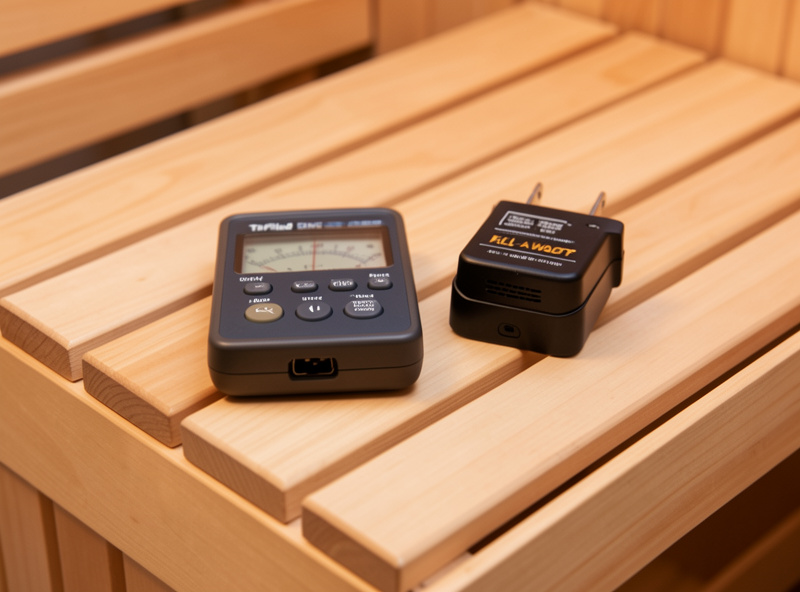
My measurement kit is boring on purpose: a TriField TF2 for magnetic field, electric field, and RF (with a cheaper acoustimeter as a cross-check), an IR thermometer and a small thermal camera for panel surface temperature and cold-spot mapping, a plug-in kill-a-watt energy meter for real kWh per session, and a digital hygrometer for room humidity. When I say an infrared cabin runs at 50°C and a steam room runs near 45°C at 100% humidity, those are felt-heat realities, not spec-sheet wattage games. The thing most buyers never run is the energy meter—and that is the number that decides whether a unit earns its place over a decade.
One rule frames the whole site: I talk with full authority about equipment, heat performance, EMF, install, and cost, and I treat the health side as studied and reported, never as something the heat will do for you. Heat physics I can measure. Therapeutic outcomes I cannot, so I will point you at what the research community reports and stop there.
Infrared Sauna vs Traditional Sauna
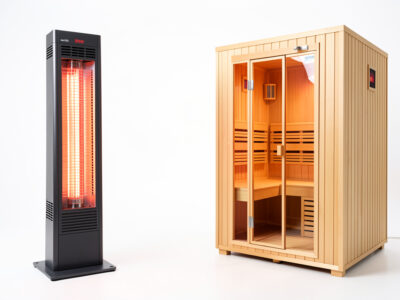
The core split: an infrared cabin warms your body directly with far-infrared panels in a 45–60°C room, while a traditional Finnish sauna heats the air to 70–100°C and you feel it through convection plus optional steam from water on the stones. Infrared feels gentler at a lower air temperature because the radiant energy reaches you, not just the air.
That changes everything downstream. A traditional electric sauna heater is typically a 6–9 kW resistive unit that wants a 240V dedicated circuit and a long preheat; my far-infrared cabin draws roughly 1.6–1.7 kW and is session-ready in 10–15 minutes off a single dedicated 16A circuit. Traditional saunas reward you with that dry-then-steamy heat ritual and a higher peak temperature; infrared rewards you with lower running cost, easier install, and a milder session that is easier to sit through for longer. I cover the full head-to-head—ramp time, electricity, install, and felt heat—in the dedicated infrared sauna vs traditional sauna comparison.
Infrared Sauna vs Steam Room
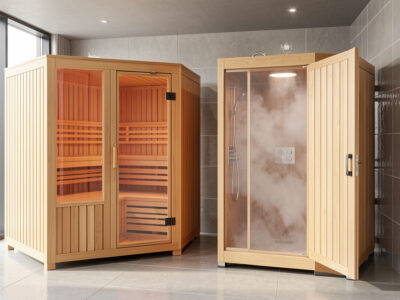
An infrared sauna gives you radiant dry heat at 45–60°C and near-zero added humidity, while a steam room runs cooler air—around 40–45°C—but at 100% relative humidity, which is what makes it feel hot and heavy. They are opposite environments that people lump together because both make you sweat.
The engineering gap is enormous. A steam room needs a sealed, fully waterproofed enclosure, a steam generator plumbed to water, sloped surfaces, and aggressive ventilation to manage condensation—it is a building project. An infrared cabin is a freestanding box you assemble in an afternoon and plug into one circuit; the only moisture is your own sweat, so mould risk and material maintenance are far lower. If you want the wet, enveloping heat and have the plumbing and waterproofing budget, steam wins on experience. If you want low-hassle radiant heat in an apartment or spare room, infrared wins on practicality. I walk through humidity, install, and upkeep in the infrared sauna vs steam room guide.
Infrared Sauna vs Hot Tub
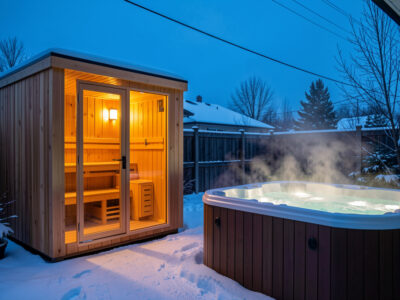
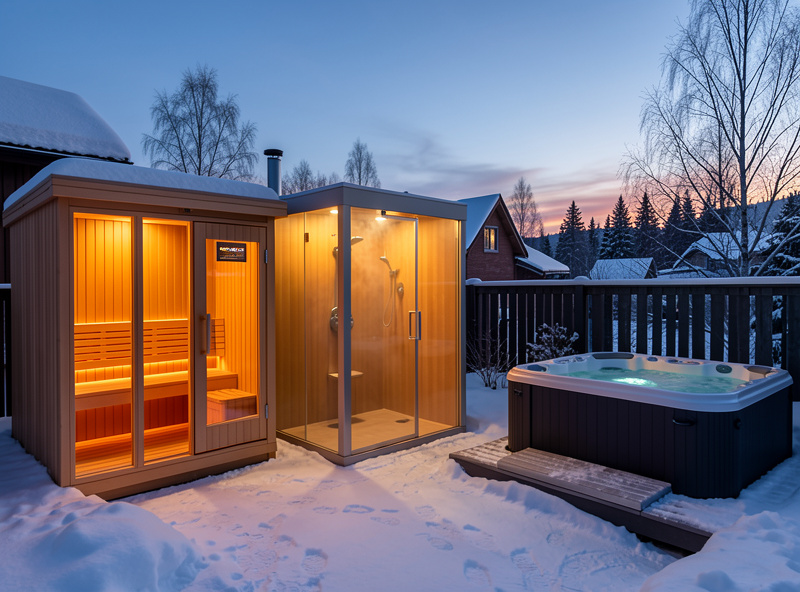
These two barely belong in the same comparison except that buyers cross-shop them as “the home wellness purchase.” A hot tub is 1,500 litres of water held at 37–40°C with a pump, filter, and chemistry to manage; an infrared sauna is a dry radiant box with no water, no chemicals, and a fraction of the standby energy draw.
The cost shapes are completely different. A hot tub’s purchase price can look comparable to a mid-range sauna, but the hot tub keeps drawing power to hold water temperature 24/7 and adds chemicals, filter changes, and water replacement to the running bill; my kill-a-watt logs put an infrared session in the low single-digit kWh range with zero standby load between sessions. A hot tub gives you buoyancy, social soaking, and outdoor relaxation that a sauna cannot; an infrared cabin gives you a high-heat dry session indoors with almost no ongoing maintenance. The full breakdown—standby power, chemistry, maintenance hours—is in the infrared sauna vs hot tub comparison.
Infrared Sauna vs Red Light Therapy
This is the comparison with the most confusion, because both use parts of the infrared spectrum—but they are doing different jobs. An infrared sauna’s panels are heat emitters tuned mostly to far-infrared (roughly 3–1000µm) to warm your whole body; red light therapy uses visible red (around 630–660 nm) and near-infrared (around 810–850 nm) LEDs at intensities meant to deliver light to tissue, not to cook the room.
Put simply: a sauna is about whole-body heat, red light is about targeted light dosing, and they barely overlap in hardware. A genuine red light therapy panel will not heat a room, and an infrared sauna’s far-infrared panels are not delivering a measured near-infrared light dose—which is exactly why a “full-spectrum” sticker that just adds one weak near-infrared bulb is mostly marketing. The wavelength bands, the hardware, and what each is actually built to do are all laid out in the existing red light vs infrared sauna deep dive, and the band hardware itself in near, mid and far infrared heaters.
Sauna Blanket vs Infrared Cabin
A sauna blanket is an infrared heating mat you zip yourself into; an infrared cabin is a walk-in box you sit upright in. Both use carbon or carbon-fiber heating elements and both heat your body, but the experience, the EMF picture, and the price gap are wide. A blanket can cost a tenth of a cabin and stores in a closet.
The trade-offs are real. A blanket wraps the heat tight against your skin, so it can feel intense fast, but you are lying still, your head is outside, and you cannot move—and because the heating elements are inches from your body, EMF positioning matters more than with a cabin where the panels sit a foot or two away. A cabin gives you upright posture, room to move, easier breathing of warm air, and panels you can route for low EMF, at the cost of floor space, install, and a much higher price. If budget or space is the constraint, a blanket is a legitimate entry point; if you want a daily ritual you will keep for years, the cabin earns it. The existing sauna blanket vs cabin comparison runs the full trade, and if a blanket is where you are starting, the best infrared sauna blankets roundup covers picks.
Portable vs Fixed Infrared Sauna
Portable here means anything you can move and store—blankets, fold-up tents, and pop-up boxes with your head out—while fixed means a wired or plug-in cabin that lives in one spot. The decision is really about commitment: a portable unit asks for almost nothing (a plug, a corner, a few minutes of setup) and a fixed cabin asks for floor space, sometimes wiring, and a permanent home.
Portables win on price, storage, and renting-friendliness; fixed cabins win on comfort, even heat, lower felt-EMF when the panels are well-routed, and longevity. The cold spots and heat-up unevenness I map with my thermal camera are far more pronounced in a tent than in a properly built cabin, and a fixed unit on its own circuit is the one I reach for daily. But if you move often or share a small space, a portable is the honest pick. The decision framework—space, power, who it suits—is in the portable vs fixed infrared sauna guide, and the portable formats themselves in portable infrared sauna: blankets, tents, and boxes compared.
The Whole Comparison in One Table
Here is how the main heat options line up on the metrics that actually decide a purchase—air temperature, humidity, typical power draw, install effort, and the EMF question. These figures reflect my own bench and typical home units, not any single brand.
| Option | Air temp | Humidity | Typical power | Install effort | EMF concern |
|---|---|---|---|---|---|
| Far-infrared cabin | 45–60°C | Low (sweat only) | 1.5–2.5 kW | Assemble + 1 circuit | Manageable, measurable |
| Full-spectrum cabin | 45–65°C | Low | 2–3 kW | Assemble + 1 circuit | NIR emitter adds a signature |
| Traditional sauna | 70–100°C | Low to steamy | 6–9 kW | 240V dedicated circuit | Low (heater is resistive) |
| Steam room | 40–45°C | 100% | Generator + plumbing | Waterproof build project | Low |
| Hot tub | 37–40°C water | Wet | Standby 24/7 | Pad, power, chemistry | Low |
| Infrared blanket | Body contact | Low | 0.2–0.6 kW | Plug and unroll | Higher—elements touch you |
EMF: The Comparison Almost Nobody Else Runs
This is where infrared comparisons usually go quiet, because measuring it takes a meter and the willingness to report what you find. On my TriField, the magnetic field off a well-built low-EMF far-infrared panel reads low at sitting distance, while a cheap cabin with poorly routed wiring or stacked heaters reads noticeably higher—and a blanket, with elements inches from your torso, is the format where positioning matters most.
The key distinction buyers miss is that EMF in a sauna has more than one source: the heating elements, the supply wiring, and the controller each contribute, and they are not the same kind of field. Magnetic field and electric field behave differently, drop off differently with distance, and respond differently to shielding and grounding. A “low-EMF” sticker tells you what the maker measured under their conditions, not what you will read in your install. That is why I tell people to meter their own unit rather than trust the label—I walk through exactly how in how to measure infrared sauna EMF with a TriField meter, what the label actually means in low-EMF infrared sauna, and the two-different-problems framing in ELF vs RF in an infrared sauna. If you want to do this yourself, an entry-level meter like a TriField EMF meter is the single most useful tool you can own as an infrared owner.
As an Amazon Associate I earn from qualifying purchases.
Running Cost Per Session, Compared
The purchase price is the headline; the electricity bill is the decade-long story. My kill-a-watt logs put a far-infrared session in the low single-digit kWh range—a fraction of what a 6–9 kW traditional sauna pulls over a longer preheat, and nothing compared to a hot tub holding water temperature around the clock. Across heater types I have lived with, infrared is consistently the cheapest dry-heat option to run.
That is the comparison most buyers never run before they buy, and it flips a few decisions. A hot tub that looks affordable to purchase can cost more to keep warm than a sauna costs to run, because standby load never stops. A traditional sauna’s higher wattage and longer ramp add up if you use it daily. I break the real numbers—per session, per month, and against a gym membership—in the infrared sauna electricity cost article, the full ownership picture in the infrared sauna cost guide, and the break-even versus a spa in home sauna vs gym or spa cost. A plug-in energy meter is how I measure mine—under twenty dollars and it ends the guessing.
Maintenance and Longevity, Compared
The option that is cheapest to keep alive is rarely the one buyers picture. An infrared cabin is mostly dry wood and panels: wipe down sweat, keep ventilation flowing so it dries out, and the heaters themselves are long-lived solid-state elements with no moving parts. There is no water chemistry, no filter, no pump to fail.
That is the quiet advantage over the wet options. A hot tub demands water testing, chemical dosing, filter cleaning, and periodic water changes—hours a month, every month. A steam room’s constant condensation is a standing fight against mould and material breakdown that the waterproofing and ventilation have to win continuously. Even a traditional sauna with water on the stones puts more moisture through the wood than an infrared cabin ever sees. In my own cabin the maintenance is closer to dusting a bookshelf than servicing a pool, and that is a big reason it has stayed in daily use across winters rather than becoming a neglected box. I cover keeping a cabin running for the long haul in the infrared sauna maintenance guide and what one holds over time in the resale value breakdown. The dry-heat, low-upkeep profile is also why a cabin tends to keep its value better than a hot tub that has aged through years of chemistry.
So Which Should You Actually Buy?
Strip away the marketing and the decision comes down to four questions: how much space and wiring you can commit, how the heat needs to feel, how much you will spend over a decade, and how much maintenance you tolerate. Infrared wins for most home buyers who want low-hassle, low-cost dry heat indoors—but it is not the only right answer.
Choose a far-infrared cabin if you want a daily indoor ritual with the lowest running cost and the easiest install. Step up to full-spectrum only if you specifically want a near-infrared band and you have verified the emitter is real, not a sticker. Choose a traditional sauna if the high-heat, steam-on-stones ritual is the point and you have the 240V circuit. Choose a steam room if wet heat is non-negotiable and you can fund the waterproof build. Choose a hot tub if buoyancy and social soaking matter more than dry heat, and you accept the standby power and chemistry. Choose a blanket or portable if budget, space, or mobility rule out a cabin. Whatever you pick, the engineering checks—circuit sizing, ventilation, EMF—are the same ones I run in the installation requirements guide, the ventilation guide, and the heater-type breakdown in carbon vs ceramic infrared sauna. New to all of it? Start with how to use an infrared sauna and the type primer in near vs far vs full spectrum.
Frequently Asked Questions
Is an infrared sauna better than a traditional sauna?
Neither is universally better. Infrared heats your body directly at 45 to 60C with much lower running cost and easier install, while a traditional sauna gives higher peak heat at 70 to 100C and the steam ritual but needs a 240V circuit and longer preheat. Pick by the heat feel and install you can commit to.
Does an infrared sauna use less electricity than a hot tub?
Yes, by a wide margin over time. An infrared session draws power only while you use it, typically a few kWh, while a hot tub holds 1,500 litres of water at temperature 24/7 plus pump and chemistry. Standby load is what makes a hot tub the more expensive option to keep running.
Is infrared sauna the same as red light therapy?
No. An infrared sauna uses far-infrared heat emitters to warm your whole body, while red light therapy uses visible red and near-infrared LEDs around 630 to 850 nm to deliver light to tissue, not heat to a room. A full-spectrum sticker that adds one weak near-infrared bulb is not a true red light panel.
Which infrared option has the most EMF?
A sauna blanket tends to read highest because its heating elements sit inches from your body, while a well-built low-EMF cabin keeps panels a foot or more away. EMF comes from the heaters, the wiring, and the controller, so the only reliable answer is to meter your own unit with a TriField rather than trust the label.
Can I put an infrared sauna in an apartment?
Usually yes. A far-infrared cabin is a freestanding box that plugs into a standard or single dedicated circuit, adds almost no humidity, and assembles in an afternoon, which makes it far more apartment-friendly than a steam room or hot tub. Check your circuit capacity and clearances first.
Is a sauna blanket worth it compared to a cabin?
As an entry point, yes. A blanket can cost a tenth of a cabin, stores in a closet, and delivers contact heat, but you lie still with your head outside and EMF positioning matters more. A cabin earns its price if you want a daily upright ritual you will keep for years.