The short answer from my bench: an infrared sauna gives you dry radiant heat at 45–60°C with near-zero added humidity, while a steam room runs cooler air around 40–45°C but at 100% relative humidity. Both make you sweat hard, but they are opposite environments—one heats your body directly, the other wraps you in saturated wet air.
People cross-shop these two because both live under the “heat therapy” umbrella, but as someone who runs a far-infrared cabin through Swedish winters and has spent enough time in commercial steam rooms to know the difference in my lungs, I can tell you they feel nothing alike and they cost nothing alike to build or run. This is the comparison that decides whether your spare room becomes a plug-in box or a plumbing project.
Dry Radiant Heat vs Saturated Wet Air
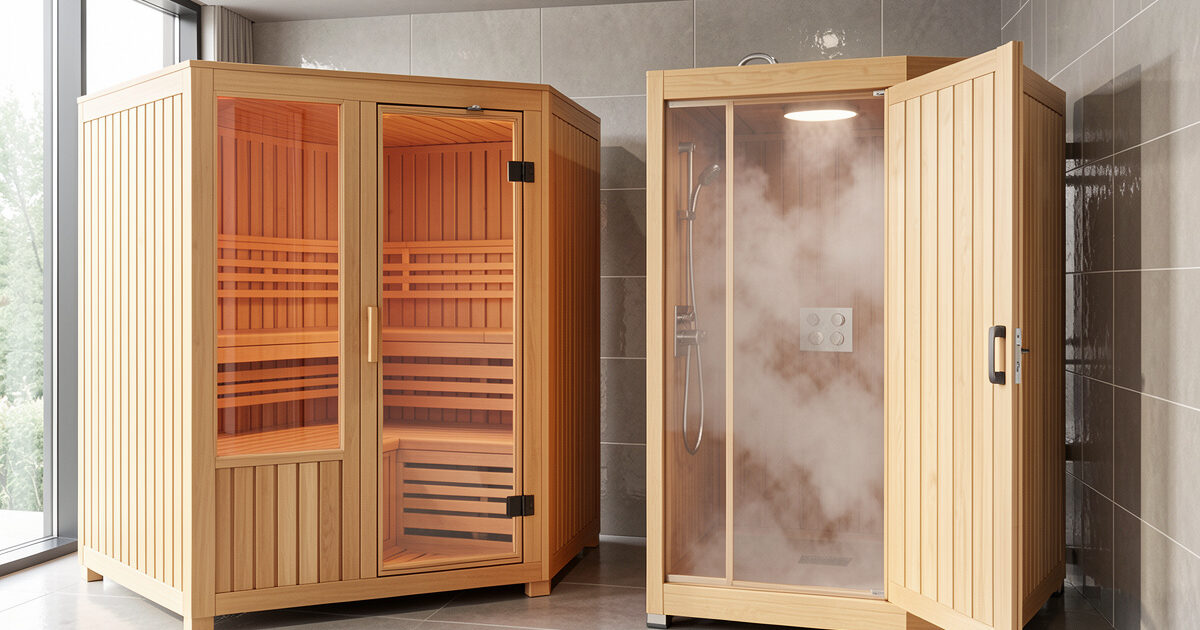
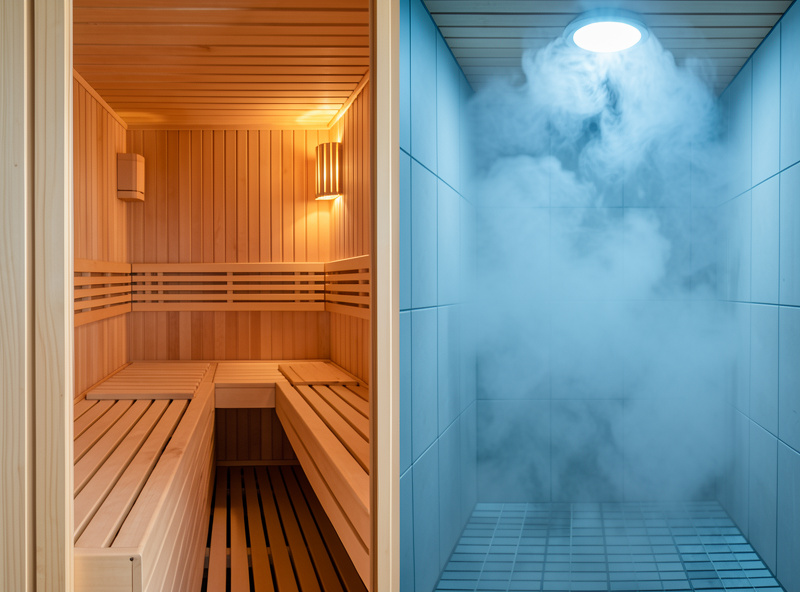
The fundamental split is how the heat reaches you. An infrared cabin uses carbon or ceramic panels to emit far-infrared that warms your skin and body directly, so the air can stay relatively cool—my cabin sits around 50°C and still drives a deep sweat. A steam room heats nothing directly; a generator floods the sealed space with vapour until the air is at 100% humidity, and that saturated air is what transfers heat to you.
That is why a 45°C steam room can feel hotter and heavier than a 55°C infrared cabin. In saturated air your sweat cannot evaporate, so heat builds against your skin and breathing feels thick. In the dry infrared cabin your sweat evaporates freely, which most people find easier to sit through for a longer session. Neither is “more intense” in the abstract—they load your body differently, and which one suits you is genuinely personal.
Install: A Plug-In Box vs a Waterproof Build
This is where the two part ways completely, and it is the gap most buyers underestimate. An infrared cabin is a freestanding assembly of wood panels and heaters that you put together in an afternoon and plug into a single dedicated circuit—mine runs on a 16A line. There is no plumbing, no sealing, no drainage. If you move, you can disassemble it.
A steam room is construction. You need a fully waterproofed, vapour-sealed enclosure, tiled or solid-surface walls, a sloped ceiling so condensation runs off rather than dripping on your head, a floor drain, a steam generator plumbed to a water supply, and a way to vent and dry the space afterward. That is a contractor job in most homes, and it is permanent. The honest framing: an infrared sauna is an appliance you buy; a steam room is a renovation you commission. I cover the cabin side of that in the infrared sauna installation guide, and why airflow matters either way in the ventilation guide.
Moisture, Mould, and Maintenance
Humidity is not just a comfort difference—it is a maintenance difference that runs for the life of the unit. In my infrared cabin the only moisture is the sweat I bring in, so as long as I leave the door open to dry it out, the wood stays dry and mould has nothing to grow on. The upkeep is wiping benches and keeping ventilation clear.
A steam room fights condensation every single session. Saturated air settles on every surface, and without aggressive ventilation and proper waterproofing behind the tile, that moisture finds its way into substrate and grout and becomes a mould problem. Even done right, a steam room needs diligent drying and cleaning that a dry infrared cabin simply does not. If you have ever dealt with a damp bathroom that never quite dries, multiply that by a deliberately steam-flooded room. I get into the dry-cabin version of this in preventing mould and humidity in your infrared sauna — it is a far smaller battle than a steam room presents.
EMF and Electrical: Two Different Pictures
On my TriField, the EMF conversation is mostly an infrared conversation. An infrared cabin’s heating panels, wiring, and controller each produce measurable magnetic and electric fields, which is exactly why low-EMF construction and panel routing matter and why I meter every unit I own. A steam room’s generator sits outside the space and the room itself has no heating elements near your body, so the in-room EMF picture is generally a non-issue.
Electrically, though, the steam room is the heavier draw to install: a residential steam generator is a serious appliance often needing its own substantial circuit and a plumbed water line. An infrared cabin’s electrical needs are modest by comparison—a single dedicated circuit for most home units. If EMF is a concern you take seriously, the infrared side is the one to measure, and I walk through exactly how in how to measure infrared sauna EMF with a TriField and what the label means in low-EMF infrared sauna.
Running Cost Over Time
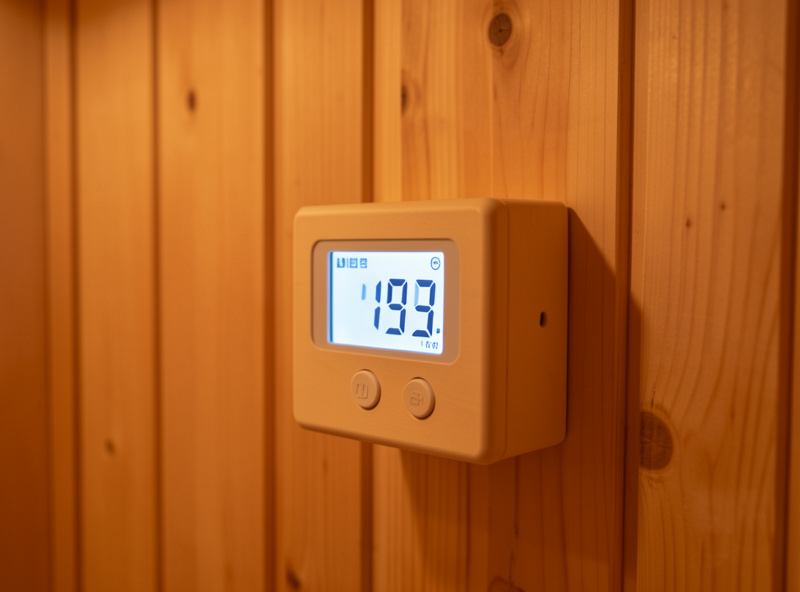
My kill-a-watt logs put a far-infrared session in the low single-digit kWh range, because the panels only run while I am in there and the cabin reaches temperature fast. A steam room adds the cost of boiling water into vapour plus the water itself, and the generator works hard to keep a sealed room saturated. Add the standing maintenance of a wet enclosure and the lifetime cost gap widens further.
For a home buyer counting the decade, infrared is the cheaper, lower-hassle dry-heat option, while a steam room is a premium wet-heat experience you pay for in both the build and the upkeep. I break down real session and monthly numbers for the infrared side in the infrared sauna electricity cost article, and the bigger picture sits in the infrared vs alternatives comparison hub alongside the infrared vs traditional sauna breakdown. A plug-in digital hygrometer is how I keep an eye on the humidity difference between the two environments.
As an Amazon Associate I earn from qualifying purchases.
Infrared Sauna vs Steam Room at a Glance
| Factor | Infrared sauna | Steam room |
|---|---|---|
| Air temperature | 45–60°C | 40–45°C |
| Humidity | Low (sweat only) | 100% |
| Heat type | Radiant, heats your body | Convective, heats the air |
| Install | Assemble + plug in | Waterproof build + plumbing |
| Maintenance | Wipe and dry out | Constant condensation control |
| In-room EMF | Measurable, manage it | Minimal |
| Running cost | Low kWh per session | Higher + water + upkeep |
Which One Fits Your Home?
Choose an infrared sauna if you want dry radiant heat you can install yourself, run cheaply, and maintain with a cloth—especially in an apartment or a spare room where plumbing and waterproofing are out of the question. Choose a steam room if saturated wet heat is the experience you specifically want and you can fund and house a permanent waterproof build with a generator and drainage.
For most home buyers the practical answer is infrared, simply because it asks so much less of the building. But if you have stood in a good steam room and that heavy, enveloping wet heat is what you are after, nothing dry will replace it. If you are still weighing the whole field, the comparison hub lines infrared up against every alternative, and how to use an infrared sauna covers getting started once you have chosen.
Frequently Asked Questions
Is an infrared sauna or steam room better for you?
They load your body differently rather than one being universally better. Infrared gives dry radiant heat that is easy to sit through, while a steam room gives saturated wet heat that feels heavier. Choose by which heat you tolerate and what you can install, and treat specific health claims as studied rather than guaranteed.
Why does a steam room feel hotter than an infrared sauna?
Because at 100% humidity your sweat cannot evaporate, so heat builds against your skin even though the air is only around 40 to 45C. An infrared cabin runs hotter air, often near 50C, but the dry environment lets sweat evaporate, which most people find easier to tolerate.
Can I install a steam room as easily as an infrared sauna?
No. An infrared sauna is a freestanding box you assemble and plug into one circuit in an afternoon. A steam room requires a waterproofed, vapour-sealed enclosure, a sloped ceiling, a floor drain, and a plumbed steam generator, which is a contractor-level renovation.
Does a steam room have more EMF than an infrared sauna?
Generally no. The EMF question is mostly an infrared one, since the cabin has heating panels, wiring, and a controller near you. A steam room has no in-room heating elements, so its in-room EMF is minimal, though its generator is a heavier electrical and plumbing install.
Which is cheaper to run, infrared sauna or steam room?
An infrared sauna is cheaper. My energy logs put a session in the low single-digit kWh range, while a steam room adds the cost of generating vapour, the water itself, and the ongoing upkeep of a wet enclosure. Over a decade the infrared cabin is the lower-cost option.