The wood in an infrared cabin is structure, smell, and heat behavior all at once — and it matters more here than in a traditional sauna. Most home infrared units ship in one of four species: Canadian hemlock, Western red cedar, basswood, or thermally modified pine. Hemlock dominates the mid-market because it is dimensionally stable, low-aroma, and cheap to source in clear panels.
I run a 2-person low-EMF far-infrared cabin built from Canadian hemlock, and over the winters I have lived with it — plus the carbon-panel single and a full-spectrum unit on the same bench — the interior wood has shaped comfort far more than the spec sheet ever hinted. Infrared heats you and the surfaces directly rather than baking a 90°C air mass, so the wood sits cooler, off-gasses differently, and shows every cold spot the panels leave. This guide is the species-by-species breakdown I wish I had read before I bought, written from the meter and the install side, not the brochure.
Why Wood Choice Hits Differently in Infrared
In a traditional Finnish sauna the air hits 80–100°C and the wood is chosen to survive steam and stay cool enough to touch. In an infrared cabin the air rarely passes 55–60°C; the heat is radiant, landing on your skin and the bench surfaces directly. That single difference reshuffles the priorities. Aroma lingers longer because nothing is boiling it off. Resin pockets stay tacky instead of curing hard. And because the cabin runs cooler and drier, dimensional stability and a clean, splinter-free surface matter more than raw heat tolerance.
The practical upshot: the “best sauna wood” lists written for traditional steam rooms are only half-relevant here. Western red cedar earns its reputation in a hot, humid Finnish build; in a 55°C infrared box its oils behave differently and the aroma can become a problem rather than a feature. I learned that the slow way, which is most of why this site exists.
The Four Species You Will Actually Be Choosing Between
Strip away the marketing and home infrared cabins come in basswood, Canadian hemlock, Western red cedar, or thermally modified wood (usually pine or aspen, branded ThermoWood or “thermo”). Poplar and aspen show up occasionally as basswood substitutes. Here is how they stack up on the attributes that actually change your ownership experience.
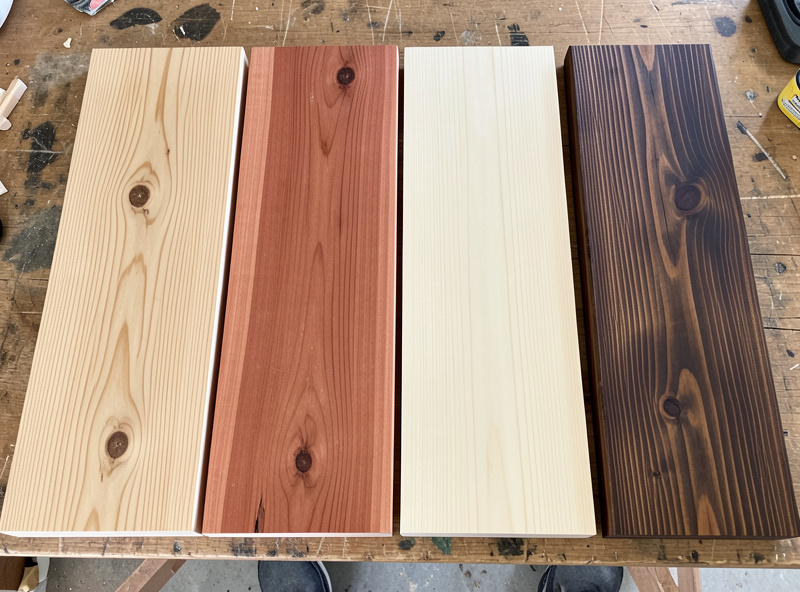
| Attribute | Canadian Hemlock | Western Red Cedar | Basswood | Thermally Modified (ThermoWood) |
|---|---|---|---|---|
| Aroma | Very low / neutral | Strong, aromatic | Near odorless | Low, faint smoky-sweet |
| Allergy-friendliness | Good | Poorest (oils + scent) | Best (hypoallergenic) | Good |
| Dimensional stability | Good | Very good | Moderate | Excellent |
| Resin / pitch risk | Low | Low | Very low | None (driven off in kiln) |
| Typical price tier | Mid (value default) | High | Mid-high | High |
| Surface feel | Smooth, light tan | Soft, reddish | Pale, very smooth | Rich brown, hard |
| Best for | All-round value cabins | Buyers who want the scent | Scent-sensitive users | Stability + dark aesthetic |
No single column wins every row, which is exactly why the question is worth a full guide. Your priority order — aroma tolerance, budget, allergy sensitivity, the look you want — decides the answer, and I will walk each species the way I would talk a friend through it standing in front of the cabins.
Canadian Hemlock: The Value Default (and What I Run)
Hemlock is the species under most mid-priced infrared cabins for good reasons: it mills into wide, clear, knot-light panels, stays dimensionally stable in a low-humidity infrared environment, and carries almost no scent. That last point is the quiet selling feature — in a cabin that never boils its oils off, “no smell” is a comfort decision, not a downgrade.
The cabin I run is hemlock with a ceramic-and-carbon hybrid heater array, and after years of winters the panels have stayed flat with no resin weeping and no warping at the door frame. Hemlock is not glamorous — it is a pale tan that ages to honey rather than the dramatic red of cedar — but it is the wood I would put a beginner in without a second thought. If you are weighing the two head to head, I broke that decision down in detail in my cedar vs hemlock comparison.
The one caveat: “hemlock” on a cheap import can mean a lower-grade, faster-grown stock with more knots and a rougher surface. Run your hand along the bench and the backrest before you buy — that tactile check tells you more than the wood name on the listing.
Western Red Cedar: The Aromatic Classic, With a Catch
Cedar is the wood people picture when they imagine a sauna: soft reddish grain, a warm scent, natural rot resistance from its oils. In a traditional hot sauna that aroma blooms and fades with each steam cycle. In an infrared cabin running at 55°C, the same oils release slowly and steadily, and the scent stays in the box. Some owners love that. A meaningful minority find it overwhelming or mildly irritating after a few weeks, especially in a small 1-person cabin where there is less air to dilute it.
Cedar is also the priciest of the common species and the one most likely to bother scent-sensitive or allergy-prone users, because both the aroma compounds and the natural oils are doing the irritating. If you specifically want the cedar smell and you know your sinuses tolerate it, it is a lovely interior. If you are unsure, that uncertainty is itself the answer — pick a neutral wood. Cedar’s oils also mean you should never seal or oil it; the wood is designed to breathe.
Basswood: The Hypoallergenic Pick
Basswood is the answer to the cedar problem. It is nearly odorless, pale, very smooth, and consistently recommended for people with allergies, asthma, or simple scent sensitivity. If someone in the household reacts to cedar — or you just do not want any smell competing with the session — basswood is the safe interior. It is a touch softer than hemlock, so it dents a little more easily, but in a low-contact infrared cabin that rarely matters.
The trade-off is price and stability: basswood often costs more than hemlock and is a little less dimensionally stable, so build quality around the joints matters more. I cover the full grain, hardness, and care picture in the basswood sauna properties guide. For a scent-sensitive buyer, though, it is the species I would shortlist first.
Aspen, Poplar, and the Budget Substitutes
Below the four headline species sit the substitutes you will meet on cheaper imports and DIY kits: aspen, poplar, and occasionally untreated pine. Aspen is genuinely good — pale, odorless, smooth, and a legitimate basswood alternative that some Nordic builders prefer for its slightly higher hardness. Poplar is the budget stand-in for basswood; it is fine but a touch more prone to surface marking and color variation. Untreated pine is the one to be wary of: it carries resin pockets that can weep and stay tacky at infrared temperatures, and it has the strongest fresh-wood smell of anything on this list. That is precisely why pine almost always gets thermally modified before it goes into a quality cabin.
If a listing just says “natural wood” or “Nordic wood” without naming the species, treat that as a red flag and ask. Vague wood naming usually means a low grade was used and the seller would rather you not look closely — the same instinct I flagged in the buying-scams guide. The species name is cheap to disclose; hiding it is a tell.
Thermally Modified Wood (ThermoWood): Stability and a Darker Look
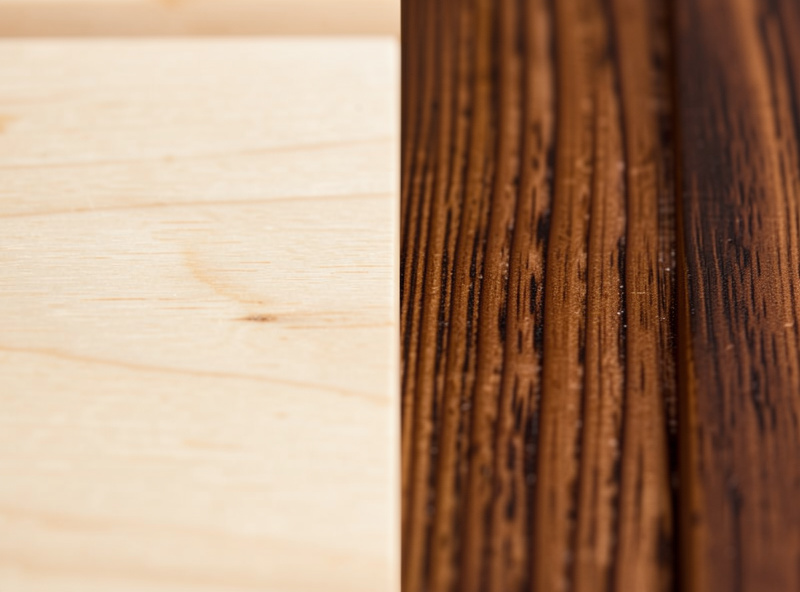
Thermally modified wood is ordinary softwood — usually pine or aspen — that has been baked in a low-oxygen kiln at around 180–215°C. The heat drives off resin, reduces the wood’s ability to absorb moisture, and turns it a rich, even brown all the way through. The result is exceptional dimensional stability, essentially zero resin or pitch risk, and a faint smoky-sweet smell rather than the sharp scent of fresh pine. ThermoWood is the registered process trademark, but “thermally modified” covers the same idea from other mills.
In an infrared cabin the appeal is twofold: the dark surface looks premium and modern, and the stability means the panels shrug off the dry-then-humid cycling that an indoor cabin sees. The downsides are cost — it sits at the high end — and a slightly more brittle surface than untreated wood. I dug into the kiln process, the strength trade-off, and where it is worth the premium in the thermally modified sauna wood guide. If you want the most stable, lowest-off-gassing interior and the dark aesthetic suits you, this is the top of the range.
Off-Gassing: Every New Cabin Does It
Whatever species you pick, a brand-new cabin will have a smell on its first few heat cycles — a mix of wood aroma, any glue or finish on trim, and the heater elements curing. This is normal and it fades. What matters is doing the first runs with the door cracked and the room ventilated, and not sitting your first full session in a box that still smells like a furniture store. Manufacturers and indoor-air guidance both point to ventilation and a few empty break-in cycles as the fix.
Wood choice changes how much there is to off-gas: thermally modified and basswood start nearly neutral, hemlock is low, and cedar carries its scent the longest by design. I wrote a full break-in procedure — cycle temperatures, timing, and how I ventilate — in the off-gassing and startup guide, and it pairs with the broader cabin ventilation guide. None of this is about toxicity claims; it is about not ruining your first impression of a cabin you just spent real money on.
The Rest of the Interior: Glass, Benches, and Panel Clearance
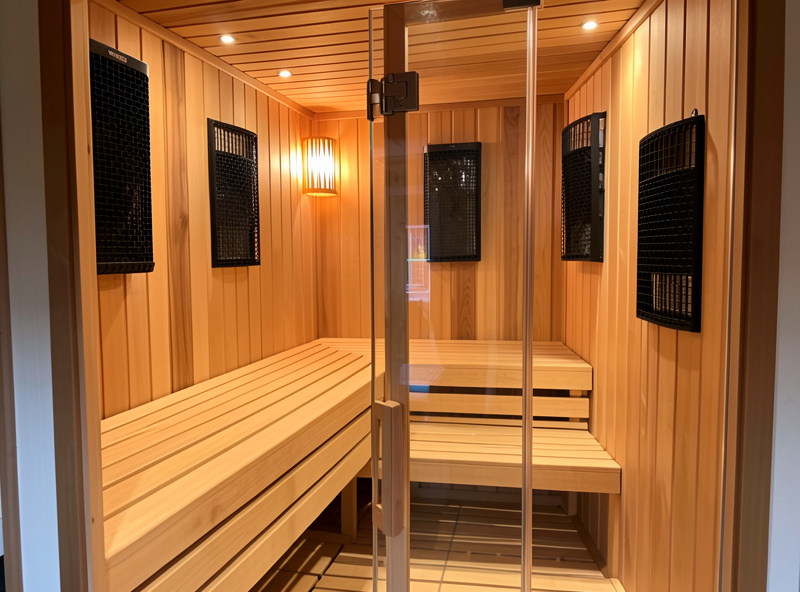
Wood species is the headline, but the interior is a system. The glass door sets how the cabin looks and how much radiant heat leaks — clear, bronze, or smoked tempered glass each behave differently, and I compared them in the glass door selection guide. Bench height and depth decide whether the panels actually hit your back and core or waste their footprint on the wall behind you; that geometry is the difference between a warm session and a cold-spot-chasing one, which is why I treat bench height versus panel placement as its own engineering problem.
And the heaters themselves interact with the wood: a darker thermally modified panel behind a heater reads hotter to the eye but radiates the same, while the real performance question is the emitter type and its EMF signature, which I cover in the carbon vs ceramic breakdown and the broader heater types and EMF guide. If you are building or refurbishing rather than buying turnkey, the DIY interior upgrade guide ties wood, glass, and bench choices into one project.
What the Wood Changes — and What It Does Not
One myth worth killing early: the interior wood does not change your EMF exposure or your infrared output. Those come from the heaters and the wiring. I have put the TriField TF2 against hemlock, basswood, and a thermally modified panel cabin, and the magnetic-field reading tracks the emitter and the cable routing, never the species. A dark ThermoWood wall behind a heater looks like it should radiate more because it reads hotter to the eye, but the panel surface temperature on my thermal camera is set by the emitter, not the wood color. If a seller tells you a particular wood “boosts the infrared,” that is marketing, not physics — the wavelength bands are a hardware property, which I break down in the near, mid and far infrared guide.
What the wood genuinely changes is everything you feel and smell: the surface temperature your skin contacts on the bench, the aroma in the box, how the cabin ages, and whether the panels stay flat. Those are comfort and longevity variables, and they are real — just keep them in the right column. Heat performance and safety live with the emitter and the install; aroma, feel, and stability live with the wood.
Living With the Wood: Maintenance and Longevity
Bare sauna wood is low-maintenance by design, but it is not zero-maintenance. Sweat, skin oils, and the occasional spill leave marks, and the fix is mechanical, not chemical: a dry brushing along the grain, an occasional wipe with plain water, and a towel on the bench every session so your skin oils land on cotton instead of soaking into the wood. Never reach for soap, oil, or a sealant. In my cabin the hemlock benches have darkened slightly to a warmer honey over the winters, which is the wood doing exactly what it should — aging, not failing.
Stability is the longevity question that actually separates the species. In an indoor cabin the wood lives through a daily cycle of bone-dry heat and then cool room humidity, and over years that cycling is what warps a door frame or opens a panel seam. Thermally modified wood resists it best, hemlock and cedar hold up well, and softer basswood needs the joinery done right to stay tight. If you keep a towel down, brush rather than scrub, and let the cabin breathe, any of the quality species will outlast the heaters — and the heaters are the part you will replace first.
How I Would Choose, in One Page
Start with the constraint that actually rules you out of options. If anyone using the cabin is scent-sensitive or allergy-prone, that decides it — basswood, with thermally modified as a close second, and cedar is off the table. If budget is the hard limit, hemlock is the honest value choice and there is no shame in it; it is what I run. If you want the dramatic look and the smell and your sinuses are fine, cedar is the indulgence. If you want the most stable, lowest-maintenance, darkest interior and money is less of an object, thermally modified is the premium answer.
Everything after that — the glass, the benches, the heater type — is tuning. Get the wood right for the people who will actually sit in it, and the cabin earns its electricity bill through a Swedish winter instead of becoming the expensive box nobody wants to use because it smells wrong. For the money side of that decision, the buying guide and the electricity cost breakdown are the next two reads, and if you are siting an indoor unit, the installation requirements guide covers clearances and circuit sizing.
| If your priority is… | Choose | Avoid |
|---|---|---|
| Lowest price, solid all-round | Canadian hemlock | — |
| Scent sensitivity / allergies | Basswood | Western red cedar |
| Maximum stability, dark look | Thermally modified | Untreated basswood |
| You love the classic scent | Western red cedar | Basswood (no aroma) |
| Lowest off-gassing from day one | Thermally modified / basswood | Fresh cedar |
As an Amazon Associate I earn from qualifying purchases. If you are finishing or maintaining bare interior wood, skip anything that seals the surface — an unsealed cabin breathes the way it should. A simple sauna wood brush and a plug-in digital hygrometer are the only two interior accessories I would call genuinely useful from day one.
Related Guides in This Cluster
- Cedar vs Hemlock for Infrared Cabins
- Basswood Sauna Properties
- Thermally Modified Sauna Wood (ThermoWood)
- Off-Gassing and Ventilation on a New Sauna
- Infrared Sauna Glass Door Selection
- Bench Height vs Radiant Panel Placement
- DIY Interior Wood Upgrade Guide
Frequently Asked Questions
What is the best wood for an infrared sauna?
There is no single best wood. Canadian hemlock is the value default and what most mid-priced cabins use. Basswood is best for scent-sensitive users, thermally modified wood is the most stable, and Western red cedar is for buyers who specifically want the aroma.
Why is hemlock used so often in infrared saunas?
Hemlock mills into wide, clear, knot-light panels, stays dimensionally stable in a low-humidity infrared cabin, and carries almost no scent. That combination of stability, clean surface, and mid-range price makes it the practical default for home infrared units.
Is cedar a problem in an infrared sauna?
It can be. Infrared cabins run around 55 degrees C, so cedar’s oils and aroma release slowly and stay in the box rather than boiling off. Scent-sensitive or allergy-prone users often find cedar overwhelming, especially in a small one-person cabin. Choose basswood instead if scent is a concern.
What is thermally modified or ThermoWood sauna wood?
It is softwood, usually pine or aspen, baked in a low-oxygen kiln at roughly 180 to 215 degrees C. The process drives off resin, lowers moisture absorption, and turns the wood a rich brown throughout. The result is excellent dimensional stability and almost no off-gassing.
Do new infrared saunas off-gas, and is that dangerous?
Every new cabin has a smell on its first few heat cycles from the wood, any trim finish, and the curing heater elements. It fades within a few break-in runs. Run the first cycles empty with the door cracked and the room ventilated. This is a comfort and break-in step, not a toxicity claim.
Should I oil or seal the wood inside my infrared sauna?
No. Sauna interior wood is meant to breathe. Sealing or oiling traps moisture, can make the surface tacky in the heat, and adds finish that off-gasses. Keep bare wood bare and clean it with a brush and water only.