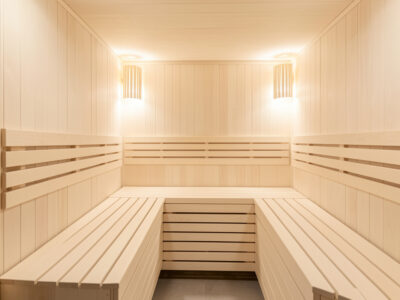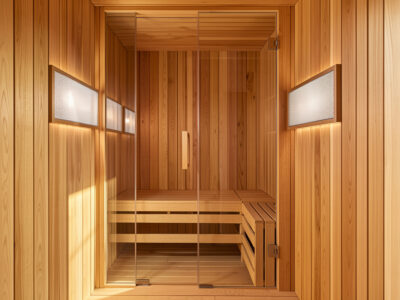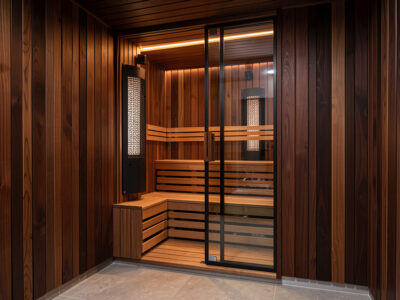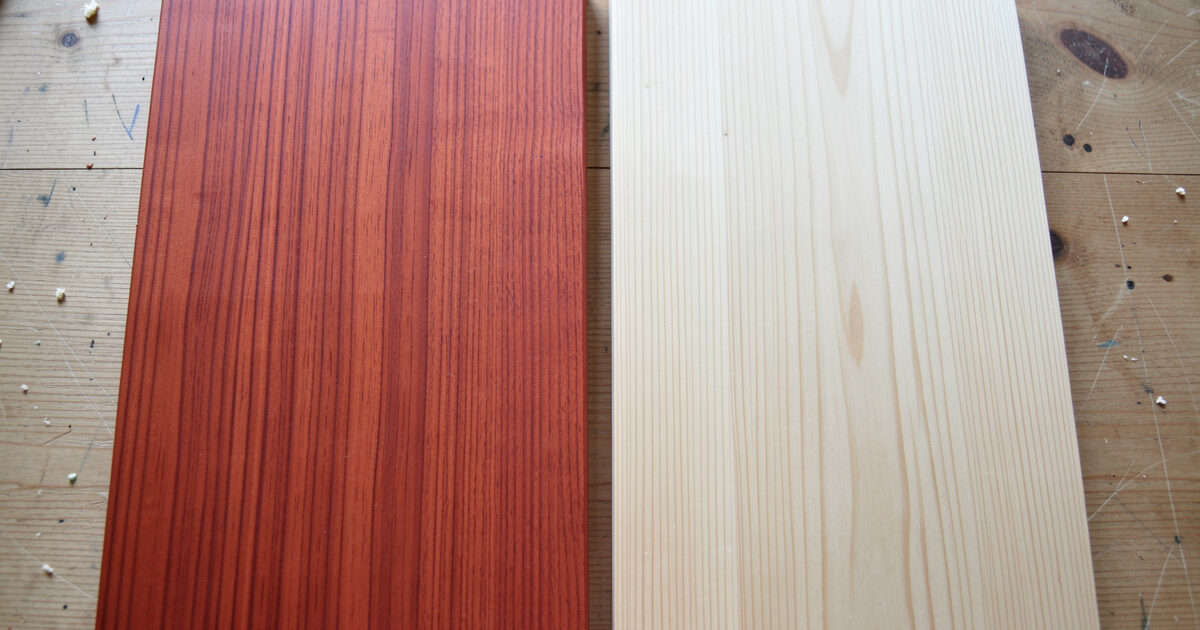
For an infrared cabin, hemlock is the better default and cedar is the indulgence. In a cedar vs hemlock infrared sauna decision, hemlock wins on price, neutral scent, and stability, while cedar wins only if you specifically want its aroma and your sinuses tolerate it. Because infrared cabins run near 55°C rather than 90°C, cedar’s oils never fully boil off — so the scent that delights in a traditional sauna can overwhelm in an infrared box.
I run a Canadian hemlock cabin and I have sat in plenty of cedar ones, and the difference is not subtle once you have lived with both for a winter. This is the head-to-head I give people who are stuck between the two species, framed around what actually changes day to day: smell, comfort, cost, and how the wood ages.
The Core Difference: Aroma in a Low-Heat Box
The whole decision hinges on one fact about infrared. A traditional sauna hits 80–100°C, and at those temperatures cedar’s aromatic oils volatilize fast, bloom with each ladle of water, and then clear. An infrared cabin tops out around 50–60°C. At that temperature cedar still releases its scent, but slowly and continuously, and there is no steam cycle to flush it. The aroma builds and lingers.
For some people that is the dream — a permanent gentle cedar note. For others, especially in a small 1-person cabin with little air volume, it becomes too much within a few weeks, and for scent-sensitive or allergy-prone users it can be irritating from day one. Hemlock sidesteps the entire question by carrying almost no scent. That neutrality is exactly why hemlock dominates the mid-market: it never forces the aroma decision on you.
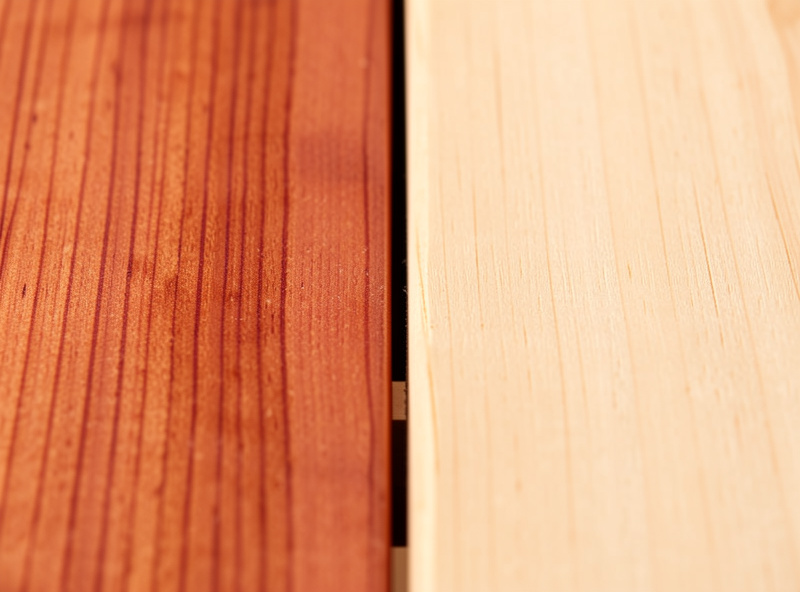
Head-to-Head Comparison
Here is the practical breakdown across the attributes that change ownership. Neither wood is fragile or unsafe in an infrared cabin — this is about fit, not failure.
| Attribute | Canadian Hemlock | Western Red Cedar |
|---|---|---|
| Aroma | Very low, neutral | Strong, persistent in infrared |
| Price tier | Mid (value default) | High (premium) |
| Allergy / scent sensitivity | Friendly | Most likely to irritate |
| Dimensional stability | Good | Very good |
| Color | Pale tan, ages to honey | Reddish, soft grain |
| Natural oils | Low | High (rot-resistant) |
| Maintenance | Brush + water only | Brush + water only |
| Best buyer | Value, scent-neutral, families | Wants the cedar scent |
Where Cedar Genuinely Wins
Cedar is not a worse wood — it is a different brief. Its natural oils make it the most rot-resistant of the common sauna species, its soft reddish grain is the most visually warm, and that scent, if you want it, is genuinely pleasant and a little nostalgic. Cedar also has very good dimensional stability. If you are building an outdoor or garage cabin where humidity swings are larger, cedar’s oils earn their keep, and if the aroma is the reason you want a sauna at all, no neutral wood will satisfy you. Buy the cedar and enjoy it — just go in knowing the scent is a feature you cannot turn off.
Where Hemlock Wins
Hemlock wins on the things most buyers actually care about once the romance fades: it costs meaningfully less, it asks nothing of your sinuses, and it mills into wide, clear, knot-light panels that feel smooth under bare skin. In my cabin the hemlock has stayed flat through years of dry-heat-then-room-humidity cycling, with no resin weeping and no warping at the door. It is the wood I would put a beginner, a family, or any scent-sensitive household into without hesitation. The pale tan is less dramatic than cedar’s red, but it ages to a warm honey that I have grown to prefer.
Cost: The Tiebreaker Most People Ignore
Across comparable cabins, cedar typically commands a real premium over hemlock for the same size and heater spec. If two units are otherwise identical — same panels, same low-EMF wiring, same dimensions — the cedar one costs more purely for the wood and the scent. That premium buys you aroma and a slightly richer look, not better heat or lower EMF, because those come from the emitter and wiring, not the species. If your budget is the hard constraint, hemlock frees up money you could put toward a better heater array or a proper dedicated circuit, both of which change the session more than the wood does. The full money picture is in the cost guide and the electricity cost breakdown.
What Neither Wood Changes
Worth repeating because sellers blur it: neither cedar nor hemlock changes your infrared output or EMF exposure. On my TriField meter the magnetic-field reading tracks the heater and the cable routing, never the wood. A cedar cabin is not “more therapeutic” than a hemlock one — that is marketing. Heat performance lives with the emitter type, which I break down in the carbon vs ceramic guide, and EMF lives with the wiring and panel design covered in the low-EMF guide. Choose the wood for smell, feel, budget, and looks — and let the hardware spec decide the actual performance.
How Each Wood Ages Over Years
Both species age gracefully if you keep them bare and put a towel down each session, but they age differently. Hemlock starts pale tan and slowly deepens to a warm honey, especially on the benches where skin contact and light exposure are highest. Cedar starts reddish and tends to mellow toward a softer grey-brown, and its scent fades gradually over the first couple of years — which, depending on your view, is either cedar losing its best feature or finally calming down. Neither wood needs sealing or oiling; both are designed to breathe, and adding a finish is the fastest way to make a bench tacky in the heat. The thing that actually shortens a cabin’s life is moisture mismanagement, not the species — which is why ventilation and a dry-out routine matter more than wood choice, and why I treat cabin ventilation as its own topic.
My Pick, and Who Should Overrule It
For most buyers I would take hemlock, and I did. It is the value choice, the neutral choice, and the safe household choice, and nothing about it feels like a compromise once you stop chasing the brochure romance. The buyers who should overrule me are the ones who already know they love the cedar scent and have no sensitivity to it — for them cedar is worth its premium. And anyone with allergies or scent sensitivity in the household should skip both questions and look at basswood, which carries no scent at all. The full species lineup, including thermally modified wood, is in the infrared sauna wood types guide.
As an Amazon Associate I earn from qualifying purchases. Whichever wood you land on, keep it bare — both cedar and hemlock are meant to breathe. A soft sauna brush and a bench towel are the only maintenance either one needs.
Frequently Asked Questions
Is cedar or hemlock better for an infrared sauna?
Hemlock is the better default for most buyers: lower price, neutral scent, and good stability. Cedar is better only if you specifically want its aroma and have no scent sensitivity. Because infrared runs cool, cedar’s scent lingers far longer than in a traditional sauna.
Why does cedar smell so strong in an infrared sauna?
Infrared cabins run around 55 degrees C instead of 90. At that temperature cedar’s aromatic oils release slowly and continuously, and there is no steam cycle to flush them, so the scent builds and lingers in the box rather than blooming and clearing.
Is hemlock a cheap or low-quality sauna wood?
No. Hemlock is the mid-market value default because it mills into wide, clear, stable panels with almost no scent. Quality hemlock is excellent. The only caution is very cheap imports using low-grade hemlock with more knots, so check the surface before buying.
Does cedar give better infrared or health results than hemlock?
No. The wood does not change infrared output or EMF, which come from the heaters and wiring. Cedar is not more therapeutic than hemlock. Choose the wood for scent, feel, budget, and looks, and let the heater spec decide actual performance.
Which wood is better for allergies, cedar or hemlock?
Hemlock is friendlier than cedar because it has far less scent and fewer aromatic oils. But for genuine allergy or scent sensitivity, neither is ideal. Basswood, which is essentially odorless, is the wood to choose for sensitive users.