Thermally modified sauna wood — ThermoWood being the best-known branded version — is ordinary softwood baked in a low-oxygen kiln at roughly 180–215°C until its chemistry changes. The heat drives off resin, lowers how much moisture the wood can absorb, and turns it a rich brown all the way through. The payoff is exceptional dimensional stability, essentially zero off-gassing, and a dark, modern look. The trade-off is a higher price and a slightly more brittle surface than untreated wood.
I run a thermally modified panel cabin alongside my hemlock and basswood units, and it is the most stable interior of the three through Sweden’s dry-winter, humid-shoulder-season cycling. This guide explains what the kiln process actually does, how ThermoWood differs from a generic “thermo” label, and where the premium is genuinely worth paying.
What Thermal Modification Does to the Wood
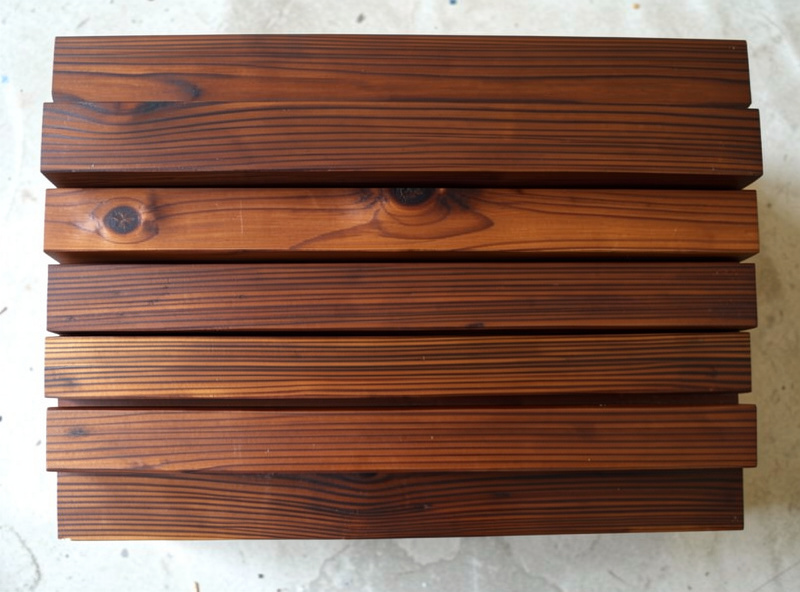
Thermal modification is a controlled bake, not a chemical treatment. The wood goes into a kiln where oxygen is kept low (so it cannot combust) and the temperature is ramped to roughly 180–215°C for a number of hours. At those temperatures the wood’s hemicelluloses break down, resin and volatile compounds are driven off, and the cell structure is permanently altered. The result is wood that absorbs far less moisture, swells and shrinks much less with humidity changes, and has lost the sugars and resins that fresh softwood carries. No glues, no preservatives, no added chemicals — just heat and steam.
Because the resin is gone, thermally modified wood does not weep or get tacky at infrared panel temperatures, and because the volatiles are already cooked out, it off-gasses almost nothing when your cabin is new. That last point is a real advantage in a low-heat infrared box, where, as I cover in the off-gassing and startup guide, scents and break-in smells linger longer than they would in a hot traditional sauna.
ThermoWood vs Generic Thermally Modified Wood
ThermoWood is a registered process trademark governed by the International ThermoWood Association in Finland, with defined treatment classes — Thermo-S (stability focus) and Thermo-D (more intensive, darker, maximum stability and durability). When you see the ThermoWood name, it signals a standardized, quality-controlled process. “Thermally modified,” “thermo-treated,” or “cooked” wood from other mills uses the same basic idea but without that specific certification, and quality can vary more. For a sauna interior, a reputable thermally modified panel from any serious supplier is fine; the ThermoWood mark is reassurance, not a strict requirement. What matters is that the wood was modified to a sauna-appropriate class and is sold as interior cladding, not exterior decking.
The Properties That Matter in a Cabin
| Property | Thermally Modified | Untreated Softwood |
|---|---|---|
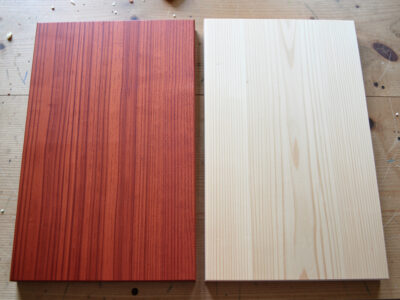
| Color | Rich brown throughout | Pale, surface-only |
| Dimensional stability | Excellent | Moderate |
| Moisture absorption | Greatly reduced | Normal |
| Resin / pitch | None (driven off) | Present, can weep |
| Off-gassing when new | Almost none | Noticeable |
| Surface hardness/brittleness | Harder but more brittle | Softer, tougher |
| Aroma | Faint smoky-sweet | Fresh wood / resin |
| Price tier | High | Low–mid |
The headline is stability and cleanliness in exchange for cost and a little brittleness. For an indoor infrared cabin that sees big swings between bone-dry heat and room humidity, that stability is exactly the property that keeps panels flat and seams tight over years.
The Look: Dark Brown, All the Way Through
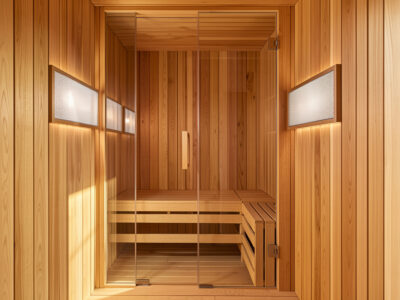
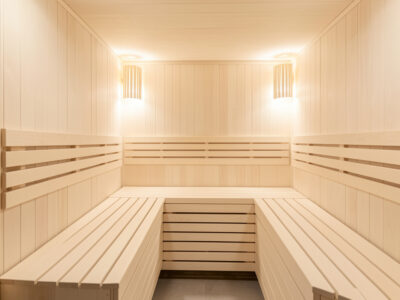
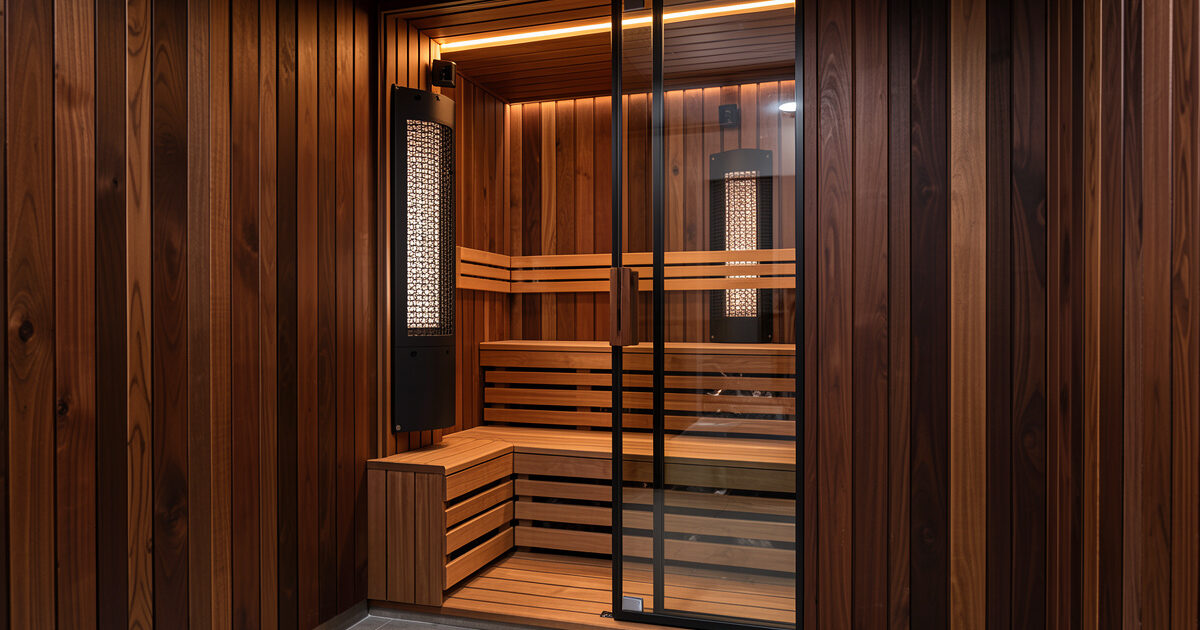
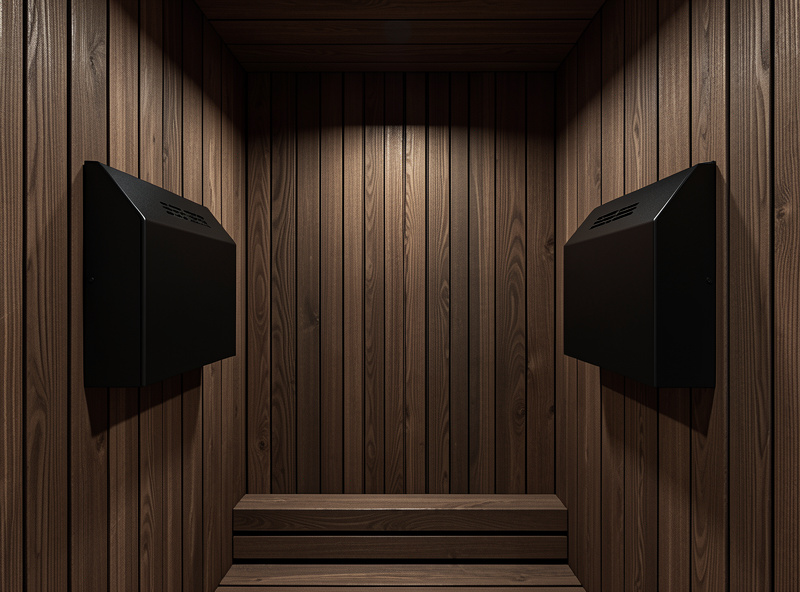
Thermal modification colors the wood throughout, not just on the surface, so a scratch reveals more brown rather than pale raw wood underneath. The shade ranges from a warm caramel to a deep coffee depending on the treatment class — Thermo-D runs darker than Thermo-S. In a cabin, that dark interior reads as premium and modern, and it pairs especially well with black carbon heater panels and a bronze or smoked glass door. If you want a contemporary, spa-like look rather than the pale Nordic blond of basswood or the red of cedar, this is the wood that delivers it. Just remember the color is aesthetic only — a darker wall behind a heater does not radiate more, because output is set by the emitter, as I explain in the near, mid and far infrared guide.
The Trade-Off: Brittleness and Price
Cooking the wood makes it harder on the surface but also more brittle — thermally modified boards lose some bending strength and can be more prone to splitting at fasteners than untreated wood. In a wall-and-bench sauna interior this rarely matters, because the panels are supported and not load-bearing in any demanding way, but it does mean a builder should pre-drill and handle the panels with a bit more care. The bigger practical consideration is cost: thermally modified wood sits at the high end of the species range, comparable to or above premium cedar. You are paying for stability, the dark look, and near-zero off-gassing, not for better heat or lower EMF — those come from the hardware, as always.
How It Behaves in a Real Cabin
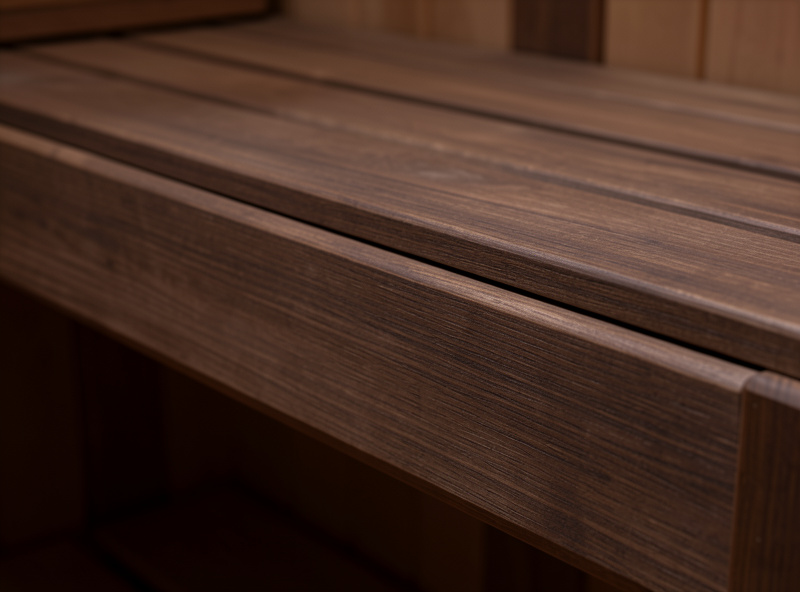
The reason I keep a thermally modified panel cabin in the rotation is the part that never shows up on a spec sheet: it is the interior I never have to think about. Through a Swedish winter the room it sits in swings from bone-dry heating-season air to damp shoulder-season humidity, and that cycle is what eventually opens a seam or bows a panel in a less stable wood. The thermo panels have stayed dead flat, the seams tight, and there has been no resin bleed at the fastener points where untreated pine sometimes weeps a sticky bead in the heat. On the first heat cycles when the cabin was new, the smell was a faint, pleasant smoky-sweet note rather than the sharp resin scent fresh softwood gives off — it cleared within a couple of empty break-in runs, which matches the near-zero off-gassing the modification is supposed to deliver.
The one habit the wood asks of you is gentleness at assembly. Because the modified fibers are more brittle, a panel that gets over-torqued at a screw or knocked hard on a corner can chip or split where untreated wood would just dent. Handle it with a little care during the build and it rewards you with the most maintenance-free interior of any species I have lived with.
Where Thermally Modified Wood Is Worth It
Choose thermally modified wood if you want the most dimensionally stable interior available, the lowest off-gassing from day one, and a dark, modern aesthetic — and if the premium fits your budget. It is especially sensible for an indoor cabin in a climate with big seasonal humidity swings, or for a buyer who wants to set the interior and never think about warping or resin again. Skip it if budget is tight (hemlock gives stability for less) or if you want a pale, bright interior (basswood or aspen). The full lineup, including how thermo stacks against cedar, hemlock, and basswood, is in the infrared sauna wood types guide, and if you are sensitive to scent, compare it with basswood. For a head-to-head on the two most common factory woods, see cedar vs hemlock.
As an Amazon Associate I earn from qualifying purchases. Like every sauna wood, thermally modified panels stay bare — no sealant, no oil. The dark surface hides marks well, so a soft sauna cleaning brush and plain water are all the upkeep it asks.
Frequently Asked Questions
What is thermally modified sauna wood?
It is softwood, usually pine, spruce, or aspen, baked in a low-oxygen kiln at roughly 180 to 215 degrees C. The heat drives off resin, reduces moisture absorption, and colors the wood brown throughout. The result is excellent dimensional stability and almost no off-gassing, with no added chemicals.
Is ThermoWood different from thermally modified wood?
ThermoWood is a registered, certified process governed by the International ThermoWood Association in Finland, with defined classes like Thermo-S and Thermo-D. Generic thermally modified wood uses the same idea without that certification. Both work for saunas; the ThermoWood mark is reassurance of a standardized process.
Is thermally modified wood good for an infrared sauna?
Yes. It is the most dimensionally stable common sauna wood, has no resin to weep at panel temperatures, and off-gasses almost nothing when new. Its trade-offs are a higher price and a slightly more brittle surface, so panels should be handled and fastened with care.
Why is thermally modified wood darker?
The kiln heat breaks down the wood’s hemicelluloses and drives off compounds, which permanently darkens it to a rich brown all the way through, not just on the surface. More intensive treatment, such as Thermo-D, produces a darker shade than the milder Thermo-S class.