An infrared sauna starts to smell like stale sweat when body oils and salt soak into warm, un-dried wood and feed bacteria. The fix is unglamorous and it works: wipe the bench after every session, dry the cabin with the door open, and deep-clean on a schedule with a gentle cleaner. Do that and the smell never gets a foothold.
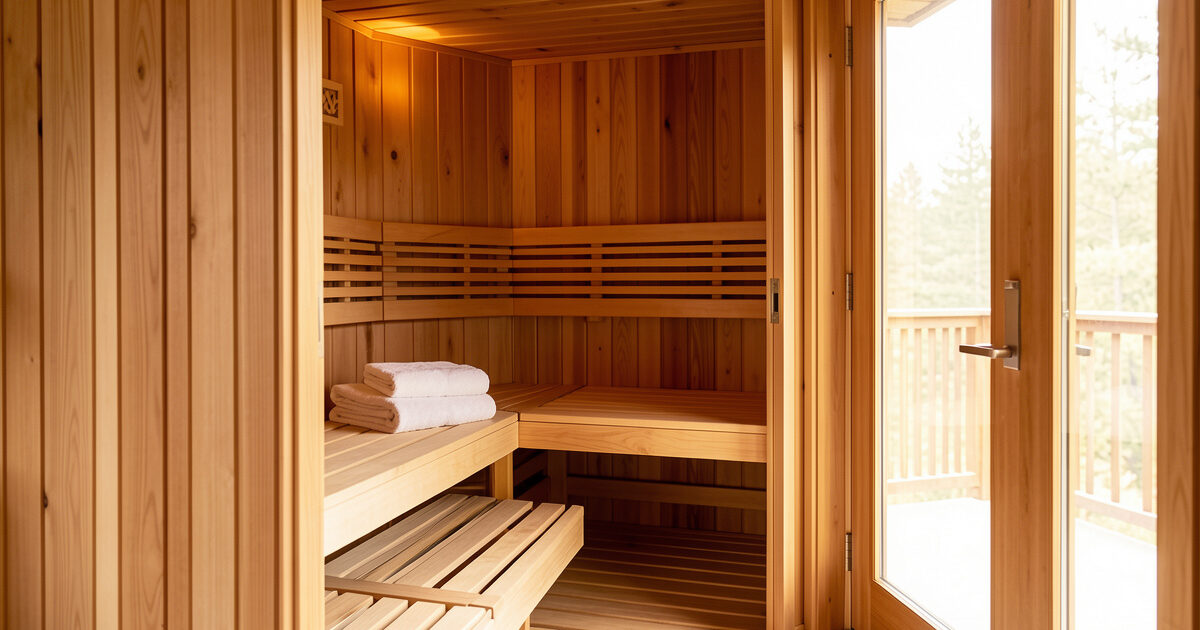
I run a two-person low-EMF far-infrared cabin in Sweden, and for the first winter I owned it I did almost none of this. By February the hemlock behind the bench had a faint gym-bag note I could catch the moment I opened the glass door cold. Nothing dramatic — no visible mold, no black spots — just that soured-towel smell that tells you salt and skin oil have been sitting in wood that never fully dried between sessions. This guide is the routine I built to kill it, split across the six focused articles below so you can go deep on whichever part you’re fighting.
This is the day-to-day sweat, smell, and hygiene side of ownership. It’s deliberately separate from the deeper wood-oiling and mold-prevention maintenance I cover elsewhere — here we’re talking towels, wipe-downs, drying, and safe cleaners, the small habits that stop a problem before it needs a chemical.
Why Does an Infrared Sauna Start to Smell?
An infrared cabin smells because sweat is not just water. It’s water plus sodium chloride, urea, lactate, and skin oils, and when that mix dries onto warm wood it becomes bacterial food. Warmth plus organic residue plus poor drying is the exact recipe for odor. Remove any one leg and the smell can’t build.
The wood matters more than people expect. Softwoods like Canadian hemlock and cedar are porous and hygroscopic — they pull moisture in and let it out slowly. The USDA Forest Products Laboratory’s Wood Handbook chapter on moisture relations shows how wood equilibrates with the humidity around it, holding water inside the cell walls long after the surface feels dry. That lag is your problem: the bench can feel bone-dry to your palm while the fibers a millimeter down are still damp with salted sweat. Bacteria don’t care that the surface looks fine.
Heater type plays a quiet role too. A far-infrared session at a modest 50°C set temp warms your body and makes you pour sweat while the cabin air stays comparatively cool — which means a lot of sweat and not a lot of drying heat afterward. On my sweat-onset testing across heater types, the far-infrared cabin had me dripping within eight minutes but left the wood cooler at shutdown than a hotter conventional room would. Great for comfort, slightly worse for passive drying — which is exactly why the after-session steps below matter so much on infrared.
What Is Actually in Sauna Sweat, and Why It Feeds Odor
Sweat itself is nearly odorless when fresh. The smell comes later, when skin bacteria break down the proteins and lipids left behind as the water evaporates. Sodium concentration in sweat commonly runs somewhere in the range of 20 to 60 millimoles per liter depending on the person and how heat-adapted they are, and that salt stays on the wood after the water is gone.
That residue is the whole game. Wipe it off while it’s still wet and there’s nothing for bacteria to work on. Let it dry into the grain over a dozen sessions and you’ve built a reservoir that reactivates every time the cabin warms and humidifies again. This is why a cabin can smell fine in week two and sour in week six with no change in how you use it — the load is cumulative. It’s also why chasing the smell with fragrance is a losing move: you’re masking the food source, not removing it.
There’s a comfort angle here too. The saltier your sweat, the more you’re losing, and a sensible hydration and electrolyte routine around sessions keeps you feeling steady — but that’s about you, not the cabin. For the cabin, the only thing that matters is getting the residue off the wood before it dries in. Everything in this guide flows from that one fact.
The Daily Routine That Keeps a Cabin From Smelling
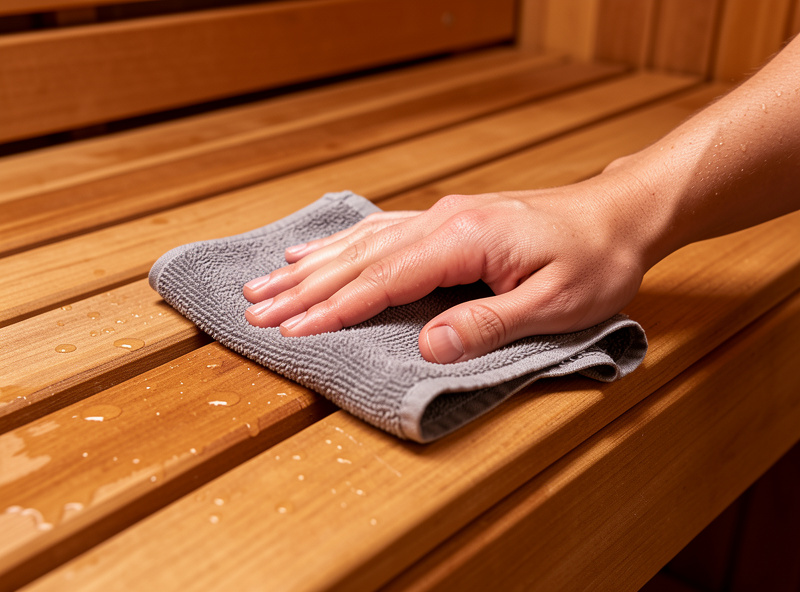
The core habit is two steps that take under three minutes combined: wipe every surface your body touched while the cabin is still warm, then prop the door open and let it dry. Warm wood releases residue and moisture far more willingly than cold wood, so the wipe-down is easiest in the ninety seconds after you step out.
I keep a dedicated microfiber cloth hanging on the cabin’s door handle so there’s zero friction to doing it — the moment the excuse of “I’ll get a cloth later” exists, the habit dies. Bench first, backrest next, then the floor slats where sweat drips and pools. My full two-minute after-session wipe-down breaks down the exact order and what to use, because doing this one small thing consistently is what saves you from the deep clean entirely.
Then comes the step almost everyone skips: drying. A wiped cabin still holds moisture in the wood and the air, and if you close the door on it that moisture just re-condenses on cooler surfaces overnight. Leaving the door cracked and — in my setup — running the internal fan for ten minutes drops the felt humidity fast. I dig into airflow, timing, and why winter makes this harder in drying the cabin after every session. These two habits together are 90% of odor control.
How Often Should You Clean Each Part of the Cabin?
Clean on a cadence, not on a smell. By the time you notice odor the residue is already dried into the grain, so the goal is a schedule that never lets it get there. Here’s the rhythm I’ve settled on after several winters with the cabin, tuned so the daily work stays tiny and the deep work stays rare.
| Task | How often | What I use | Time |
|---|---|---|---|
| Wipe bench, backrest, floor slats | Every session | Dry/damp microfiber cloth | ~2 min |
| Air-dry cabin (door open + fan) | Every session | Internal fan, propped door | 10 min passive |
| Wash towels and bench covers | Every 1–2 sessions | Hot wash, no fabric softener | Machine |
| Wipe wood with diluted cleaner | Weekly | 50/50 white vinegar and water | ~10 min |
| Spot-treat any darkening or stains | As needed | 3% hydrogen peroxide, light sanding | 15–30 min |
| Check and clean floor/heater guards | Monthly | Vacuum, damp cloth | ~15 min |
Notice the weekly cleaner is diluted white vinegar, not a spray-bottle disinfectant. That’s deliberate, and worth understanding before you reach for something stronger.
Which Cleaners Are Safe for Sauna Wood — and Which to Skip?
The safe list is short: diluted white vinegar for routine wiping, 3% hydrogen peroxide for spot-treating stains and killing odor bacteria, and plain warm water for most days. The skip list is longer and more important: no bleach, no ammonia, no pine oils, no fragranced multi-surface sprays, and nothing that leaves a film. Bare, unsealed sauna wood absorbs whatever you put on it, and then bakes it out into the air you breathe at 50°C.
Vinegar works because its acetic acid cuts the salt and oil residue and knocks back odor bacteria, and it evaporates clean with no lingering scent once dry. It is not, technically, a registered disinfectant — the EPA’s own material on what counts as an antimicrobial pesticide makes clear that only products registered and labeled as such can claim to disinfect. For a home cabin that’s fine: you’re managing odor and residue, not sterilizing a clinic. Where you do want more kill, 3% hydrogen peroxide is the right tool, and it breaks down to water and oxygen with no residue. If you ever do want a labeled product for a shared setup, the EPA maintains a list of selected registered disinfectants with their EPA registration numbers. My full breakdown of dilutions and the exact products to avoid is in safe cleaners for a sauna cabin.
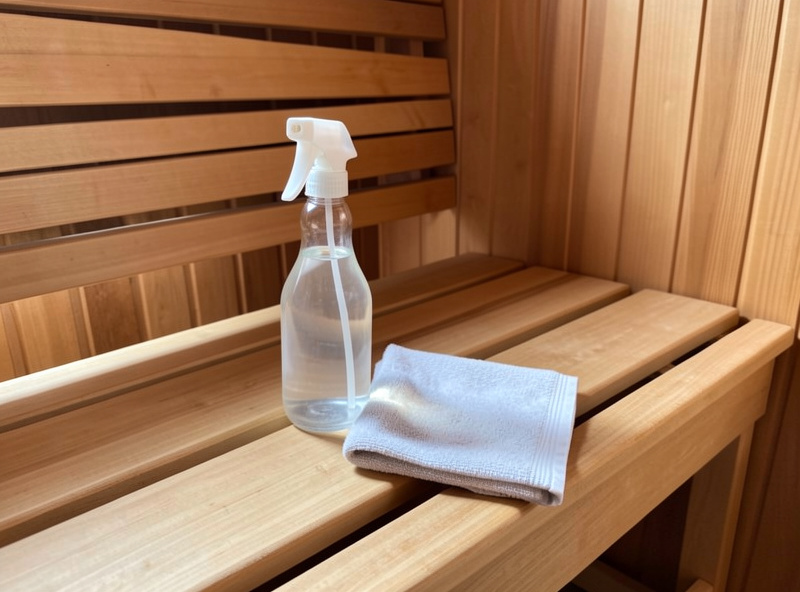
Here’s the mistake I made so you don’t have to: early on I wiped the bench with a fragranced all-purpose spray because it was under the sink and I was in a hurry. The next session the cabin smelled like synthetic lavender being cooked — a hot, chemical sweetness that took three door-open airings to clear, and I could taste it at the back of my throat. Bare wood plus heat plus fragrance is a genuinely bad combination. Warm water and vinegar from then on.
Towels and Bench Covers: The First Line of Defense
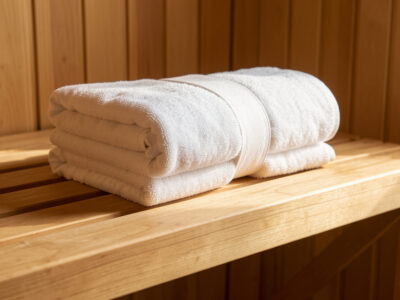
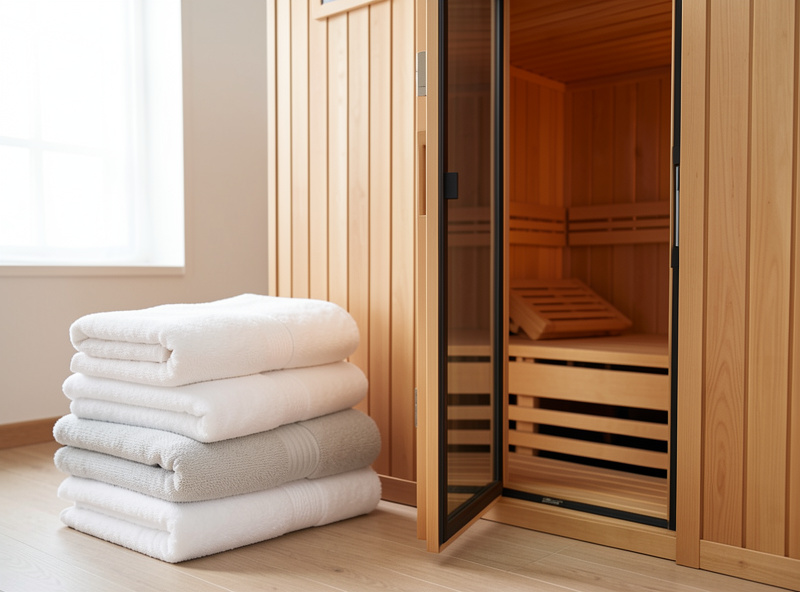
The cheapest odor control is catching the sweat before it ever reaches the wood. A large cotton towel under your whole body and a smaller one for your feet stops the vast majority of the residue at the fabric, where it’s easy to wash out. Fabric you can throw in a hot wash; wood you cannot. This single habit does more for long-term cabin smell than any cleaner.
I use flat-weave cotton towels because they dry fast and wash clean without holding a mildew note the way thick terry can if it sits damp. For the bench itself, a dedicated washable cover takes the abuse so the wood stays cleaner longer. If you’re buying, look for organic or OEKO-TEX cotton and skip anything with a rubberized backing — that backing traps moisture against the wood, which is the opposite of what you want. I compare weaves, sizes, and cover types in best towels and bench covers to catch sweat. You can browse flat-weave cotton sauna towels and simple washable bench covers to see the styles I mean.
As an Amazon Associate I earn from qualifying purchases.
If more than one person uses your cabin, towels and covers stop being just about smell and start being about basic shared hygiene. I cover the between-users routine — who wipes what, and why a cover per person matters — in shared-sauna hygiene.
When Sweat Has Already Stained the Wood, What Then?
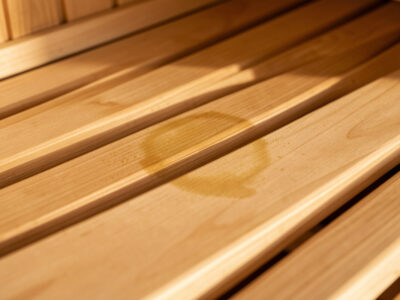
If you’re reading this because there’s already a yellow-brown shadow on the bench, don’t panic and don’t sand aggressively. Most sweat staining lives in the top fraction of a millimeter and lifts with 3% hydrogen peroxide and patience — flood the stain lightly, let it sit, and let the wood dry fully before judging the result. Bleach and heavy sanding are how people turn a cosmetic mark into a permanent gouge or a bleached patch that never matches.
The reason peroxide works and bleach doesn’t belong here is that peroxide oxidizes the discoloration and then vanishes, while chlorine bleach can drive into the grain and leave its own residue in wood you’re about to heat. Deeper stains that have set over a season may need a light pass with fine sandpaper along the grain, then a re-oil to even the tone. I walk through the whole escalation — peroxide, sanding grit, when to stop — in lifting sweat stains from sauna wood without damage. If you’re also choosing or matching wood, my guide to infrared sauna wood types and the cedar vs hemlock comparison explain why some interiors stain more visibly than others.
Drying: The Step Almost Everyone Skips
Drying is where odor is truly won or lost, because a cabin that dries fully between sessions gives bacteria no wet window to work in. The target is simple: get the wood and the air back down to normal room humidity before you close the door. In practice that means airflow — an open door plus moving air — not just walking away.
In winter this is genuinely harder, and it’s worth being honest about it. A cold Swedish room outside the cabin means the warm, humid cabin air condenses fast on the glass and the coolest wood surfaces, so I run the internal fan for ten minutes with the door propped and, on the worst damp days, aim a small room fan at the open doorway. I keep a cheap digital hygrometer inside; when it reads close to the room’s ambient humidity, the cabin’s dry enough to close. Cold-climate owners should also read how the same moisture behaves seasonally in freeze-thaw and sauna wood. If your cabin is well built, good insulation and vapor control makes this drying step easier because the wood stays warmer longer after shutdown. The full method — fan timing, door position, humidity targets — is in drying the cabin after every session.
Does Heater Type Change How Much a Cabin Smells?
Indirectly, yes. Heater type doesn’t create odor — sweat and drying do — but it changes how much you sweat and how warm the wood stays afterward, which shifts the drying math. Across the heaters I’ve lived with, the pattern is consistent: hotter-running units dry the wood better on their own, while comfortable low-temp infrared leaves more moisture behind for you to manage.
My far-infrared daily driver runs a modest set temp and produces a lot of sweat with relatively cool wood at shutdown — best comfort, most drying discipline required. The full-spectrum unit with its NIR halogen emitter ramps hotter and leaves the surrounding wood warmer, so it passively dries a bit faster once I’m out. The portable infrared blanket is its own case: there’s no cabin wood to smell, but the interior fabric absorbs everything and lives or dies by how well you wipe and air it. None of this is a reason to pick a heater — comfort and EMF matter far more — but it’s why two owners with identical habits can get different results. If your cabin smells hot or acrid rather than sweaty, that’s not hygiene at all; a burning smell is an electrical issue to stop and investigate, not clean.
A Realistic Weekly and Monthly Hygiene Rhythm
Pulling it together, the whole system is small daily habits plus two light scheduled passes. Daily: wipe warm, dry with airflow, hang the towel to wash. Weekly: a diluted-vinegar wipe of all the wood while you’ve got ten minutes. Monthly: pull the floor guard, vacuum the crumbs and dust that collect under the slats, and check the heater fronts. That’s the entire program.
What makes it stick is removing friction: cloth on the handle, hygrometer where you can see it, towels stacked within reach, vinegar pre-mixed in a labeled bottle. I track set temp, panel temp, and kWh per session in a loose log anyway, and once I started noting “wiped/dried: yes” in the same log the habit locked in within a week. The reward is that the cabin smells like warm wood and nothing else — the way it did the day it was installed. If you’re still fighting an established smell, start with getting the sweat smell out, then keep it gone with the daily routine here. And if your sweat itself is the frustration — too little, too slow — that’s a separate rabbit hole I cover in why you’re not sweating and how to sweat more.
One cross-network note, since readers ask: the same smart-plug hub that pre-heats my cabin can also trigger the drying fan on a timer after a session ends, so the cabin airs itself out even when I walk away. If you want to automate that side, my notes on scheduled routines live over at homeautocentral.
What About the Portable Blanket or Tent — Do They Smell Too?
They can, and faster, because there’s no wood to blame — the sweat lands directly on synthetic interior fabric that absorbs it and holds it. A portable infrared blanket or tent has none of the porous-wood forgiveness of a cabin, so the fabric liner becomes the entire hygiene surface. The upside is that most of it wipes down in seconds and some liners come out to wash.
The routine I run on my travel blanket is the same logic, tightened: I always lie on a full cotton towel inside it so my skin never touches the liner, wipe the interior with a barely-damp cloth the moment I’m out, then leave it unzipped and open flat to dry rather than folding it away warm and damp. Folding a wet blanket into its bag is exactly how you build a sour, plastic-and-sweat smell that’s genuinely hard to reverse, because you’ve sealed moisture into a non-breathing envelope. I learned that the expensive way after a trip — zipped it into the carry bag still warm, opened it a week later, and the liner had a smell no wipe would fully shift. Now it dries open every time, and the towel-first rule means there’s almost nothing to smell in the first place. For a small-room cabin the same principle holds: less thermal mass and airflow means you lean harder on towels and immediate wiping.
The Odor Mistakes That Keep Coming Back
Most recurring cabin smells trace to the same handful of errors, and once you know them they’re easy to design out. The pattern is always the same underneath: sweat residue left on wood, plus moisture that never fully cleared. Fix those two and nothing else can take hold.
The first is closing the door on a warm, damp cabin — it feels tidy but it traps the exact humidity you needed to release. The second is using fragranced or filmy cleaners that give bacteria a fresh food layer and gas off unpleasantly when heated. The third is letting damp towels or covers sit balled up in or near the cabin; a mildewed towel will re-scent a clean cabin in one session, which is why washing fabric every one or two uses matters as much as wiping the wood. The fourth is chasing the smell with air freshener or essential oils on the heater — you’re masking the residue, not removing it, and you’re adding something to bake. The fifth, and the sneakiest, is inconsistent drying in winter: skip the fan on a cold, humid evening and the wood stays damp until the next session warms it right back into the bacterial comfort zone. None of these need a product to fix. They need a cloth on the door handle, a hygrometer you actually glance at, and the discipline to give the cabin its ten minutes of airflow before you walk away. That’s the whole secret, and it’s why this cluster is built around habits rather than chemicals.
Why does my infrared sauna smell like sweat even though I wipe it down?
Almost always because it never fully dries between sessions. A wipe removes surface residue but the wood still holds moisture in the grain, and if you close the door on damp wood, bacteria keep working. Add a drying step: prop the door open and move air through it until the interior is back near room humidity before closing up.
Is white vinegar safe to clean an infrared sauna?
Yes, diluted 50/50 with water it is one of the best routine cleaners for bare sauna wood. The acetic acid cuts salt and oil residue and evaporates clean with no lingering scent. It is not a registered disinfectant, so for stronger microbial control use 3 percent hydrogen peroxide instead. Avoid bleach, ammonia, pine oils, and any fragranced spray on bare wood.
How often should I deep clean my infrared sauna?
Wipe every session and dry every session, do a diluted-vinegar wipe of all the wood weekly, and pull the floor guard to vacuum and check the heaters monthly. Cleaning on a schedule instead of waiting for a smell is the whole point, because by the time you smell odor the residue is already dried into the grain.
Can I get sweat stains out of sauna wood without sanding?
Often yes. Most sweat staining sits in the top fraction of a millimeter and lifts with 3 percent hydrogen peroxide applied lightly and left to work, then dried fully. Only stains that have set over a season usually need a light sanding along the grain followed by re-oiling. Skip bleach entirely on wood you are about to heat.
Do towels and bench covers really stop cabin odor?
They are the single most effective habit. Catching sweat in washable cotton before it reaches the wood means the residue leaves in the laundry instead of soaking into the grain. Use a full-body towel plus a foot towel, add a washable bench cover, and avoid rubberized backings that trap moisture against the wood.
Related Reading
- A Two-Minute After-Session Wipe-Down That Saves the Deep Clean
- Drying the Cabin After Every Session to Stop Smells
- Best Towels and Bench Covers to Catch Sweat in the Cabin
- Safe Cleaners for a Sauna Cabin: Vinegar, Peroxide, and What to Skip
- How to Get the Sweat Smell Out of an Infrared Sauna
- Sweat Stains on Sauna Wood: Lifting Them Without Damage