If your infrared sauna smells like sweat, the fix is a sequence, not a spray: strip out the fabric that’s holding odor, wipe the wood with diluted vinegar, spot-treat the worst patches with 3% hydrogen peroxide, then dry the cabin completely for several sessions running. The smell lives in salted sweat that dried into the wood and fabric — remove the residue and give it no moisture, and it goes.
I caught this in my own cabin during my first Swedish winter. Nothing dramatic — no black mold, no visible spots — just a soured gym-bag note the moment I opened the cold glass door. Masking it with anything scented only made it worse once the cabin heated. What actually worked was boring and systematic, and that’s what this is: the order I’d follow to get an established sweat smell out and keep it gone.
Why Does an Infrared Sauna Smell Like Sweat?
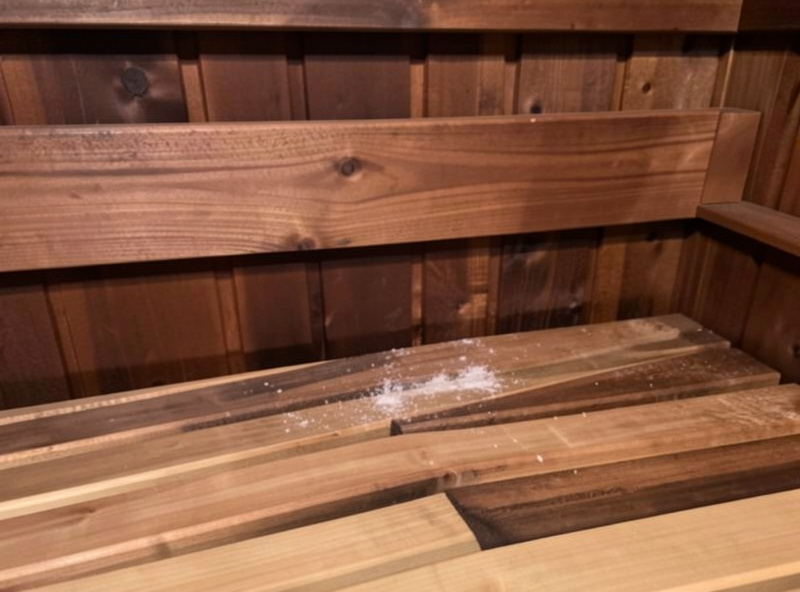
Because sweat isn’t just water — it’s salt, urea, lactate, and skin oil, and when that residue dries into warm wood it becomes food for the skin bacteria that produce the smell. Fresh sweat is nearly odorless; the sour note appears later, as bacteria break down what evaporation left behind. Warm wood plus dried residue plus poor drying is the exact recipe.
The wood is why it lingers. Softwoods like hemlock and cedar are porous and hygroscopic, so the residue doesn’t sit on top — it soaks in. The USDA Forest Products Laboratory’s Wood Handbook chapter on moisture relations describes how wood holds moisture deep in its cell walls long after the surface feels dry, and that hidden damp layer is where the odor bacteria live. It’s also why surface-wiping alone often fails: you clean what you can see and the smell comes right back when the cabin next warms up, because the reservoir a millimeter down is untouched. To actually fix it you have to address the fabric, the wood, and the drying all at once.
What’s the First Thing to Do About a Smelly Cabin?
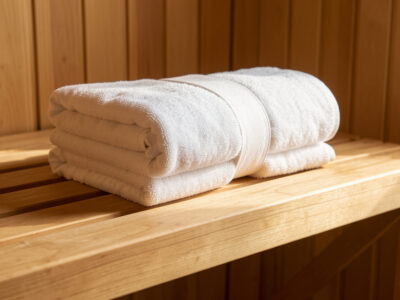
Pull everything soft out of the cabin and wash or replace it. Towels, bench covers, headrests, anything fabric — these hold sweat and mildew far more than the wood does, and a single sour towel will re-scent a clean cabin in one session. Before you touch a cleaner, remove the fabric variable entirely so you know what you’re actually dealing with.
Wash all of it on a hot cycle with no fabric softener, adding a splash of white vinegar in place of softener to strip odor and mineral build-up. If a towel or cover still smells after a hot wash, retire it — some fabric develops a permanent note that never fully leaves. Then run the empty cabin through a normal heat session with the door cracked afterward and see how it smells with no fabric inside. Often the fabric was carrying most of it. Getting your towels and covers right from the start is the single best prevention, which is why I keep the fabric side dialed in and covered separately in best towels and bench covers. With the fabric handled, whatever smell remains is coming from the wood — and that’s where the cleaning goes next.
How Do You Clean the Smell Out of the Wood?
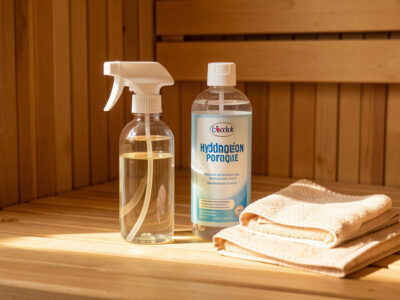
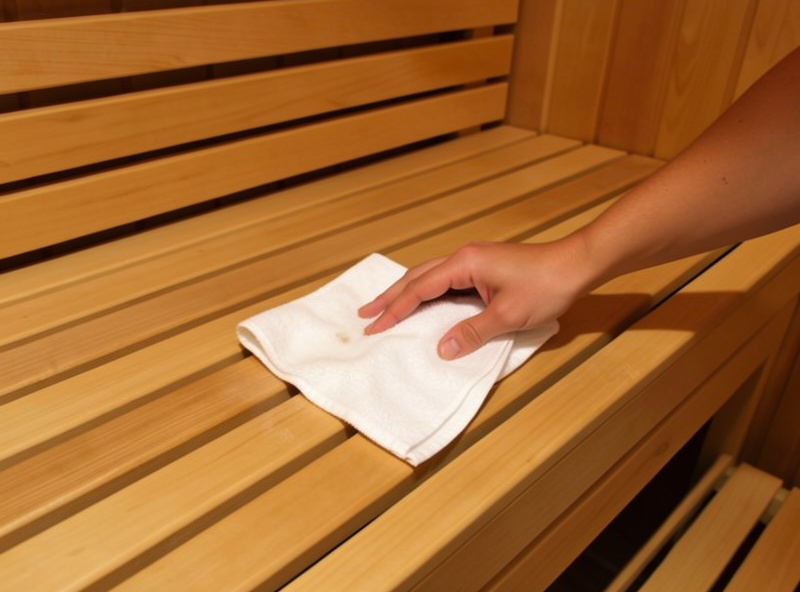
Wipe all the wood with a 50/50 mix of white vinegar and water, then spot-treat the worst areas with 3% hydrogen peroxide. Vinegar’s acetic acid cuts the salt and oil residue and knocks back bacteria while evaporating clean; peroxide goes after the stubborn bacterial patches and breaks down to water and oxygen with no residue left in wood you’re about to heat.
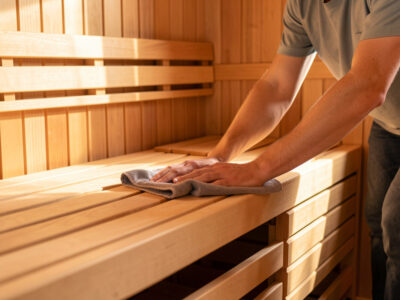
Work along the grain with a well-wrung microfiber cloth — damp, not dripping, because over-wetting just adds moisture you’ll have to drive back out. Pay special attention to the low-airflow spots where smell concentrates: behind the backrest, under the front lip of the bench, and the floor slats where sweat drips and pools. For a patch that stays smelly after the vinegar, dab on a little 3% peroxide, let it sit, and let it dry fully before judging. Note that vinegar cleans and deodorizes but isn’t technically a disinfectant — the EPA’s material on antimicrobial pesticides reserves that term for registered products — but for a home cabin, removing the residue is what actually kills the smell, not disinfecting. The full safe-cleaner rundown, including what never to use, is in safe cleaners for a sauna cabin.
Why Drying Is the Step That Actually Fixes It
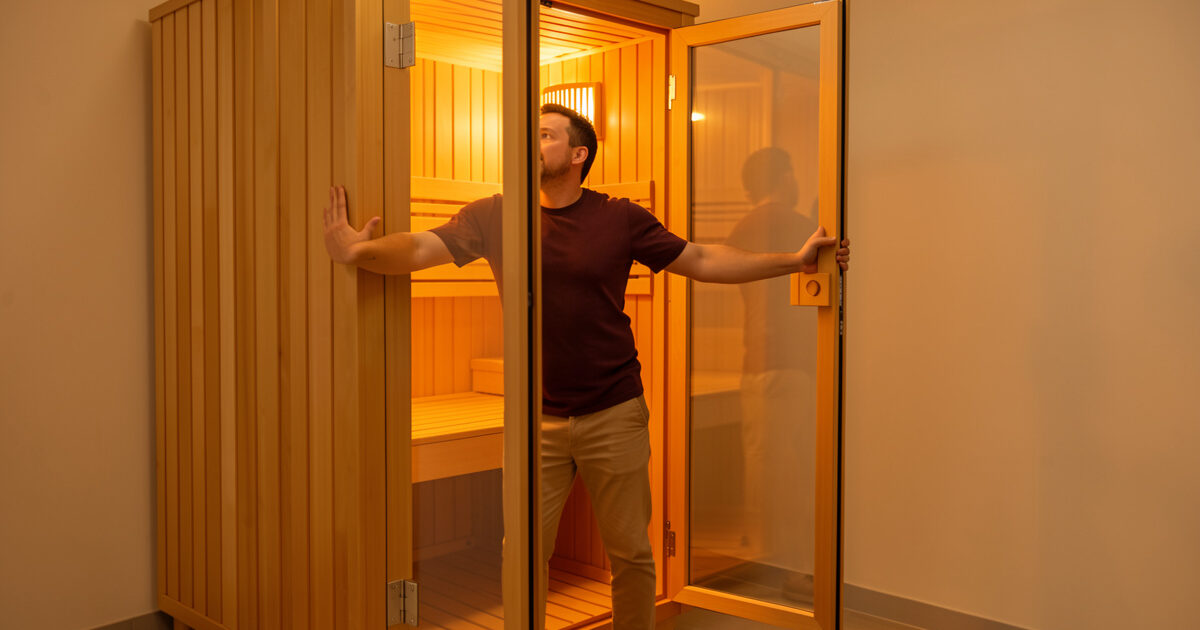
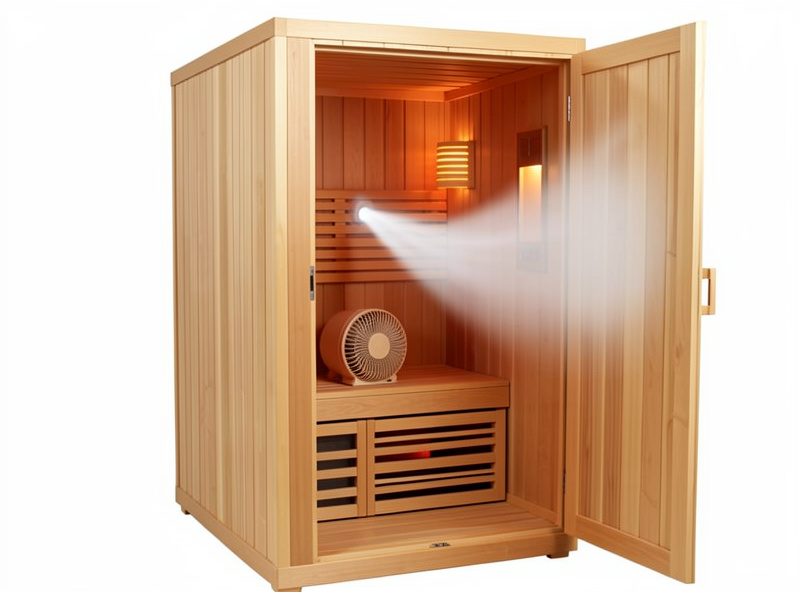
Cleaning removes the current residue, but drying is what stops the smell coming back — because the deep moisture in the wood is what let bacteria set up in the first place. After you clean, run the cabin dry hard for several sessions: door wide open, fan on, until the interior humidity drops back near the room. Do it every session and you starve the problem out.
This is the step I’d skipped that let the smell start. The EPA’s guidance on mold and moisture puts the target plainly — keep indoor humidity below 60 percent, ideally 30 to 50 — and a closed-up cabin after a sweaty session sits well above that for an hour. I keep a cheap digital hygrometer on the bench and don’t close the door until it reads near ambient. In winter, when a cold room drives fast condensation on the glass and cool wood, I extend the fan run and sometimes give a short low-power reheat to warm the wood so it releases the last of its moisture. The complete method — timing, airflow, humidity targets — is in drying the cabin after every session. Clean once, then dry every time: that combination is what makes the fix stick.
What If the Smell Still Won’t Go?
If a deep clean and a week of hard drying haven’t cleared it, the residue has set deeper than a wipe can reach, and the answer is a light sand along the grain followed by a re-oil — or, occasionally, it isn’t a sweat smell at all. Distinguishing those two saves you a lot of wasted effort, so figure out which one you’ve got before escalating.
A set-in sweat smell on darkened wood usually means the discoloration and the odor are in the top fraction of a millimeter, and a gentle sand with fine paper along the grain lifts both, after which you re-oil to even the tone — that overlaps with removing visible marks, which I treat as its own job. But an acrid, sharp, or electrical smell is a completely different animal: a hot or burning smell is not hygiene at all but a reason to stop and investigate the wiring or a heater. And a hot chemical or perfumed smell almost always means someone cleaned with the wrong product — fragranced sprays, essential oils, or softener-treated fabric that gasses off at temperature. Match the fix to the actual smell: sweaty and sour gets cleaning and drying, sharp and electrical gets shut down and checked, chemical and sweet gets the offending product removed and the cabin aired out.
How Do You Stop the Smell Coming Back?
Prevention is three small habits that cost almost no time: catch sweat in washable towels, wipe the warm wood after every session, and dry the cabin before you close the door. Get those three running and the residue never accumulates, which means the smell never has anything to build from. It’s far easier than any cure.
Concretely: a full-body towel plus a foot towel so raw sweat rarely touches the bench, a microfiber cloth on the door handle for the two-minute wipe-down, and the door-open fan routine to dry. Those are the same three pillars I keep coming back to because they’re what actually work. I tie mine to my session log — a simple “wiped/dried: yes” tick per session — and that alone locked the habit in within a week. The reward is a cabin that smells like warm hemlock and nothing else, session after session. For the whole system laid out together, the complete hygiene and odor guide is the map, and if the cabin is shared, the between-users routine in shared-sauna hygiene matters even more because there’s simply more sweat going in.
What I’d Do Starting Today
If I opened my cabin tomorrow to that sour note, here’s the exact order I’d run. Strip and hot-wash all the fabric, retiring anything that stays smelly. Wipe every wood surface with 50/50 vinegar, along the grain, cloth barely damp. Spot-treat the backrest, bench lip, and floor slats with 3% peroxide and let them dry fully. Then dry the empty cabin hard — door open, fan on — and reassess by smell with no fabric inside.
From there it’s maintenance, not rescue: towels down every session, wipe warm, dry to near-ambient humidity before closing up. If a patch stays discolored and faintly sour after all that, a light sand and re-oil finishes it. The thing I wish I’d understood my first winter is that you don’t fight sauna odor with scent — you remove residue and remove moisture, and the smell has nowhere to live. Do that and the cabin goes back to smelling the way it did the day it was installed, which is to say like nothing at all.
Related Reading
- Infrared Sauna Hygiene & Odor: The Complete Guide
- Safe Cleaners for a Sauna Cabin: Vinegar, Peroxide, and What to Skip
- Drying the Cabin After Every Session to Stop Smells
- A Two-Minute After-Session Wipe-Down That Saves the Deep Clean
- Best Towels and Bench Covers to Catch Sweat in the Cabin
- Burning Smell From an Infrared Sauna: When to Stop