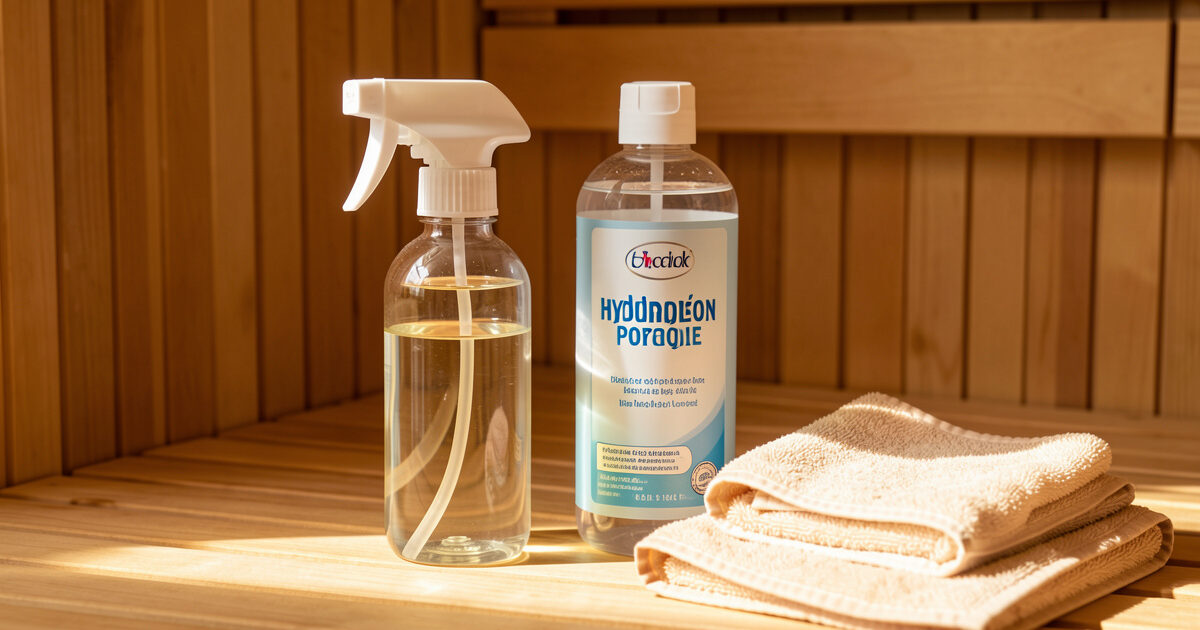
The safe cleaners for an infrared sauna cabin are short and boring: diluted white vinegar for routine wiping, 3% hydrogen peroxide for stains and stronger odor control, and plain warm water most days. The skip list is longer and matters more — no bleach, no ammonia, no pine oil, no fragranced multi-surface sprays. Bare sauna wood absorbs whatever you put on it and then bakes it into the air you breathe at 50°C.
I learned the skip list the hard way, and I’ll get to the cooked-lavender incident below. The short version is that a sauna is not a kitchen counter: the wood is unsealed, porous, and about to be heated with you sitting inside it, so “cleans great on everything” is exactly the wrong instinct. Here’s what’s safe, what’s not, the dilutions I actually use, and why.
What Is the Safest Everyday Cleaner for a Sauna?
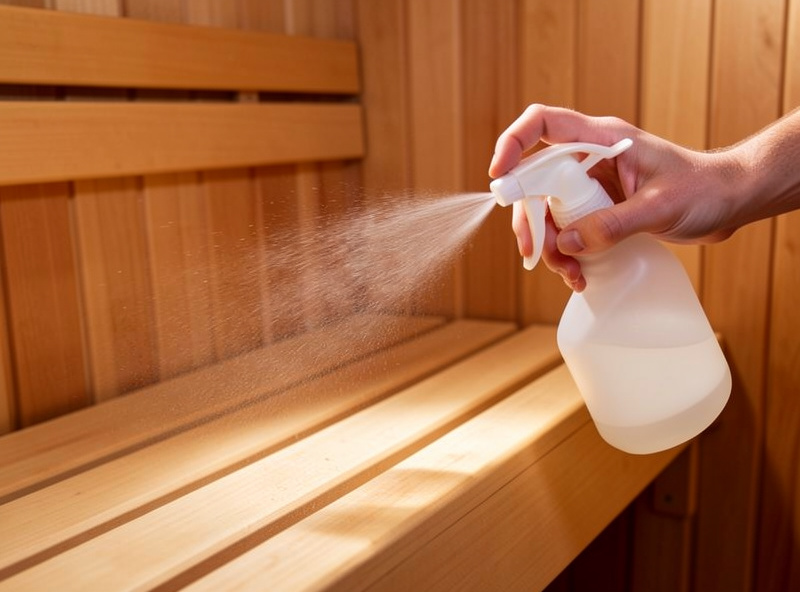
Diluted white vinegar — a 50/50 mix of white vinegar and water — is the safest routine cleaner for bare sauna wood. Its acetic acid cuts the salt and skin-oil residue that causes odor, knocks back bacteria, and then evaporates completely with no lingering scent once dry. Nothing gets left behind to gas off when you heat the cabin, which is the whole requirement.
I keep a labeled spray bottle of the 50/50 mix by the cabin and use it for the weekly wipe of all the wood. Light mist, wipe with a microfiber cloth along the grain, done. It’s worth being precise about what vinegar does and doesn’t do: it cleans and deodorizes, but it is not a registered disinfectant. The EPA’s material on what counts as an antimicrobial pesticide is clear that only products registered and labeled as such can legally claim to disinfect. For a home cabin that distinction rarely matters — you’re managing odor and residue, not sterilizing a clinic — but it’s why I reach for peroxide when I want more microbial kill, not more vinegar. For the daily pass you often need no cleaner at all, just the cloth, as I cover in the two-minute wipe-down.
Is Hydrogen Peroxide Safe for Sauna Wood?
Yes — 3% hydrogen peroxide is the right tool when you want more than vinegar can offer, whether that’s lifting a sweat stain or killing the bacteria behind a stubborn smell. It breaks down into water and oxygen with no residue, which is exactly the property you want in wood you’re about to heat. It’s my step-up cleaner, used spot-wise rather than all over.
The reason peroxide belongs in the safe list and bleach doesn’t comes down to what’s left behind. Peroxide oxidizes the discoloration or the odor bacteria and then vanishes; chlorine bleach can drive into the grain and leave its own residue in wood that then gets heated. For a stain, I flood it lightly with 3% peroxide, let it sit, and let the wood dry fully before judging — the full stain method is its own topic. If you ever do want a labeled disinfectant product for a shared or commercial setup, the EPA maintains a list of selected registered disinfectants with their EPA registration numbers, and hydrogen-peroxide-based products appear among them. For a home cabin, though, the plain 3% bottle from the pharmacy does everything I need.
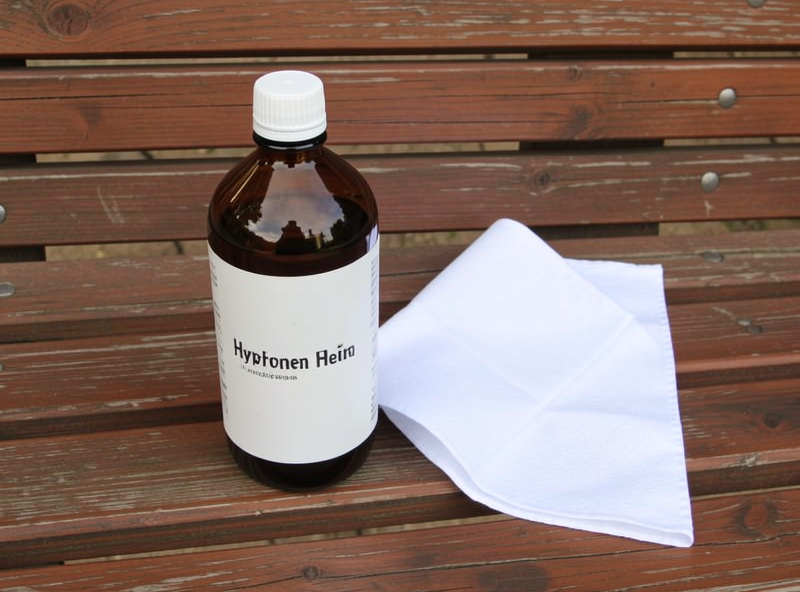
Which Cleaners Should You Never Use in a Sauna?
Never use bleach, ammonia, pine-oil cleaners, fragranced all-purpose sprays, or anything that leaves a film or coating. Every one of them either soaks into the unsealed wood and off-gasses when heated, or leaves a residue you then breathe at temperature. A sauna is the worst possible place for “smells clean” chemistry, because you’re going to cook whatever you leave behind.
Here’s the working list I keep in my head, safe versus skip.
| Cleaner | Verdict | Why |
|---|---|---|
| White vinegar (50/50) | Safe — routine | Cuts residue, evaporates clean, no scent left |
| 3% hydrogen peroxide | Safe — spot use | Kills bacteria and lifts stains, breaks down to water and oxygen |
| Plain warm water | Safe — daily | Enough for a fresh-residue wipe on warm wood |
| Chlorine bleach | Skip | Drives into grain, leaves residue in heated wood |
| Ammonia cleaners | Skip | Harsh fumes, worse when heated in an enclosed cabin |
| Pine oil / fragranced sprays | Skip | Absorbs into wood and gasses off at temperature |
| Fabric softener on covers | Skip | Waxy film cuts absorbency, smells when heated |
Here’s my own mistake, so you can skip it: early on I grabbed a fragranced all-purpose spray from under the sink because it was handy. The next session the cabin smelled of cooked synthetic lavender — a hot, cloying sweetness I could taste at the back of my throat — and it took three door-open airings to clear. Bare wood plus heat plus fragrance is a genuinely unpleasant combination. Warm water and vinegar ever since.
How Do You Dilute and Apply Sauna Cleaners?
Keep it simple: 50/50 white vinegar and water in a spray bottle for routine cleaning, 3% hydrogen peroxide straight from the bottle for spot work, and a well-wrung microfiber cloth so you clean without soaking the wood. The single most common error isn’t the wrong chemical, it’s too much liquid — a dripping-wet bench takes far longer to dry and undoes your odor control.
My routine is a light mist of the vinegar mix, then a wipe along the grain with a barely-damp cloth, then the drying step — door open, fan on — so the wood doesn’t sit wet. For peroxide I go spot-only: a little on the stain or the smelly patch, let it work, dry fully. I always finish any cleaning session with the same after-session drying routine I use normally, because adding moisture and then not clearing it is worse than not cleaning at all. A pack of plain microfiber cloths and a couple of labeled spray bottles is the entire kit — you don’t need a specialty sauna cleaner product, and most of them are just fragranced sprays you should be avoiding anyway.
As an Amazon Associate I earn from qualifying purchases.
What About Cleaning the Glass, Heaters, and Floor?
Glass takes plain water or a little vinegar mix; heater fronts and guards need only a dry or barely-damp wipe when cool and unplugged; the floor slats want a vacuum and a wipe. The key rule across all of them is the same — nothing fragranced, nothing filmy, and never spray liquid directly onto or into an electrical heater element.
For the glass door, the vinegar mix cuts the salty film that builds from humid air without streaking. For the heaters, I wait until they’re cool and the cabin’s off at the circuit, then wipe the fronts with a dry microfiber cloth to clear dust — dust on a heater is a smell source of its own once it warms up, though a sharp acrid or burning smell is a different, electrical problem you should stop and investigate rather than clean. The floor guard lifts out on most cabins for a monthly vacuum of the crumbs and dust that collect under the slats. None of this needs a product beyond water, vinegar, and a vacuum. For how the cleaning cadence fits with towels and daily wiping, the complete hygiene and odor guide lays out the full schedule, and the wood types guide explains why some interiors tolerate cleaning better than others.
Do Natural or DIY Sauna Cleaners Actually Work?
Some do, some are marketing. White vinegar and hydrogen peroxide are the two DIY cleaners that genuinely earn their place, because both do a real job and leave nothing behind. Baking soda has a narrow use as a mild abrasive paste for a stubborn spot, but most of the “natural sauna cleaner” recipes floating around — especially the essential-oil sprays — are exactly what you should avoid.
The essential-oil trap catches a lot of owners. It feels natural and virtuous to spritz the bench with a tea-tree or eucalyptus mix, but you’re adding an oil to bare wood that then gasses off every time you heat the cabin, and oils are precisely the residue you’re trying to keep out of the grain. A pleasant cold smell becomes an overpowering hot one, and now it’s in the wood. Baking soda is more defensible: a thick paste of baking soda and water, rubbed gently along the grain, can lift a localized mark, but rinse it and dry it fully afterward because the powder residue itself can hold moisture. The honest takeaway is that the effective DIY kit is tiny — vinegar, peroxide, water, and occasionally a baking-soda paste — and everything past that is either unnecessary or actively working against you. When a recipe promises to make the cabin “smell amazing,” read that as “adds something to bake,” and skip it. Real freshness comes from removing residue and drying the wood, not from adding scent, which is the whole philosophy behind the hygiene and odor approach across this site.
Is vinegar safe to clean an infrared sauna?
Yes. Diluted 50/50 with water, white vinegar is one of the best routine cleaners for bare sauna wood. The acetic acid cuts salt and skin-oil residue and evaporates clean with no lingering scent. It is not a registered disinfectant, so for stronger microbial control use 3 percent hydrogen peroxide instead. Avoid bleach, ammonia, pine oils, and fragranced sprays.
Can I use hydrogen peroxide in my sauna?
Yes, 3 percent hydrogen peroxide is safe and useful for spot-treating sweat stains and killing the bacteria behind stubborn smells. It breaks down into water and oxygen with no residue, which is exactly what you want in wood you are about to heat. Apply it spot-wise, let it work, and let the wood dry fully rather than flooding the whole bench.
Why can’t I use bleach in a sauna?
Because chlorine bleach can drive into the porous, unsealed wood grain and leave residue in wood that then gets heated with you sitting inside. It is harsh on the wood and unpleasant when warmed in an enclosed cabin. Hydrogen peroxide does the same disinfecting and stain-lifting job and then breaks down cleanly, so use that instead.
Do I need a special sauna cleaner product?
No. Diluted white vinegar, 3 percent hydrogen peroxide, plain warm water, and microfiber cloths do everything a home cabin needs. Most products marketed as sauna cleaners are just fragranced sprays, which are exactly what you should avoid on bare wood because the fragrance absorbs and gasses off when heated.