A two-minute wipe-down after every infrared sauna session is the highest-leverage habit in the whole hobby: it removes the salt and skin oil while the wood is still warm and willing to give it up, which is exactly when residue lifts easiest. Do it consistently and you may never need a deep clean at all. Skip it and you’re signing up for stripping and re-oiling later.
I resisted this for a while because it felt fussy. It isn’t. In my two-person far-infrared cabin the entire routine — bench, backrest, floor slats — takes me under two minutes, and it’s the difference between a cabin that smells like warm hemlock and one that smells like a gym bag by February. Here’s the exact routine, the order I do it in, and why each step is where it is.
Why Does a Two-Minute Wipe-Down Save the Deep Clean?
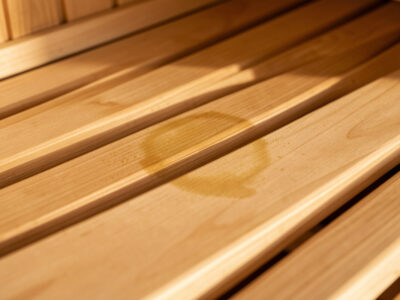
Because it removes the problem before it sets. Sweat is water plus salt, urea, lactate, and skin oil, and that residue only becomes odor once it dries into the wood and feeds bacteria. Wipe it off while it’s still wet and warm and there’s nothing left to sour. Let a dozen sessions dry into the grain and you’ve built a reservoir that needs sanding to remove.
Timing is the whole trick. Warm wood releases residue far more readily than cold wood — the same reason the after-session window is the best time to dry the cabin. The USDA Forest Products Laboratory’s Wood Handbook chapter on moisture relations describes how wood holds and releases moisture through its cell walls; in practice that means the salted sweat sitting on a warm bench wipes clean now but bonds into the grain once it dries. Two minutes now versus a two-hour job later isn’t a close call. And note this is cleaning, not disinfecting — for most home cabins removing the residue is the entire goal, since the EPA’s material on antimicrobial pesticides makes clear that only registered products can actually claim to disinfect, which a home sauna rarely needs.
What Cloth Should You Use to Wipe Down a Sauna?
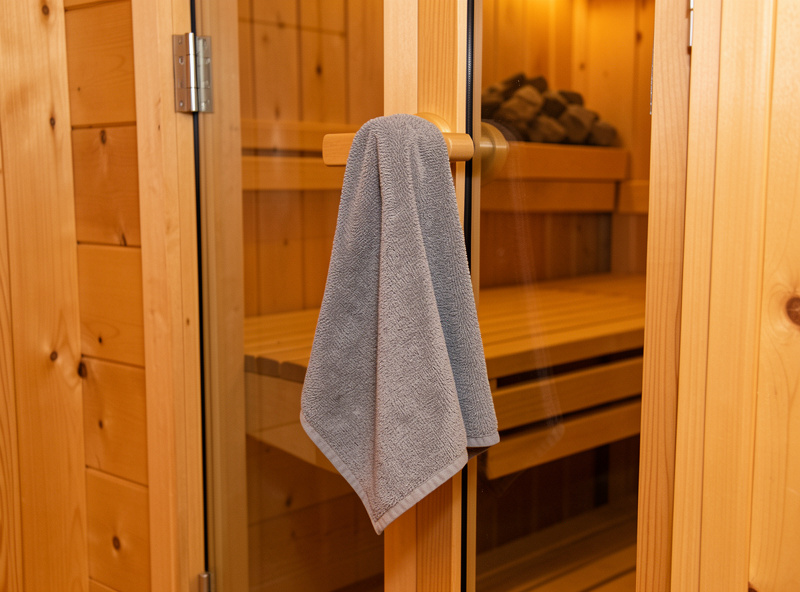
A dry or barely-damp microfiber cloth is the right tool — it lifts salt and oil without soaking the wood, and it’s washable so you’re not buying paper endlessly. I keep a dedicated grey microfiber cloth hanging on the cabin’s door handle, and that placement is not incidental: the moment the cloth lives in a drawer instead of on the handle, the habit dies.
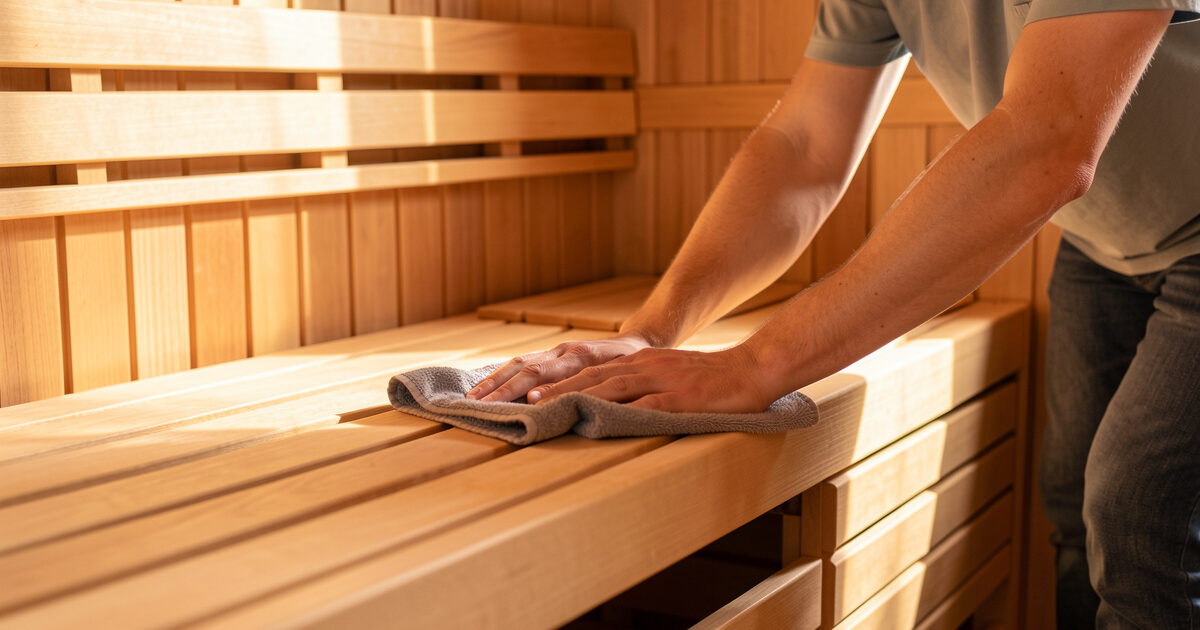
Microfiber beats terry towel here because it grabs residue into the fibers rather than just pushing water around, and it beats paper towel because it doesn’t shed or go soggy. For a normal session a dry cloth is enough; after a heavy-sweat session I dampen it lightly with plain warm water, wring it hard so it’s barely moist, and wipe. The one thing you don’t want is a sopping cloth adding water to wood you’re about to try to dry — that works against the drying step I cover in drying the cabin after every session. Keep a second clean cloth in rotation so one can be in the wash while the other’s on the handle. That’s the entire kit: two cloths and warm water, no spray required for the daily pass.
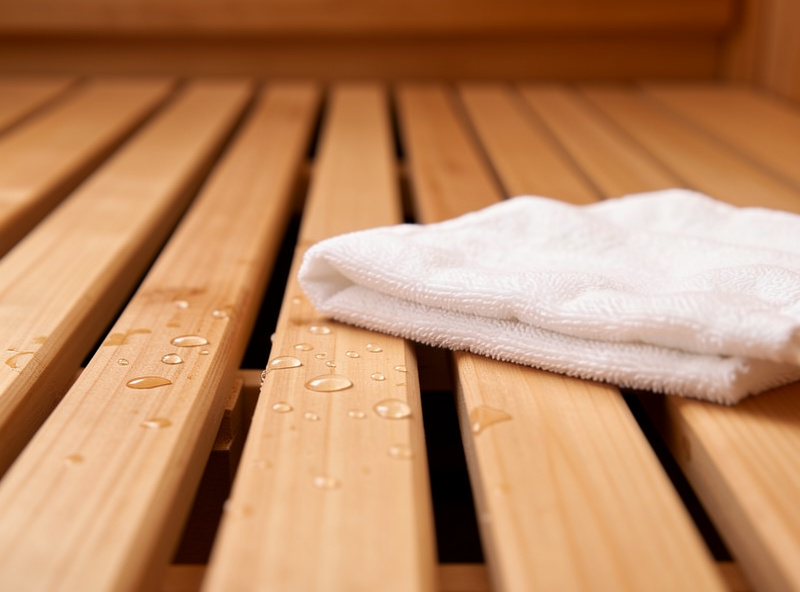
What Order Should You Wipe the Cabin In?
Work top to bottom and dirtiest-last: backrest and walls you leaned on first, then the bench, then the floor slats where everything drips and pools. Going top-down means any residue you loosen falls onto surfaces you haven’t cleaned yet, so you catch it on the way down instead of re-contaminating a finished surface.
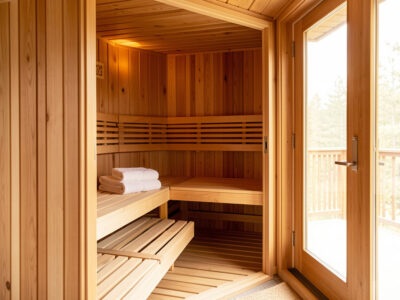
My exact sequence takes well under two minutes. Backrest and the wall section behind my shoulders get a quick pass — that’s where a surprising amount of sweat lands. Then the bench top and its front edge, which is the highest-contact, highest-sweat surface in the cabin and the one most likely to stain if neglected. Then down to the floor slats, where sweat drips between the boards and collects; I run the cloth along and between the slats because that trapped moisture is a classic hidden odor source nobody sees. Heater guards and glass get a wipe only if they’re visibly spotted. The whole time the door is open and the fan is running, so I’m drying and wiping in one overlapping motion. If your cabin is shared, this same order applies but do it between users, not just at the end of the day — the shared routine is in shared-sauna hygiene.
Do You Need a Cleaner for the Daily Wipe-Down?
No. For the everyday pass, a dry or barely-damp microfiber cloth on warm wood does the job — you’re lifting fresh residue, not fighting set-in grime, so plain warm water is plenty. Save the cleaners for the weekly pass. Reaching for a spray every day just risks over-wetting the wood and, if it’s the wrong spray, leaving something to bake.
The mistake I made early was assuming “clean” meant “wet and sprayed.” It doesn’t for daily upkeep. A fragranced all-purpose spray I grabbed once left the cabin smelling of cooked synthetic lavender the next session — a hot, cloying note I could taste at the back of my throat, and it took three door-open airings to clear. On bare sauna wood, which absorbs whatever you put on it and then off-gasses it at 50°C, less is genuinely more. The daily cloth handles the residue; the weekly diluted-vinegar wipe handles the deeper clean. Which cleaners are actually safe, and which to keep far away from the cabin, is a topic worth its own read, and it lives in the complete hygiene and odor guide. The wood you chose also affects how forgiving it is of the occasional missed wipe, which I get into in infrared sauna wood types.
How Do You Make the Habit Actually Stick?
Remove every gram of friction. The cloth lives on the door handle, not in a cupboard. The reason nearly everyone fails at this isn’t laziness, it’s that the tools aren’t within arm’s reach at the exact moment the session ends and you want to walk away. Put the cloth where your hand already goes and the habit builds itself.
The other trick that locked it in for me was tying it to something I already do. I keep a loose session log — set temp, panel temp, kWh per session on the kill-a-watt meter, comfort notes — and once I added a simple “wiped/dried” tick to each entry, missing it started to feel like an incomplete session. Within a week it was automatic. You don’t need a spreadsheet; a note on your phone or a mental “session isn’t over until the cloth’s back on the handle” works the same way. The reward is real and immediate: the cabin smells like nothing but warm wood, and the annual deep-clean I used to dread simply stopped being necessary. For where the two-minute wipe sits alongside drying, towels, and stain removal, the hygiene and odor guide maps the whole system, and the sweat-by-heater-type breakdown explains why a heavy sweater needs the habit even more than a light one.
What If You’ve Already Skipped It for Months?
Then the residue has set, and the daily cloth alone won’t lift it — but the wipe-down is still where you restart. Begin doing it every session immediately to stop adding to the problem, then tackle the accumulated layer with the weekly vinegar wipe and, for any staining, a spot treatment. The habit going forward matters more than any single deep clean.
Think of it as two jobs: stop the bleeding, then heal the wound. Stopping the bleeding is the two-minute wipe from today onward, which prevents any new residue from setting. Healing is the diluted-vinegar wipe and, where sweat has darkened the wood, a peroxide spot treatment — I walk through both in the hygiene guide. The good news is that once you’re wiping consistently, an established cabin recovers faster than you’d think, because you’ve cut off the fresh food supply and the drying step finally gets the deep moisture out. I’ve never had to fully strip and re-oil mine, and the only reason is that the cloth on the handle turned a two-hour chore into a two-minute one I actually do.
Does the Wipe-Down Change for a Portable Blanket or Tent?
It gets even more important, because a portable infrared blanket or tent has no forgiving wood — the sweat lands on synthetic interior fabric that absorbs and holds it. There’s no grain to buy you time, so the immediate wipe is the whole hygiene strategy rather than one part of it. The good news is the surface wipes down in seconds.
On my travel blanket the routine is the same logic, tightened. I always lie on a full cotton towel so my skin never touches the liner, then wipe the interior with a barely-damp microfiber cloth the second I’m out and leave it open flat to dry rather than folding it away warm. The one rule that matters most is never zipping a damp blanket into its bag — I did that once after a trip and opened it a week later to a sour, plastic-and-sweat smell no wipe would fully shift, because I’d sealed the moisture into a non-breathing envelope. Towel first, wipe immediately, dry open: for a portable unit that three-part habit is the difference between a liner that stays fresh and one you end up replacing. The same “catch it in fabric first” principle scales up to a cabin too, which is why towels and covers are their own line of defense in the hygiene and odor guide.
How long should the after-session wipe-down take?
Under two minutes for most cabins. You are wiping the backrest, the bench, and the floor slats while the wood is still warm, which is when residue lifts most easily. It only becomes a long job if you skip it for weeks and let the salt and oil dry into the grain.
What should I use to wipe down my infrared sauna after each use?
A dry or barely-damp microfiber cloth. It lifts salt and skin oil without over-wetting the wood, and it is washable so you reuse it. Keep a second cloth in rotation so one can be in the wash. For the daily pass you do not need any cleaner, just the cloth and, after a heavy sweat, a little warm water.
In what order should I wipe down the cabin?
Top to bottom: backrest and walls first, then the bench, then the floor slats last. Working downward means any residue you loosen falls onto surfaces you have not cleaned yet, so you catch it on the way down instead of re-contaminating a finished surface. Do the floor slats carefully since sweat pools between the boards.
Do I need to disinfect my sauna after every session?
No. For a home cabin used by one person or a household, the goal is removing sweat residue, not disinfecting. A microfiber wipe plus drying handles that. Disinfecting is a separate step best reserved for shared setups, and only registered products can actually claim to disinfect, which most home saunas never need.