To lift sweat stains from sauna wood without damaging it, start gentle and escalate only as needed: 3% hydrogen peroxide first, a baking-soda paste for what remains, and a light sand along the grain plus a re-oil as the last resort. Most sweat staining sits in the top fraction of a millimeter, so patience beats aggression — the fastest way to ruin a bench is to reach for bleach and coarse sandpaper on day one.
I run a two-person hemlock cabin, and the bench front is where staining shows first because it’s the highest-contact, highest-sweat surface in the whole cabin. The good news from years of dealing with it: nearly every sweat mark I’ve met came out with peroxide and patience, and I’ve never had to strip a bench back to bare and refinish it. Here’s the escalation ladder, from the gentlest fix to the last resort, and how to know which rung you’re on.
What Causes Sweat Stains on Sauna Wood?
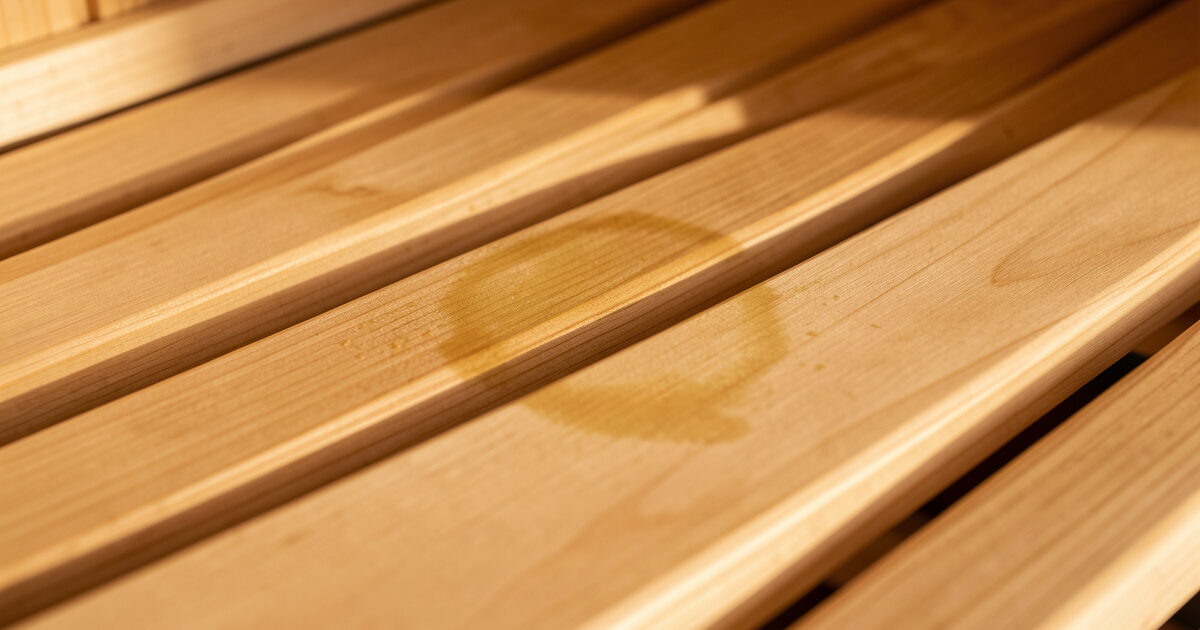
Sweat stains are the salt, urea, and skin oil in sweat oxidizing and discoloring the wood surface after repeated sessions. The yellow-brown shadow you see is dried residue that’s bonded into the top layer of the grain — the same residue that causes odor, just concentrated enough to change the wood’s color. High-contact spots stain first because that’s where the most sweat lands.
Understanding where the stain lives tells you how to remove it. The USDA Forest Products Laboratory’s Wood Handbook chapter on moisture relations describes how porous softwoods absorb liquids into their cell structure, which is exactly why sweat soaks in rather than sitting on top — but it also soaks in shallowly, so the discoloration is usually near the surface rather than deep. That’s the whole reason the gentle methods work: you’re lifting a thin oxidized layer, not the wood beneath it. The wood you have matters too, since lighter woods like hemlock and basswood show sweat shadows more than darker cedar; I get into that in infrared sauna wood types. Prevention is always easier than removal, and it starts with keeping sweat off the wood in the first place.
How Do You Remove a Sweat Stain Without Sanding?
Reach for 3% hydrogen peroxide first — it oxidizes the discoloration and lifts most sweat stains with no abrasion at all. Flood the stain lightly, let it sit for a while, wipe, and let the wood dry fully before you judge the result, because damp wood looks darker than it will once dry. Repeat once or twice before escalating. This clears the majority of stains I encounter.
Peroxide is the right first tool because it does the job and then vanishes — it breaks down into water and oxygen with no residue in wood you’re about to heat, which is exactly why it appears among hydrogen-peroxide products on the EPA’s list of selected registered disinfectants. If peroxide alone doesn’t finish it, a paste of baking soda and water rubbed gently along the grain adds mild mechanical lift without cutting into the wood; rinse and dry it fully afterward. Only if both fail do you move to sanding. Crucially, skip bleach entirely: chlorine can drive into the grain and leave residue in heated wood, and it can bleach the surrounding area unevenly so you trade a stain for a pale patch that never matches. The full safe-versus-skip cleaner list is in safe cleaners for a sauna cabin.
When Should You Sand a Sauna Stain — and How?
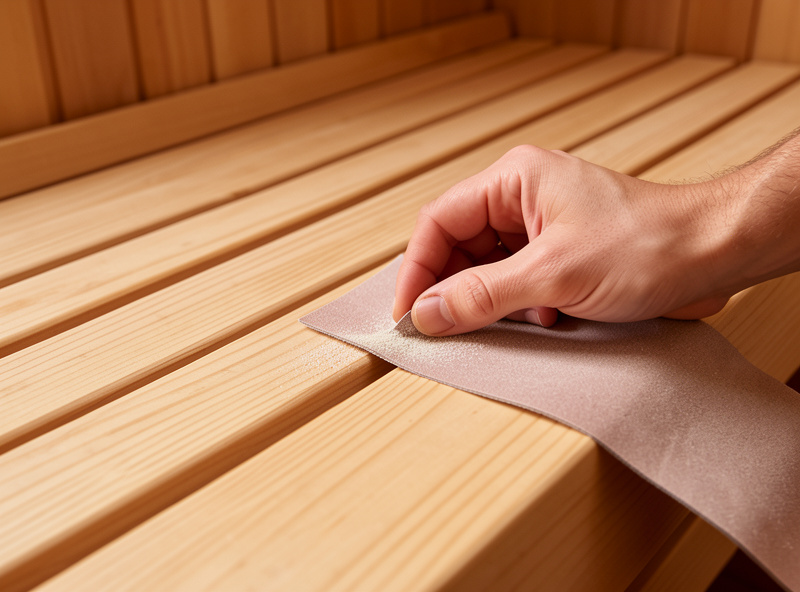
Sand only when peroxide and baking soda have failed, and then lightly, along the grain, with fine paper. A stain that’s set over a full season can be too deep for chemistry alone, and a gentle sand removes the thin discolored layer. The rules are simple: fine grit, with the grain never across it, even pressure, and stop the moment the color lifts.
Here’s the escalation ladder I actually follow, matched to how bad the stain is.
| Stain severity | Method | Grit / product | Then |
|---|---|---|---|
| Fresh, light shadow | Diluted vinegar wipe | 50/50 vinegar and water | Dry fully |
| Set, yellow-brown | Hydrogen peroxide | 3% peroxide, 1–2 passes | Dry, reassess |
| Stubborn spot | Baking-soda paste | Baking soda + water | Rinse, dry |
| Season-deep stain | Light sanding | 180–220 grit, with grain | Re-oil to match |
| Widespread darkening | Sand + refinish section | 150 then 220 grit | Re-oil whole panel |
Use a sanding block rather than bare fingers so pressure stays even, start around 180–220 grit, and feather the edges into the surrounding wood so there’s no visible border. I learned that last part the hard way: the first stain I ever sanded, I got impatient and worked a small circular motion across the grain on the bench’s front edge, which left a dull cloudy patch of fine cross-grain scratches that caught the light at every session until I sanded the whole board back and re-oiled it to fix my own shortcut. Go slow — you can always sand more, but you can’t put wood back. A fine-grit sandpaper assortment is worth having on hand for exactly this. After any sanding, the wood needs re-oiling to restore its tone and protection.
Do You Need to Re-Oil the Wood After Removing a Stain?
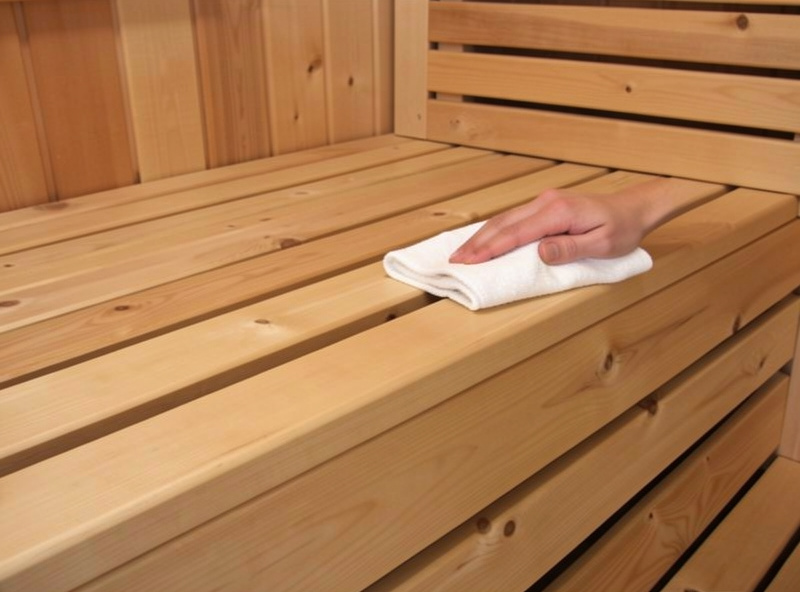
Yes — anywhere you’ve sanded, you’ve exposed fresh, unprotected wood that needs re-oiling to even the color and restore its surface. Skipping this leaves a lighter patch that stains again faster than the wood around it, because you’ve removed whatever protection was there. A light coat of a food-safe, sauna-appropriate oil blends the repair in and re-seals the spot.
Match the oil to sauna use: a food-safe or paraffin-based sauna oil rather than a standard furniture polish or anything fragranced, since whatever you apply gets heated with you inside the cabin. Apply a thin coat with a cloth along the grain, let it soak, wipe off the excess, and let it cure before the next session. The goal is to blend the sanded area into the surrounding tone, so feather the oil outward rather than stopping at a hard line. A food-safe sauna wood oil is the right product here; skip the hardware-store polyurethane and anything scented. Deeper wood care — full re-oiling schedules and how seasonal swings affect it — is its own maintenance topic beyond day-to-day hygiene, and how the wood moves through a cold winter is covered in freeze-thaw and sauna wood.
As an Amazon Associate I earn from qualifying purchases.
How Do You Stop Sweat Stains From Forming Again?
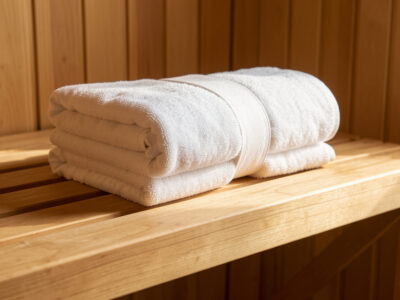
Keep sweat off the wood and dry the cabin after every session — the same two habits that prevent odor also prevent staining, because they’re the same residue. A body towel and foot towel intercept the sweat before it reaches the bench, and drying stops any that gets through from soaking in and oxidizing. Prevention here is genuinely trivial compared to removal.
My routine is fixed: a large flat-weave towel down the bench and a small towel where my feet drip, the two-minute wipe-down of the warm wood, and the after-session drying that gets the interior back near room humidity before I close the door. Do those and the bench front — the first place to stain — simply stops staining. The reason I’m this systematic about a cosmetic issue is that a stain is a warning: it means residue is accumulating and the wood is staying wet, which is the same condition that eventually smells. Fix the habit and you fix both at once. For where stain removal sits in the full picture of towels, cleaners, and drying, the complete hygiene and odor guide ties the whole routine together, and if you’re already fighting a smell alongside the stain, start with getting the sweat smell out.
How do I get sweat stains out of sauna wood?
Start with 3 percent hydrogen peroxide applied lightly to the stain, left to work, then wiped and dried fully. Most sweat stains sit in the top fraction of a millimeter and lift with peroxide alone. If it remains, try a baking-soda-and-water paste rubbed along the grain, and only sand lightly with fine grit as a last resort, followed by re-oiling.
Can I use bleach to remove sauna sweat stains?
No. Chlorine bleach can drive into the porous grain and leave residue in wood you then heat with you inside, and it often bleaches the surrounding area unevenly, trading a stain for a pale patch that never matches. Use 3 percent hydrogen peroxide instead, which lifts the stain and then breaks down cleanly into water and oxygen.
Do I have to sand sweat stains out of the bench?
Usually not. Most stains lift with hydrogen peroxide or a baking-soda paste without any sanding. Sanding is the last resort for a stain that has set over a full season and is too deep for chemistry. When you do sand, use fine 180 to 220 grit with the grain, stop as soon as the color lifts, then re-oil the spot to blend it in.
What oil should I use after sanding a sauna stain?
Use a food-safe or paraffin-based sauna oil, not furniture polish, polyurethane, or anything fragranced, because whatever you apply gets heated with you in the cabin. Apply a thin coat along the grain, let it soak, wipe off the excess, and let it cure before the next session. Feather it outward so the repair blends into the surrounding tone.
Why does my sauna bench stain but the walls don’t?
Because the bench, especially its front edge, is the highest-contact and highest-sweat surface in the cabin, so it takes the most residue. Lighter woods like hemlock and basswood also show sweat shadows more than darker cedar. Using a towel and a washable bench cover to intercept sweat, plus wiping and drying after each session, stops the bench staining in the first place.