The accessories that actually change how a home infrared sauna feels are a chromotherapy light bar, a decent thermometer-hygrometer, a washable bench cover, a moisture-rated speaker, and a plug-in energy meter — together usually $120 to $400 on top of the cabin. Everything else is either a comfort tweak or a gimmick, and after five winters of adding, swapping, and quietly returning things, I can tell you which is which. The cabin I run is a 2-person low-EMF far-infrared hemlock unit on its own 16A circuit, and almost none of these upgrades touch the heaters — they touch the parts you sit on, breathe, see, and pay for.
This guide walks the full accessory stack the way I’d set up a cabin from scratch today: what’s worth buying first, what to skip, and the engineering reasons behind each call. I’ll point you to the deeper spoke guides where each accessory deserves its own page, but the short version is that a sauna is a box of radiant heat, and the best accessories respect that — they survive the heat, don’t off-gas into it, and earn back their cost in comfort or data you can read on a meter.
What Accessories Does an Infrared Sauna Actually Need?
An infrared sauna needs almost nothing to function — the heaters and a timer do the work. But four accessories meaningfully improve a daily-use cabin: an independent thermometer-hygrometer (the built-in readout lies by 5-15°F in my experience), a washable bench cover, a chromotherapy light if you use the cabin in the dark, and a plug-in energy meter so you actually know what a session costs. I’d buy those four before anything decorative.
The reason most accessory lists balloon to twenty items is that vendors sell upgrade kits, and upgrade kits pad the cart. The honest hierarchy is need, comfort, and ambiance. Need is anything that protects the wood, your skin, or gives you data. Comfort is backrests and towels. Ambiance is lighting and aroma. I’ve spent on all three, but only the first category changed how often I actually use the sauna.
One framing that helped me stop overbuying: separate accessories that make the cabin work better from accessories that make it feel nicer. A door seal, a thermometer, and an energy meter all make the cabin work better — they affect heat, cost, and your read on what’s happening. A backrest, a speaker, and a diffuser make it feel nicer. Both categories are legitimate, but if money is tight, the “work better” accessories are cheaper and pay back faster, so they come first every time. I learned that order the expensive way, by buying ambiance before instrumentation and then wondering why my electricity bill surprised me.
Chromotherapy Lighting: Ambiance, Not Therapy
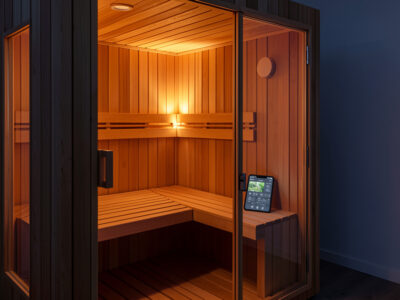
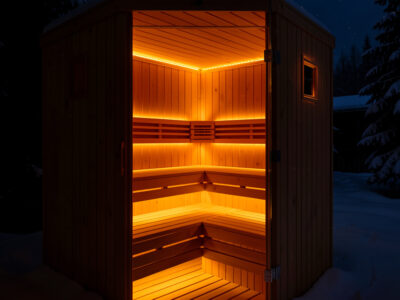
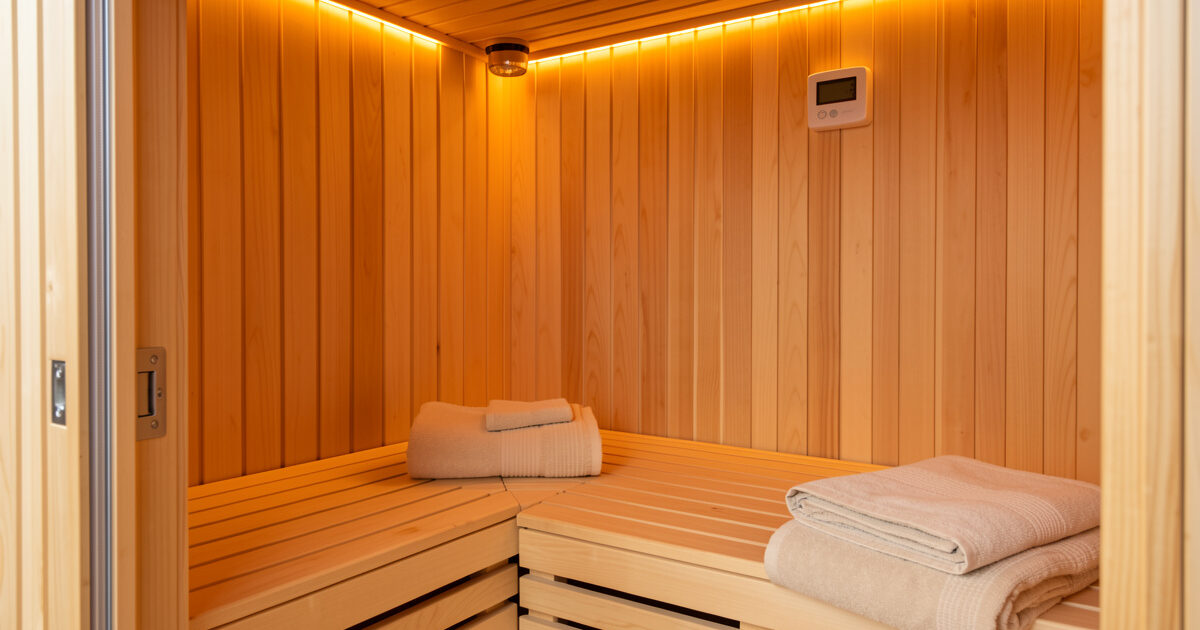
Chromotherapy lighting is colored LED light — usually a 7-color RGB bar wired to a remote — added for mood and ambiance, not for any medical effect. A good chromotherapy LED light bar runs $40 to $120 and mounts above the bench, well clear of the panels. The color does nothing to your body that the manufacturers can prove; it changes the room, and a calm room is a real reason to sit longer.
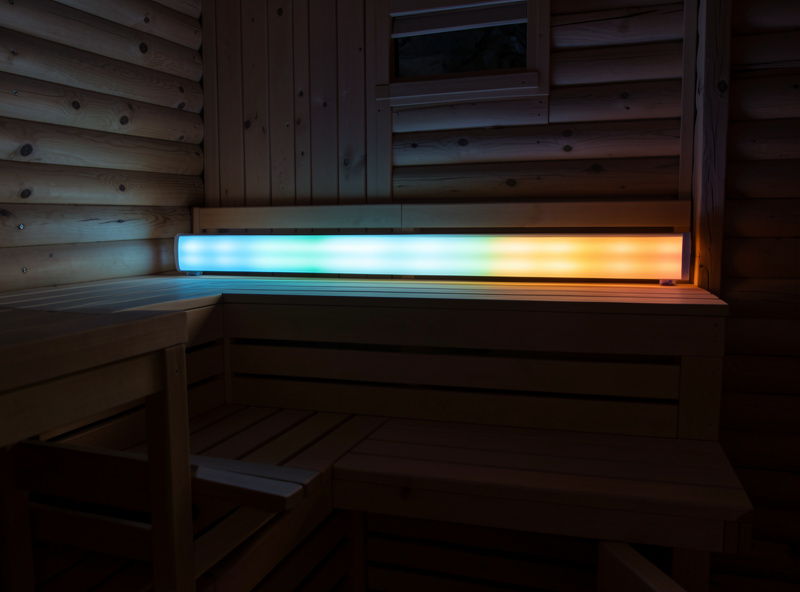
I keep mine on a warm amber most evenings because a Swedish winter night is dark enough that the default cold-white cabin light feels clinical. The engineering points that matter are heat rating (the LED housing has to tolerate cabin temps near 140°F at the ceiling), low-voltage wiring kept off the heater circuit, and a diffuser so you’re not staring at raw diodes. Skip any kit that claims the light “penetrates” or “heals” — that’s red-light-therapy marketing bolted onto an RGB strip, and the two are not the same hardware. If you want the genuine red-light versus infrared distinction, I break the hardware apart in the red light vs infrared sauna comparison; chromotherapy is neither. I cover the full spectrum-vs-ambiance distinction in the chromotherapy lighting guide.
Thermometer and Hygrometer: The One Accessory I’d Never Skip
An independent thermometer-hygrometer is the single most useful sauna accessory, because the cabin’s own display is usually a set-temp readout, not a measured one. On my meter, a cabin set to 140°F often holds 125-130°F at bench height during the first ten minutes — a 10-15°F gap that changes your whole session. A $15 to $30 digital unit fixes that blind spot.
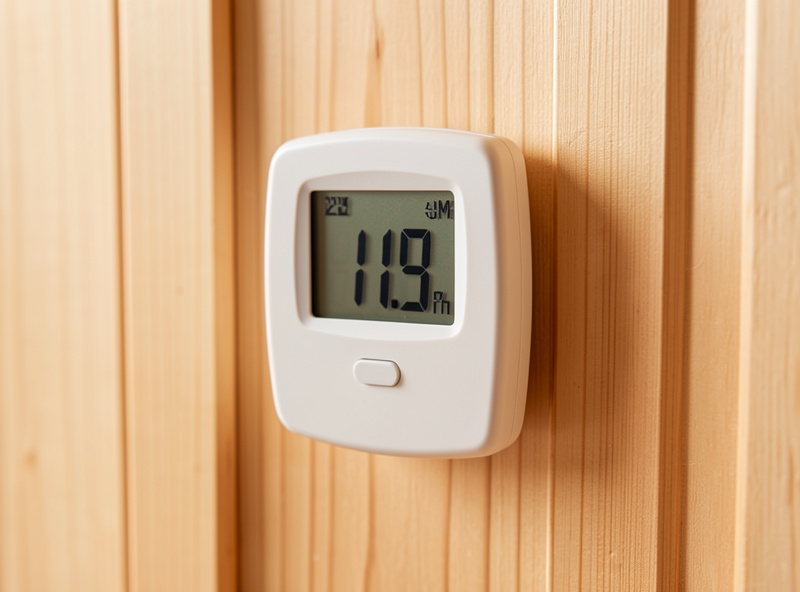
Humidity matters too. Infrared cabins run dry, often below 20% relative humidity, which is why your skin tightens and why hydration is a real concern. A combo thermometer-hygrometer mounted at bench height tells you both numbers at a glance. As an Amazon Associate I earn from qualifying purchases. I run a basic digital hygrometer plus an IR thermometer for spot-checking panel surface temps, and the two together took the guesswork out of dialing in set temp versus felt heat. The bench-cover and session-comfort decisions both depend on knowing these numbers, so this is where I’d start.
Bench Covers and Towels: Protecting the Wood
A bench cover protects the hemlock or cedar from sweat, which is the number-one thing that ages a sauna interior. Untreated softwood soaks up perspiration, darkens, and eventually smells — a $20 to $50 microfiber or linen cover, washed weekly, prevents all of it. This is maintenance disguised as a comfort accessory, and it’s cheap insurance on a cabin that cost thousands.
Material choice is the whole game. You want something that wicks and dries fast, tolerates a hot wash, and doesn’t off-gas in the heat — which rules out a lot of synthetic blends with rubberized backing. I use plain linen towels over the bench and floor because they breathe, launder cleanly, and don’t trap odor the way bamboo-viscose blends did in my cabin. Cotton terry works but holds water longer. The materials and laundering details are their own rabbit hole, covered in the bench cover materials guide.
Audio: Speakers That Survive the Heat
A sauna speaker has to tolerate heat and humidity that would kill a normal Bluetooth unit, which is why outdoor- or marine-rated speakers are the right category — not “sauna speakers,” which barely exist as a real product class. A rugged IP67 Bluetooth speaker placed outside the direct radiant path, or a wall-mount marine pair, runs $30 to $150 and just works. I keep mine on a shelf near the door, not bolted to a panel wall, so it never bakes.
The mistake people make is mounting a speaker on the heater wall where ceiling temps climb past 140°F — lithium batteries and heat are a bad pairing, and I’ve watched a cheap unit swell after one summer of that. Position it in the coolest part of the cabin, keep it battery-powered to avoid running mains audio wiring into a wet hot box, and accept that bass will be thin in a small reflective space. For the full placement-and-rating breakdown, see the sauna speaker system guide.
Door Seals: The Cheapest Efficiency Upgrade
A worn door seal is the most common reason an older cabin takes longer to preheat and costs more to run — a $10 to $30 silicone or magnetic gasket replacement often restores 5-10°F of lost ceiling temp. Glass-door cabins especially lose heat at the edges as the original foam compresses over a few hundred sessions. This is the upgrade nobody markets because it isn’t sexy, and it’s one of the few accessories that pays for itself in electricity.
You diagnose it by feel: run the cabin to temp, then run your hand along the door edge for a draft, or watch where the IR thermometer reads cold along the frame. On my full-spectrum unit the original adhesive-backed seal started leaking at the bottom corner after about two winters, and a self-adhesive high-temp silicone strip brought the preheat time back down. The replacement process and gasket types are detailed in the door seal replacement guide.
Essential Oil Diffusers: Aroma, Carefully
An essential-oil diffuser adds scent for mood and ambiance — not treatment — and in an infrared cabin you want a small standalone unit, never oil applied to the heaters. A $20 to $60 ultrasonic or passive diffuser placed on a shelf does the job; what you must not do is drip oil onto a hot panel, which is both a smoke and a residue problem. Aroma is a real comfort lever, but it’s a mood lever, and that’s the only claim I’ll make for it.
The engineering caution here is heat and oil chemistry. Many ultrasonic diffusers aren’t rated for a 130°F+ environment, so I run mine for the cabin air rather than inside the hottest zone, or use a passive clip diffuser with a few drops on a pad. Eucalyptus and pine read as “sauna” to most people; I keep it light because a small sealed cabin concentrates scent fast. The diffuser types and safe-placement rules are in the essential oil diffuser guide — and nothing in it treats aroma as anything but ambiance.
Energy Monitoring: Knowing What a Session Costs
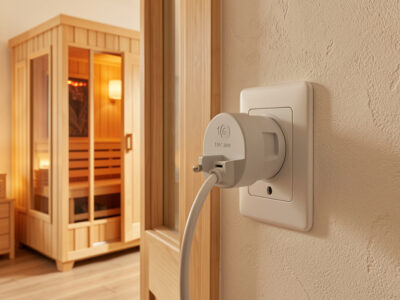
An energy monitor is the accessory that turns guessing into data — a $15 to $40 plug-in energy meter on the sauna circuit shows real watt draw and kWh per session, preheat included. My 2-person carbon cabin pulls about 1,500W, and on my kill-a-watt a full session including preheat lands around 0.5-0.8 kWh, not the lower number the spec sheet implies. That’s the difference between estimating your running cost and reading it.
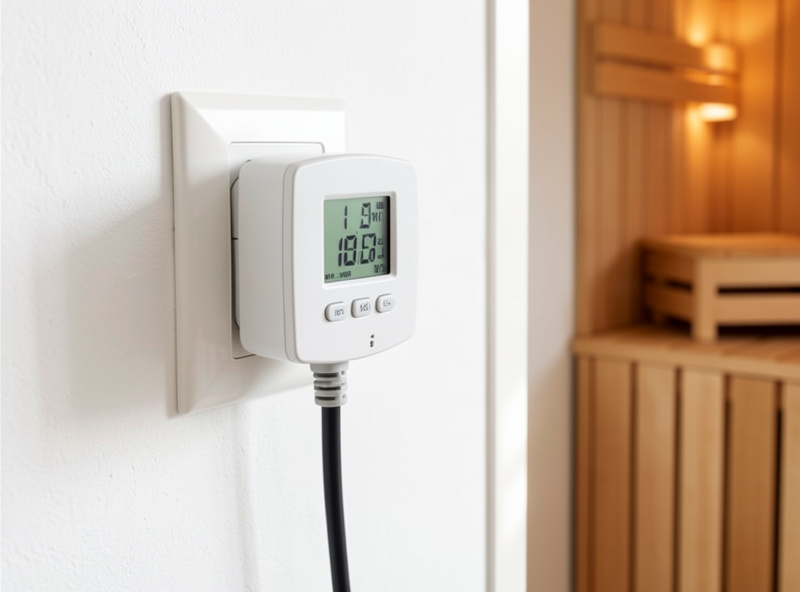
There are three monitoring options worth knowing: a basic plug-in energy meter for a 120V cabin, a smart energy plug that logs to your phone and lets you schedule preheat, and a clamp meter or whole-circuit monitor for a hardwired 240V unit that can’t plug into a meter. I run a smart plug on the same hub that controls my grow lights so the cabin preheats on a schedule and logs every kWh — the same instinct that drives my session-tracking and logging setup. This is monitoring gear, distinct from the running-cost math — for the actual cost formula and yearly numbers, see the electricity cost breakdown; for which meter to buy and how to read it, the electricity usage monitor guide.
Backrests, Cushions and Floor Mats: Comfort That Lasts
A contoured backrest is the comfort upgrade I underrated for years — a $25 to $60 wood or heat-safe cushioned backrest turns a flat bench into something you can actually relax against for a 30-minute session. The flat vertical wall of most cabins pushes your spine into a panel, and in a far-infrared unit that panel is exactly where you don’t want firm contact. A simple slatted hemlock backrest solves it without blocking radiant heat. This matters most in a small one-person cabin, where the seating geometry is tighter — something I get into in the solo cabin setup guide.
Floor mats are the other quiet win. The cabin floor stays cooler than the air and gets slick with sweat, so a quick-dry bamboo or teak floor mat improves footing and protects the floor wood the same way a bench cover protects the bench. I avoid foam or rubber mats because they off-gas in the heat and trap moisture underneath, which is how you grow mildew in a corner you never look at. The pattern across all comfort accessories is the same: natural materials that breathe, tolerate heat, and launder or wipe down. Anything sealed, foamed, or rubber-backed is a moisture trap waiting to happen in a hot, humid box.
Timers, Controllers and Smart Plugs: Automating Preheat
A smart plug or upgraded controller is the accessory that makes a sauna part of your routine instead of a chore — a $15 to $35 smart plug lets the cabin preheat on a schedule so it’s at temperature when you walk in. A far-infrared cabin needs 15-20 minutes of preheat to feel right, and nobody wants to start that countdown after a long winter workday. Automating it is the difference between using the cabin four times a week and twice.
The polymath crossover here is real: the same smart-home hub that runs my hydroponic grow lights pre-heats the sauna on a weeknight schedule, one rule engine handling everything in the house that draws current. The caution is electrical — a 120V plug-in cabin can run on a standard smart plug rated for the load, but a hardwired 240V unit cannot, and you should never daisy-chain a high-draw heater through an underrated plug. Check the cabin’s amp draw against the plug’s rating before you trust it with 1,500W. Done right, scheduled preheat is the single accessory that most changed how often I actually sit in the cabin.
Accessory Comparison: Cost, Priority, and What It Does
| Accessory | Typical Cost | Priority | What It Actually Does |
|---|---|---|---|
| Thermometer + hygrometer | $15-30 | Buy first | Real bench-height temp and humidity vs the cabin’s set-temp readout |
| Energy meter / smart plug | $15-40 | Buy first | Actual kWh per session, scheduled preheat |
| Bench cover / towels | $20-50 | Buy first | Protects wood from sweat, washable, prevents odor |
| Door seal replacement | $10-30 | When preheat slows | Restores lost ceiling temp, cuts running cost |
| Chromotherapy light | $40-120 | Comfort | Colored ambiance for dark-room sessions; no medical effect |
| Bluetooth speaker (IP-rated) | $30-150 | Comfort | Heat-tolerant audio placed in the coolest zone |
| Essential oil diffuser | $20-60 | Ambiance | Scent for mood; never applied to heaters |
| Backrest / floor mat | $25-60 | Comfort | Spine support and footing in natural, breathable materials |
| Smart plug / timer | $15-35 | Routine | Scheduled preheat so the cabin is ready when you are |
The One Rule Behind Every Sauna Accessory: Heat Tolerance
Every accessory decision in a sauna comes back to one physical fact: the cabin is a sealed box that swings from room temperature to 140°F at the ceiling and runs bone-dry, often under 20% humidity. That environment punishes anything not built for it. The accessories that fail in a cabin all fail for the same reasons — plastics warp or off-gas, adhesives let go, batteries swell, foams trap moisture, and cheap electronics cook. Knowing that, you can predict which accessory will survive before you buy it.
The rule I apply at the cart is simple: would I trust this in a hot car in summer, plus moisture? A marine speaker passes. A bargain Bluetooth puck does not. Linen passes; rubber-backed mats do not. A high-temp silicone gasket passes; the foam strip the cabin shipped with eventually doesn’t. This single filter — heat plus humidity tolerance — sorts the entire accessory market into “lasts” and “lands in the bin by spring,” and it’s why I keep coming back to natural materials and outdoor-rated gear. The vendors selling glossy upgrade kits rarely mention it, because half their kit wouldn’t pass.
That same filter is why I’m skeptical of anything marketed as sauna-specific at a premium. A “sauna Bluetooth speaker” is usually just a marine speaker with a markup; a “sauna thermometer” is a hygrometer that tolerates heat. Buy the honest category — outdoor, marine, high-temp, industrial — and you’ll pay less for gear that’s actually engineered for the conditions, instead of paying extra for the word “sauna” on the box.
What to Buy First (and What to Skip)
If I were kitting out a new cabin on a budget, I’d spend the first $80 on a thermometer-hygrometer, a plug-in energy meter, and a stack of linen towels — the three accessories that give you data and protect the investment. Everything else can wait until you know how you actually use the cabin. Chromotherapy and audio are genuine quality-of-life upgrades, but they’re second-wave purchases.
What I’d skip: “ion generators,” magnet kits, vague “detox” add-ons, and any accessory that makes a health claim, because the value of an infrared cabin lives in heat performance, comfort, and cost — not in bolt-on wellness gadgets. I’ve bought a few of those over the years and quietly returned them. The accessories that survived in my cabin are the boring, functional ones, and that’s the pattern worth trusting.
If you want a simple sequence: buy the thermometer-hygrometer and the energy meter first, because they cost almost nothing and immediately make the cabin legible — you stop guessing at temperature and cost. Add the linen towels in the same order. Then, once the cabin is instrumented and protected, treat yourself to the comfort layer: a chromotherapy light for dark evenings, a rugged speaker placed somewhere cool, and a small diffuser for aroma. Keep the door seal in mind as a maintenance check rather than a purchase, and replace it the moment preheat starts dragging. That order — instrument, protect, then comfort — is the one I’d give anyone setting up a cabin, and it’s the order that keeps you from overspending on the parts that don’t matter. For the engineering behind the cabin itself, the heater and EMF guide and the running-cost guide are the two companion reads I’d pair with this one.
Frequently Asked Questions
What accessories do I actually need for an infrared sauna?
The four worth buying first are an independent thermometer-hygrometer, a plug-in energy meter, washable bench towels, and a chromotherapy light if you use the cabin in the dark. Together they run about $90 to $220 and either give you data or protect the wood.
Is chromotherapy lighting medically beneficial?
No. Chromotherapy lighting is colored LED ambiance, not therapy. A 7-color RGB bar changes the mood of the room, which can make sessions more relaxing, but it has no proven medical effect and should not be confused with red-light-therapy hardware.
Why do I need a separate thermometer if the sauna has a display?
Most cabin displays show set temperature, not measured temperature. On my meter a cabin set to 140°F often holds only 125-130°F at bench height early in a session. A $15-30 independent thermometer-hygrometer closes that 10-15°F blind spot.
Can I use any Bluetooth speaker in an infrared sauna?
Not safely on the heater wall. Pick an outdoor- or marine-rated IP67 speaker and place it in the coolest part of the cabin, away from direct radiant heat. Ceiling temps near 140°F can swell lithium batteries in cheap units over time.
Are essential oils safe in an infrared sauna?
Aroma is fine as ambiance if you use a standalone diffuser. Never drip oil onto a hot heater panel, which causes smoke and residue. Treat oils as a mood accessory only, never as a treatment, and keep scent light in a small sealed cabin.
What is the cheapest accessory that saves money?
A door seal replacement. A worn $10-30 silicone or magnetic gasket lets heat leak at the door edge, slowing preheat and raising running cost. Replacing it often restores 5-10°F of ceiling temp and pays for itself in electricity.