Infrared sauna chromotherapy lighting is a 7-color RGB LED system added for ambiance and mood, not for any medical effect — a decent kit runs $40 to $120 and mounts above the bench. After running colored light in my own hemlock cabin through five Swedish winters, I’ll tell you exactly what it does (changes the room, makes you sit longer) and what it doesn’t (anything your doctor would recognize). The engineering that matters is heat rating, wiring, and diffusion — get those right and chromotherapy is a genuine comfort upgrade. Get sold on “color therapy” claims and you’ve overpaid for an RGB strip.
This guide is the honest version: how chromotherapy lighting actually works in an infrared cabin, what to look for, how to install it safely near panels that hit 140°F at the ceiling, and why I keep mine on warm amber most nights. It’s part of the broader infrared sauna accessories guide, and it’s the accessory where the gap between marketing and reality is widest.
What Is Chromotherapy Lighting in an Infrared Sauna?
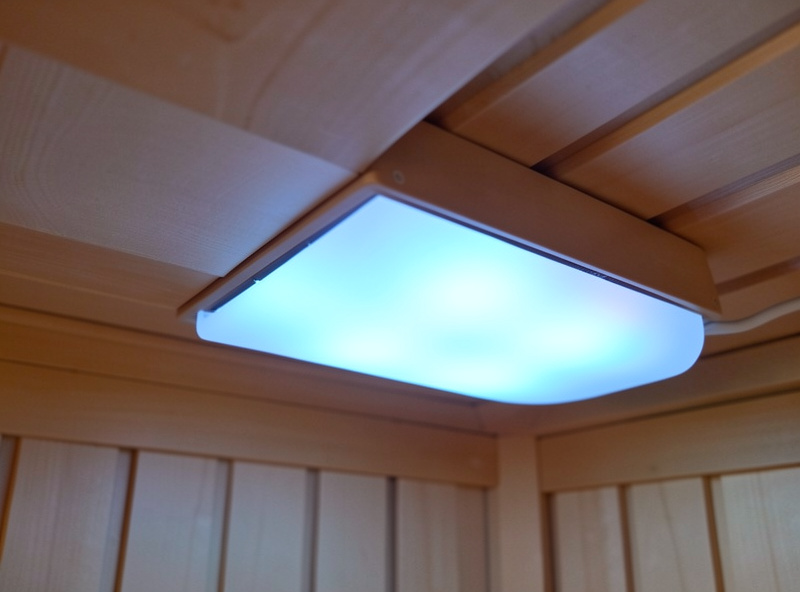
Chromotherapy lighting is colored LED lighting — typically a remote-controlled bar cycling through 7 or more colors — installed in a sauna for ambiance and mood. The hardware is identical to RGB accent lighting you’d find anywhere; the “chromotherapy” label is marketing. A kit costs $40 to $120 and adds nothing to the heat or the radiant performance of the cabin. It changes how the room feels, and that’s the whole, legitimate value.
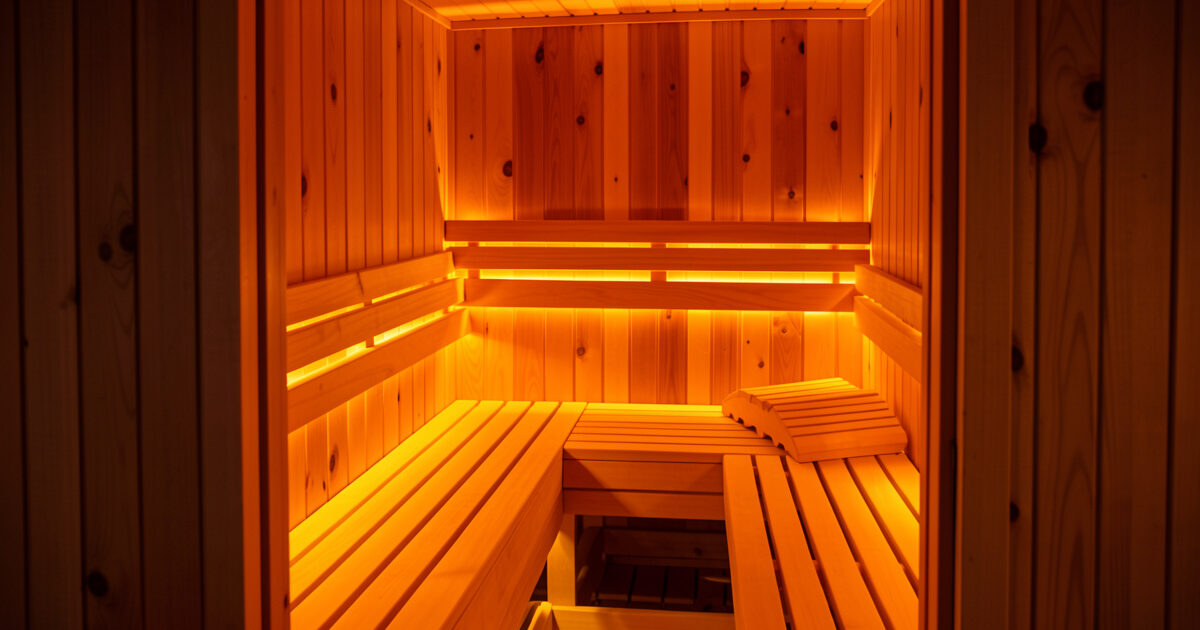
The reason it shows up in nearly every premium sauna brochure is that color is cheap to add and easy to upsell. A few watts of LED behind a diffuser turns a clinical white box into a calm amber-lit space, and a calmer space genuinely makes a 30-minute session easier to sit through, which matters most when you’re still building the habit and following a beginner session schedule. I’m not dismissing the comfort — I run color every night. I’m separating “this relaxes me” (true, subjective, fine) from “this heals me” (a claim no chromotherapy vendor can back up).
Does Sauna Chromotherapy Have Health Benefits?
No chromotherapy lighting has a proven medical benefit — it is ambiance, not treatment, and any kit claiming to “balance energy” or “heal” with color is selling marketing, not medicine. The relaxing effect of warm low light is real and well-understood as a mood and environment factor, but it is not a therapeutic outcome, and I won’t pretend otherwise on a gear site.
This is also where people confuse chromotherapy with red-light therapy, and the two are completely different hardware. Red-light therapy uses specific high-irradiance wavelengths from dedicated emitters; a chromotherapy RGB bar emits low-power visible color for mood. If you’re after the red-light hardware question, I cover it in the red light vs infrared sauna comparison — but understand going in that an RGB ambiance strip is neither red-light therapy nor a medical device. Treat the color as decor that happens to be relaxing, and you’ll buy the right thing.
How to Choose a Chromotherapy Light for Your Cabin
Pick a chromotherapy light rated for high heat, with a diffuser and a simple remote — those three features separate a unit that survives the cabin from one that yellows and fails in a season. The LED housing sits near the ceiling where temps climb past 140°F, so the plastic and the driver must tolerate it. Cheap RGB strips meant for a TV backlight will warp and discolor fast in that environment.
Look for low-voltage operation (most run 12V or 24V off a small transformer), a frosted diffuser so you see color rather than raw diodes, and a control method you’ll actually use — a physical remote beats a finicky app in a steamy room. On my cabin I run a sealed bar with a diffuser lens because staring at bare LEDs is harsh, and warm amber is the only color I reach for after the novelty of cycling through all seven wears off. Match the bar length to your bench width so the light wraps the seating area evenly instead of spotlighting one corner.
Installing Chromotherapy Lighting Safely
Install the light high on a side wall or the ceiling edge, kept off the heater circuit and clear of direct panel contact — the goal is even wash without baking the LEDs. Mount it where the cabin is coolest, route the low-voltage wiring away from the heater wiring, and use the transformer outside the hot zone if the kit allows. This is low-voltage work, but it’s still wiring in a hot, occasionally humid box, so neatness matters.
The mistake I see is people sticking an adhesive RGB strip directly onto a heater panel surround, where it cooks within weeks. Keep a few inches of air gap from any panel, and never run the chromotherapy controller’s power through the same connection that feeds the heaters. If your cabin is a prefab unit, many have a dedicated low-voltage accessory port for exactly this; if you’re retrofitting, treat it like any low-voltage install and keep it tidy. For the broader install picture, the installation guide covers how the cabin’s circuits are laid out.
Which Colors Actually Get Used?
In practice most owners settle on one or two warm colors and leave the rainbow cycling off — in my cabin that’s amber in the evening and a soft blue-green occasionally. The 7-color party mode is a showroom feature; nightly use gravitates to whatever feels calm. There’s no wrong answer because none of it is medical, so the right color is simply the one you find relaxing.
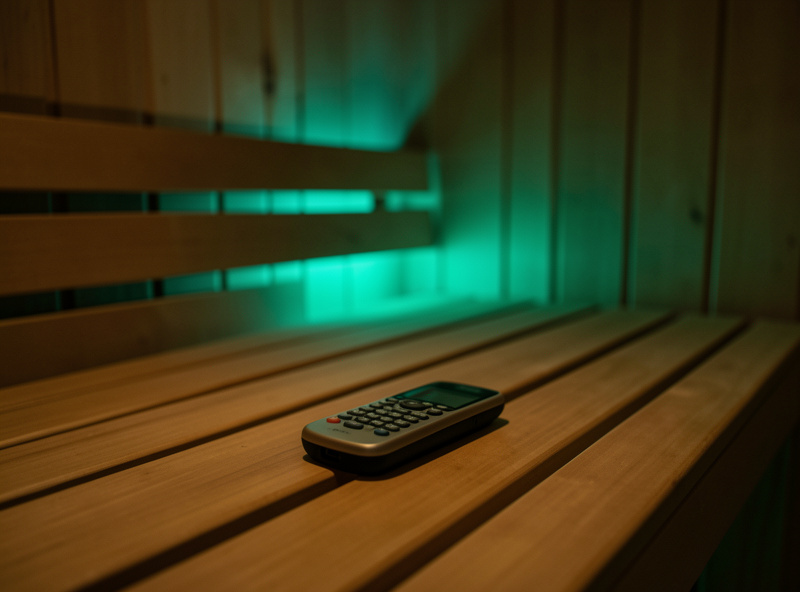
Warm tones (amber, soft red, orange) read as cozy and pair well with a dark winter evening session. Cool tones (blue, green, teal) feel fresh and work for a daytime reset, the kind I pair with a solo cabin routine. Bright white defeats the purpose — if you wanted clinical light you’d leave the standard cabin light on. The practical tip from living with it: set a default color you like and use the remote’s memory so you’re not fishing through modes every session. The novelty fades; the calm amber stays.
What I’d Buy and What I’d Skip
If I were adding chromotherapy to a cabin today, I’d spend $50 to $80 on a heat-rated RGB bar with a diffuser and a physical remote, and skip everything above $120 because the extra money buys length and packaging, not function. The sweet spot is a unit specifically sold for sauna or steam-room use, or a marine/outdoor RGB bar rated for heat and moisture — the same “buy the honest category” logic that runs through every sauna accessory decision. You can browse heat-rated chromotherapy light bars on Amazon to compare diffuser styles and bar lengths. As an Amazon Associate I earn from qualifying purchases, at no extra cost to you.
What I’d skip: any kit whose listing leans on “color therapy,” “energy balancing,” or “healing frequencies,” because you’re paying a wellness premium for a plain RGB strip. Also skip app-only control — in a hot, dim cabin you want a button, not a phone. And don’t buy a longer bar than your bench; an over-long strip just wraps onto cold walls and washes out. The honest spend is modest, and the result is a calmer room you’ll sit in longer, which is the only outcome chromotherapy can actually deliver.
Chromotherapy vs Other Ambiance Upgrades
| Upgrade | Cost | Effect | Medical Claim? |
|---|---|---|---|
| Chromotherapy RGB bar | $40-120 | Colored mood lighting | None — ambiance only |
| Dimmable warm LED | $20-50 | Adjustable single-tone light | None |
| Essential oil diffuser | $20-60 | Scent for mood | None — aroma only |
| Red-light therapy panel | $150-600 | Dedicated wavelength emitter | Separate hardware; research-stage |
Frequently Asked Questions
Does infrared sauna chromotherapy lighting actually do anything?
It changes the ambiance of the cabin, which can make sessions more relaxing, but it has no proven medical effect. Chromotherapy lighting is colored LED mood lighting, identical to RGB accent light, sold under a wellness label. Treat it as decor, not therapy.
Is chromotherapy the same as red-light therapy?
No. Chromotherapy is low-power colored visible LED light for mood. Red-light therapy uses dedicated high-irradiance emitters at specific wavelengths and is completely different hardware. An RGB ambiance bar is neither red-light therapy nor a medical device.
How much does a sauna chromotherapy light cost?
A typical 7-color chromotherapy LED bar with a remote costs $40 to $120. Higher prices usually buy a longer bar, a better diffuser, or heat-rated housing, not any added function. The light adds nothing to the cabin’s heat or radiant performance.
Can I install chromotherapy lighting myself?
Yes, most kits are low-voltage and mount on a side wall or ceiling edge. Keep the LEDs off the heater circuit, clear of direct panel contact, and route wiring away from the heater wiring. Mount it in the coolest part of the cabin so the LEDs do not bake.
Will a normal RGB LED strip work in a sauna?
It will work briefly, but a TV-grade RGB strip is not rated for the 140°F ceiling temps and will yellow, warp, or fail within a season. Choose a heat-rated unit with a diffuser designed for the sauna environment instead.