An infrared sauna absolutely works for an apartment renter — you just have to stay inside three limits a lease and a flat impose: a plug-in unit under about 1,500 W so you never touch the wiring, floor and moisture protection you can remove, and a footprint you can take with you. Get those right and you can have real radiant heat in a rented flat without a single hole drilled or a single awkward conversation with a landlord.
I run a fixed cabin on a dedicated circuit now, but I started in smaller spaces and I keep a portable tent and blanket precisely to test what works where you cannot install anything. This is the renter chapter of my portable compact sauna guide, and it is the most constraint-driven of the lot — the right answer is dictated by your tenancy more than your taste.
The Power Limit Is the Whole Game
As a renter you cannot pull a new circuit, so the single number that decides everything is wattage against your existing socket. A standard 10A wall socket comfortably handles a continuous load up to roughly 1,500 W, and almost every true portable — blankets at 600 to 900 W, tents at 800 to 1,300 W, folding panels at 1,000 to 1,500 W — sits under that by design. Anything advertised needing a dedicated 16A circuit or hardwiring is off the table for you, full stop, no matter how good it looks.
One safety line I never cross: do not run a 1,300 W sauna through a thin daisy-chained extension lead. A continuous heat load wants a direct socket or a heavy-gauge lead, and ideally one sited near the consumer unit rather than at the end of a long thin run. That is not fussiness — a cheap extension under sustained load is a real hazard, and it is the one renter shortcut I will tell you flatly to avoid.
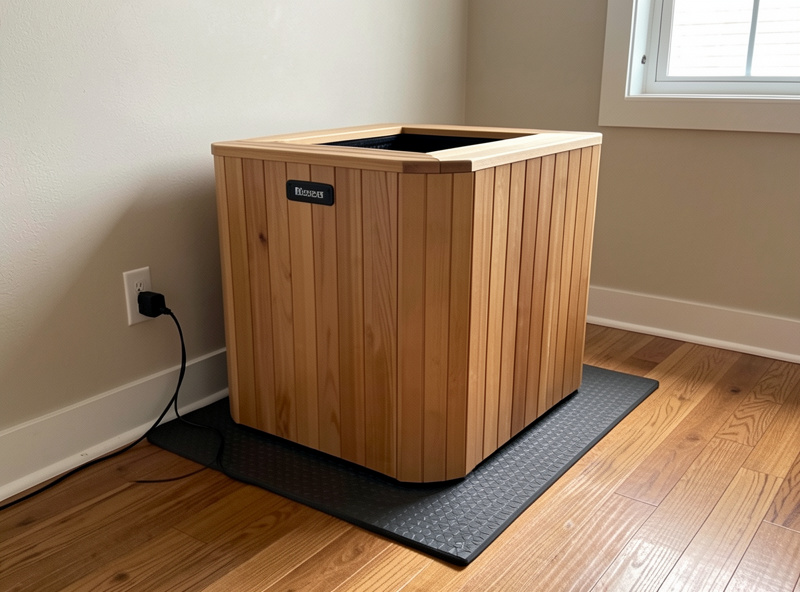
Floors, Moisture, and Getting Your Deposit Back
Renters worry about the deposit, and rightly. Infrared saunas sweat far less moisture into the air than a steam room, but you still want a removable barrier between the unit and a wood or laminate floor — a moisture mat under it handles both the small base heat load and any sweat that escapes a towel. Everything you add should be removable: mats, towels, a freestanding unit that lifts out. Nothing screwed, nothing adhesive, nothing that marks the wall.
Ventilation in a flat is simpler than people fear because infrared is a dry heat, but I still crack a window or run the unit near one and dry the interior afterwards so nothing musts up. A folding cabin or tent dries in minutes with the door open. The general principles are in the ventilation guide; in a rental you are just applying the removable version of all of it.
Neighbours, Noise, and the Lease Itself
Portable infrared units are quiet — a faint fan and the controller, nothing your neighbours will hear through a wall. The real “neighbour” issue is electrical: you are adding a sustained load to a shared building supply, which is fine on a modern flat but worth a thought in an older block where your circuit is shared. If you are unsure what your socket and consumer unit can take, that is the one question worth asking a qualified electrician, and it is jurisdiction-dependent enough that I will not give you a number for your building.
On the lease: a freestanding plug-in appliance is generally no different from a heater or a treadmill in most tenancy agreements, but read yours, and if it restricts high-draw appliances, check before you buy. The whole point of going portable is that you are adding an appliance, not altering the property — keep it that way and you keep the conversation simple.
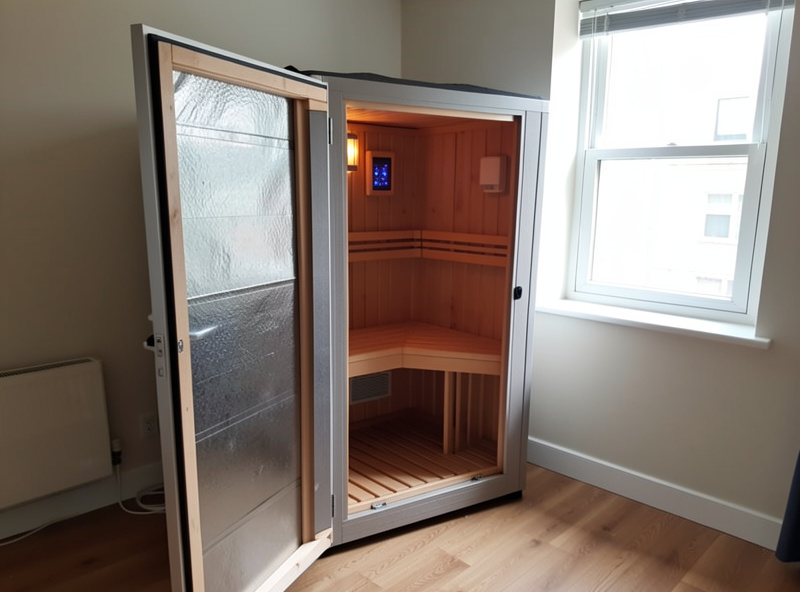
Which Form Factor Suits a Rental
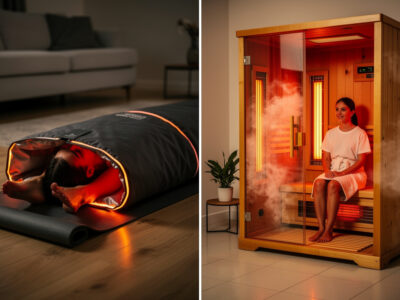
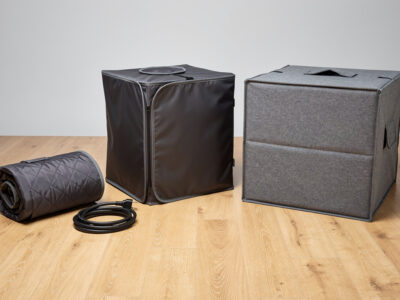
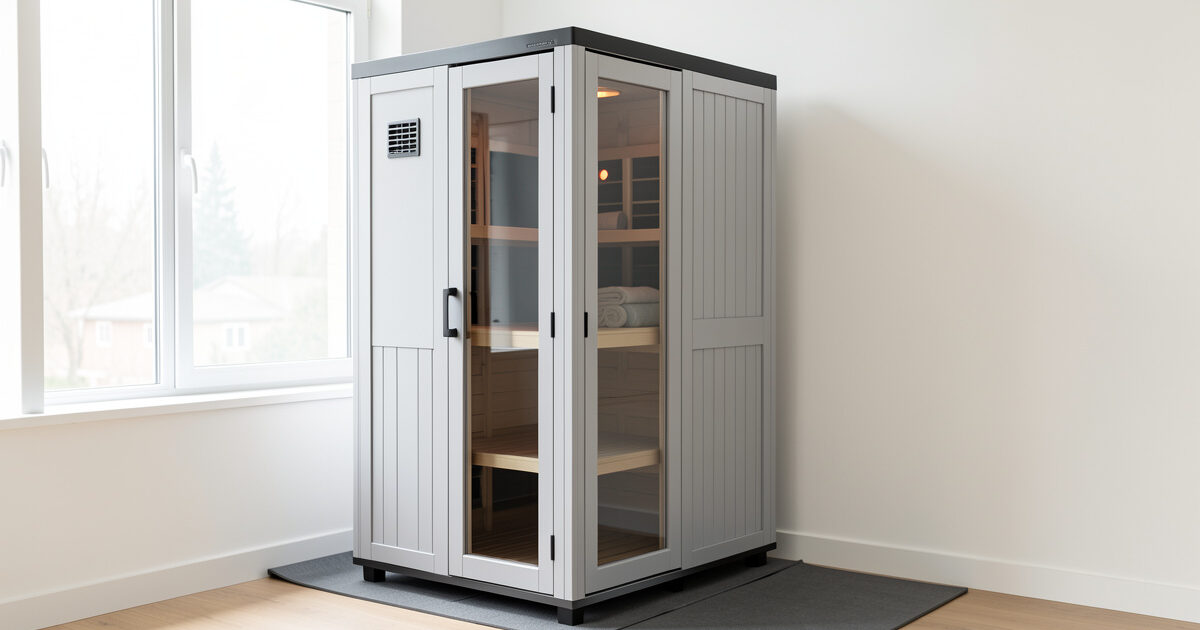
For most renters the answer is a folding carbon-panel unit: it gives you real radiant heat and head-out comfort, runs on the wall socket, folds thin to store, and lifts out clean when you move. If your hard constraint is storage rather than the full feel, a blanket disappears into a cupboard; if you want to sit upright with your head free on a budget, a tent. What I would not buy as a renter is a heavy compact cabin you cannot move and that flirts with needing a dedicated circuit — that is an owner’s purchase, not a tenant’s.
I break the specific category picks down in the best portable picks, the blanket class in the blanket comparison, and the folding-frame units in folding infrared sauna options. If you are weighing whether to go portable now and buy a fixed cabin when you own a place, the portable vs fixed decision lays out that timeline.
Running Cost in a Rental
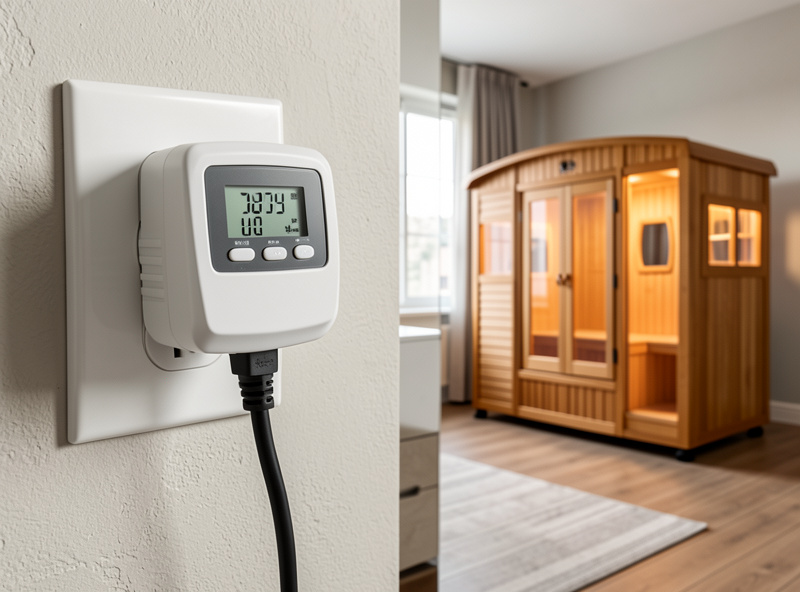
The good news for a renter watching the meter: portables are cheap to run. A folding unit at around 1,200 W for a 30-minute session lands near 0.6 kWh on my plug-in meter, a blanket roughly half that — small enough that the running cost rarely changes the decision. I would still put a plug-in energy meter on whatever you buy for the first week, both to know your real number and to confirm the unit is not quietly drawing more than its socket should carry. The full kWh-by-form numbers are in the electricity cost breakdown.
None of this is a health pitch — what the heat does for recovery or sleep is studied and reported, not something a rental-friendly unit delivers. The renter’s win is simply that you can have a genuine infrared session in a flat you do not own, on a socket you already have, with nothing left behind when you leave.
A Renter’s First-Week Setup, Step by Step
Here is the sequence I would follow setting one up in a flat. First, pick the socket: a dedicated wall outlet near the consumer unit, not a multi-way strip shared with the television and a heater. Second, lay the removable barrier: a moisture mat sized a little larger than the unit’s base, so any stray sweat lands on something washable rather than the floor. Third, deploy near a window you can crack, both for fresh air and for drying the interior afterward.
Then meter the first few sessions. Put a plug-in energy monitor between the socket and the unit and watch two things — the sustained wattage, to confirm it sits where the spec says and within your socket’s comfort, and the kWh per session so you know the real running cost rather than the nameplate peak. After a session, leave the door or zip open for ten minutes and wipe the interior down; a dry unit never develops the musty smell that gives cheap portables a bad name.
That whole routine takes one evening to dial in and then becomes automatic. It is also entirely reversible — when you move, you roll up the mat, fold the unit, and the flat looks exactly as it did, which is the renter’s real requirement. If you later buy a place and want the fixed-cabin upgrade, the engineering of a dedicated circuit and permanent ventilation is a different project, and the portable vs fixed decision walks that fork.
As an Amazon Associate I earn from qualifying purchases.
If you want to shop the rental-friendly options, a 1-person portable infrared sauna search filtered to under-1,500-watt, freestanding units is exactly the slice that suits a tenancy.
Frequently Asked Questions
Can I use an infrared sauna in a rented apartment?
Yes. A plug-in portable under about 1,500 watts runs on a standard wall socket with no wiring changes, sits on a removable mat to protect the floor, and lifts out when you move. It adds an appliance rather than altering the property, which keeps it within most leases.
Do I need permission from my landlord for a portable sauna?
A freestanding plug-in appliance is usually treated like any heater in a tenancy, but read your lease for clauses on high-draw appliances. You are not drilling, wiring, or altering anything, so there is normally nothing to remove or repair when you leave.
Will an infrared sauna damage my apartment floor or cause moisture problems?
Infrared is a dry heat and sweats far less moisture than a steam room. Put a removable moisture mat under the unit on wood or laminate, dry the interior with the door open after each session, and there is no lasting mark on the floor.
What is the best portable sauna for a small rented flat?
For most renters, a folding carbon-panel unit: real radiant heat, head-out comfort, runs on the wall socket, and folds thin to store. If storage is the priority, a blanket; if you want to sit upright cheaply, a tent. Avoid heavy cabins that need a dedicated circuit.