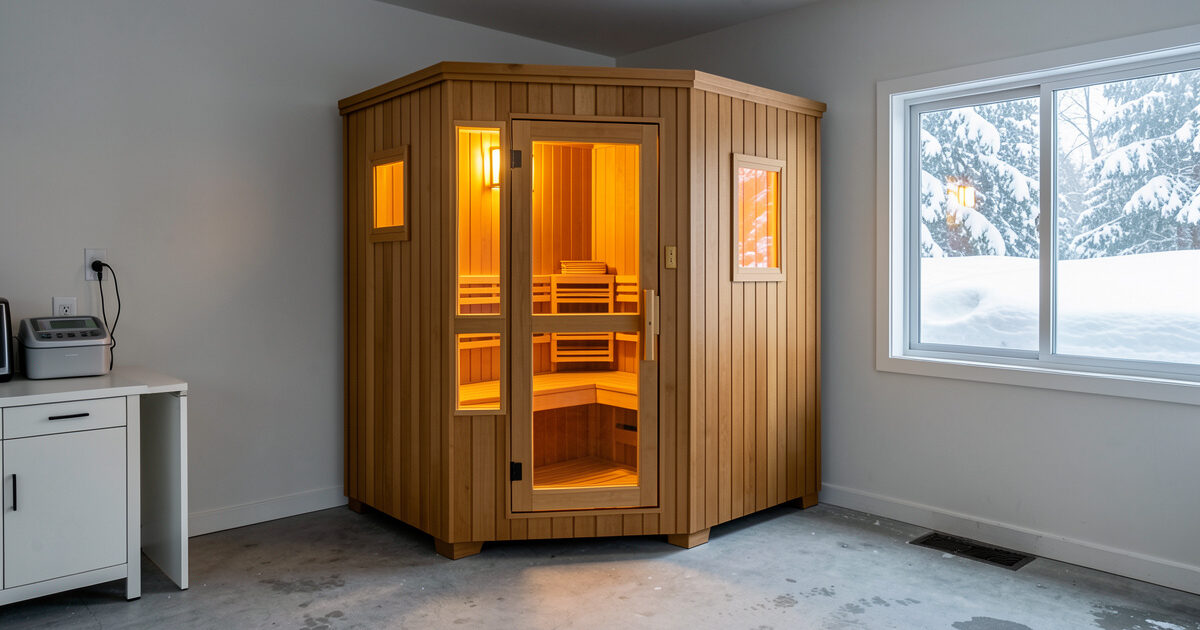
A garage infrared sauna holds heat in winter only if you break its contact with the cold concrete slab first. In my testing, a cabin sitting directly on a 4°C garage floor loses heat through the base all session and runs the bench 3 to 4°C below set temp — insulate underneath and seal the door, and most of that penalty disappears.
The garage is where most cold-climate owners actually put an infrared cabin, and it is also where the physics turns against you the hardest indoors. I have run my far-infrared cabin in a heated room and helped chase heat problems in unheated garage installs, and the failure is almost always the same three cold paths. Here is what actually holds heat and what does not.
The Slab Is the Problem, Not the Air
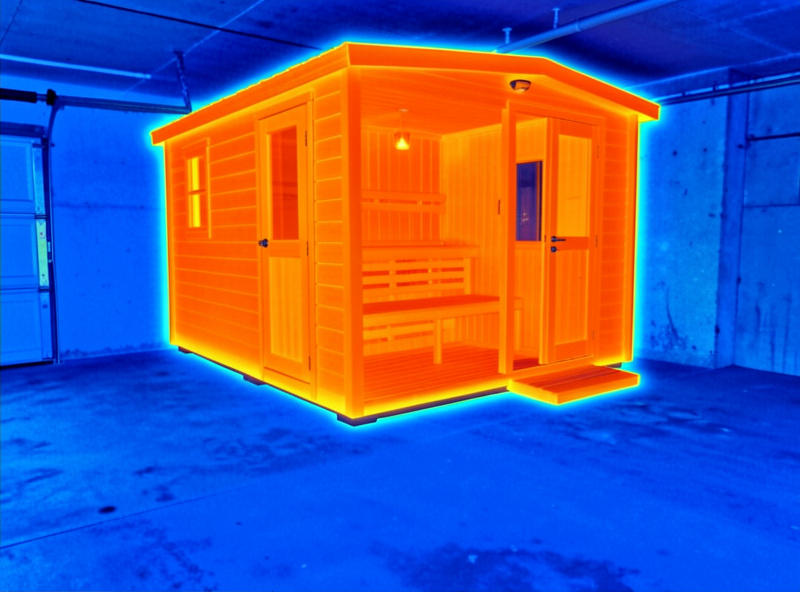
The single biggest heat sink in a winter garage is the concrete floor. A slab is a huge thermal mass tied to the ground and the outside air, and at 4°C it will keep pulling heat out of the base of the cabin faster than the panels can replace it — for the entire session, not just during preheat. You can warm the garage air with a space heater and still have a cold bench, because the floor never came up.
This is why garage installs feel colder than their air temperature suggests. When I shoot a garage slab with an IR thermometer mid-session, it often still reads near-freezing while the air feels fine. The fix is not more heat into the room; it is putting an insulating break between the cabin and the slab so the floor stops draining the cabin from below.
What Actually Holds Heat in a Freezing Garage
Ranked by return on effort, here is what moves the needle in a cold garage install. The order matters — the cheap envelope fixes beat throwing wattage at the problem almost every time.
| Fix | What it does | Effort / cost | My rough gain |
|---|---|---|---|
| Insulate off the slab | Stops floor heat drain | Low (foam board + mat) | Biggest single gain |
| Seal the door gap | Stops cold-air infiltration | Very low (weatherstrip) | Several minutes of preheat |
| Space-heat the garage to 12–15°C | Warms starting air and surfaces | Medium (energy cost) | Turns severe into mild |
| Add wall insulation behind cabin | Cuts conductive loss | Medium (DIY build) | Moderate, steadier temp |
| Oversize the heater one bracket | More reserve against loss | High (buy-in) | Helps peak, not efficiency |
Notice that the heater is last. A bigger heater fights the symptom — it can claw back some peak temperature — but it does nothing about the floor draining heat, and it drives your winter electricity bill up while doing it. Fix the envelope first and you often find the heater you already have is fine. If you are still sizing, my heater wattage for cold climates guide covers where the reserve actually helps.
Getting the Cabin Off the Floor
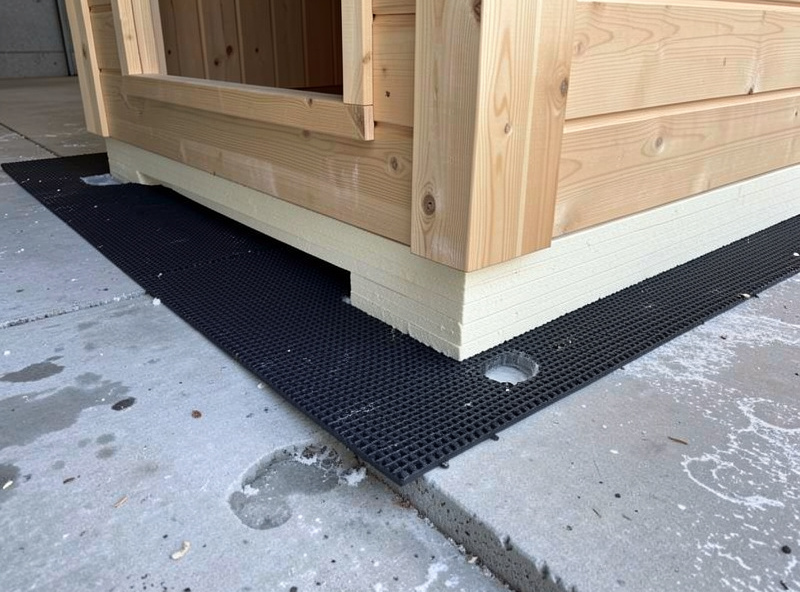
My go-to floor stack for a cold slab is simple: a layer of rigid foam insulation board rated for compression, a moisture barrier, and a firm rubber or composite mat on top for a stable, wipeable surface. The goal is a continuous thermal break under the whole footprint of the cabin, not just a mat that leaves the edges bridging to the slab. Compression rating matters because the cabin plus occupants is real weight and you do not want the foam crushing flat and losing its R-value.
Keep a moisture barrier in the stack, because a warm cabin over a cold slab is exactly the condition that grows condensation, and trapped damp under a sauna is how you get mold and wood problems over a winter. This is the same reason I care about ventilation — you want the space able to dry between sessions. Done right, the floor stack is the highest-return money in the whole install.
Sealing the Door and the Cold-Air Path
The second cold path is air. A garage is draftier than a house, and every gap around the cabin door lets cold air wash in while the panels are trying to warm the space. Weatherstripping the door gap and checking the cable pass-through is a few minutes of work that recovers several minutes of preheat, because the panels stop heating a moving target. If your cabin’s original door seal has hardened or cracked, replacing it is worth doing — I cover that in the door seal replacement write-up.
Should You Heat the Garage, or Just the Cabin?
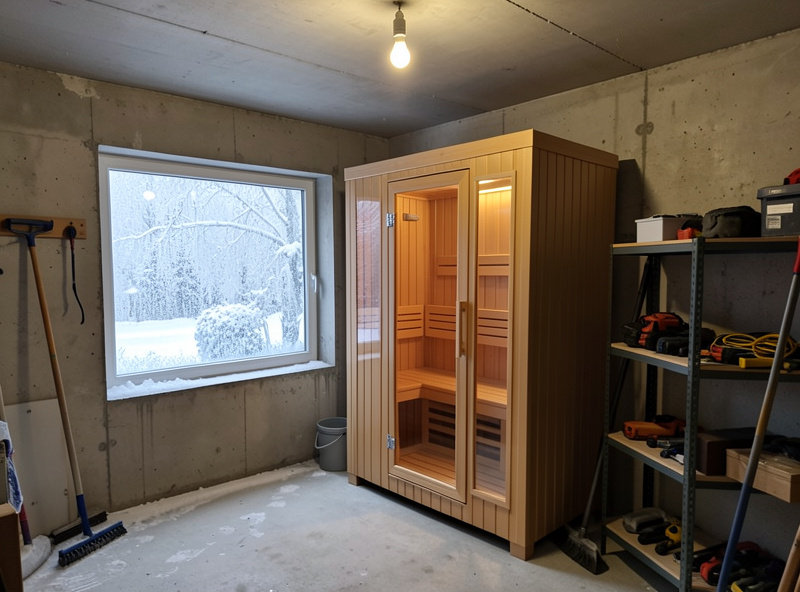
The honest answer is that a little ambient heat goes a long way. You do not need to bring a garage to living-room temperature — getting it to a stable 12 to 15°C before a session turns a severe cold-climate penalty into a mild one, because the cabin now starts from warm air and warmer surfaces. A small thermostatically controlled heater on a timer, or the sauna’s own scheduled preheat plus a short garage warm-up, is usually enough.
What I would not do is leave the whole garage heated all day to serve a 40-minute session — the energy math is terrible. Schedule a short pre-warm instead. The broader trade-offs between a garage and an indoor spot are in my indoor vs garage comparison, and the full winter picture across all placements is in the cold-climate performance field guide. If you want to price the floor stack, rigid foam board and a weatherstrip kit are the two cheap buys that do the most. As an Amazon Associate I earn from qualifying purchases.
Keep Reading
- Infrared Sauna Cold-Climate Performance: A Swedish Winter Field Guide
- Why My Sauna Takes Longer to Preheat in Winter
- Indoor vs Garage Infrared Sauna
- Insulating a DIY Infrared Sauna
Frequently Asked Questions
Can an infrared sauna work in an unheated garage in winter?
Yes, but only if you insulate the cabin off the cold slab and seal the door. Sitting directly on a 4C floor, the cabin loses heat through its base all session and runs the bench 3 to 4C below set temp. With a foam-board floor stack and weatherstripping, most of that penalty goes away.
Why does my garage sauna feel cold even when the display reads set temp?
The concrete slab. It stays near-freezing long after the air feels warm and keeps draining heat from the base of the cabin, so the bench feels cooler than the air temperature suggests. Insulating between the cabin and the floor is the fix, not more heat into the room.
What should I put under a sauna on a garage floor?
A continuous thermal break: compression-rated rigid foam board, a moisture barrier, and a firm rubber or composite mat on top. Cover the whole footprint so the edges do not bridge to the slab, and keep the moisture barrier to stop condensation forming between a warm cabin and a cold floor.
Should I heat the whole garage or just run the sauna?
Pre-warm the garage to a stable 12 to 15C before a session rather than heating it all day. Warm starting air and surfaces turn a severe cold-climate penalty into a mild one, while leaving the whole garage heated for a 40-minute session wastes far more energy than it saves.
Do I need a bigger heater for a garage install?
Usually no, if you fix the envelope first. A bigger heater claws back some peak temperature but does nothing about the floor draining heat, and it raises your electricity bill. Insulating off the slab and sealing the door beat oversizing the heater in both cost and result.